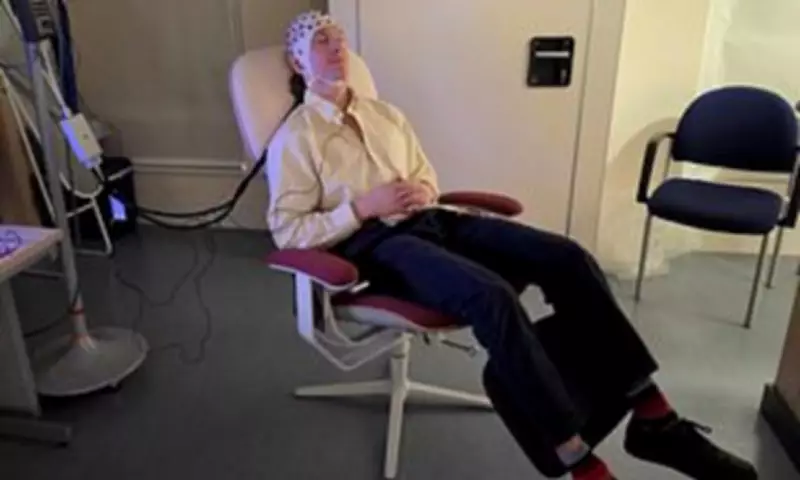
The Aiora Chair: A £10,000 Ticket to Altered Consciousness
From extravagant meditation retreats to psychedelic jungle experiences, the pursuit of altered states of consciousness has traditionally required significant investment of both time and money. Now, British designers DavidHugh LTD claim to have distilled this experience into a single piece of furniture: the Aiora chair. Priced from £5,700 for the basic model to £9,950 for the leather-clad 'Signature' version, this innovative recliner promises to transport users into an altered state of mind within minutes.
Scientific Investigation at University of Essex
Since 2018, psychologists at the University of Essex have been rigorously testing the Aiora chair's extraordinary claims. Their research suggests that sitting in this unusual chair creates profound neurological changes, producing brain states comparable to those observed in Tibetan monks during deep meditation. To separate scientific fact from marketing fiction, researchers have been monitoring brain activity in real-time as subjects experience the chair's effects.
The chair represents the brainchild of furniture designer and biomechanics expert Dr David Wickett, whose original intention was simply to create seating that minimized pressure on the body. Having begun his career designing clinical seating solutions for patients with mobility issues, Dr Wickett only discovered the chair's consciousness-altering properties when early users reported strange experiences including altered perceptions of time.
How the Technology Works
The Aiora chair operates through what Dr Wickett terms 'pure planar motion mechanics', recreating the sensation of floating in zero gravity. Unlike conventional chairs that create gravitational awareness through friction and acceleration, the Aiora chair eliminates both sensations as much as possible. Even when rocking, the user's center of gravity moves only horizontally, preventing acceleration relative to gravity, while weight distribution across supports minimizes friction.
This creates a weightlessness sensation similar to that experienced in sensory deprivation tanks. The chair is so sensitive to movement that even deep breathing or finger wiggling can disrupt balance, but achieving perfect equilibrium results in a sudden, remarkable sensation of floating.
First-Hand Experience and EEG Analysis
During testing at Essex University's sleep laboratory, subjects reported profound alterations in consciousness. Initial fifteen-minute sessions produced dramatic distortions in time perception, with participants consistently underestimating elapsed time by significant margins. This effect particularly interested psychologist Dr Helge Gillmeister, who had observed similar temporal distortions in research involving dissociative states induced through extended mirror gazing.
For more rigorous analysis, researchers employed electroencephalogram (EEG) caps to measure electrical activity in the brain's outer layers. The data revealed several remarkable findings:
- Increased brain activity across most frequency bands, indicating heightened mental stimulation
- Decreased delta brainwave power, suggesting increased alertness rather than sleepiness
- Shifted cortical activity toward the right hemisphere, associated with 'approach motivation' and positive emotional states
- Autonomic nervous system modulation between 'fight or flight' and 'rest and recover' modes
Neurological Significance
Dr Gillmeister explains that increased right hemisphere activity correlates with broader, less focused attention and motivational states that propel individuals forward. The switching between sympathetic and parasympathetic nervous system responses particularly intrigued researchers, as this pattern frequently appears in people experiencing peak psychedelic states, including DMT trips.
Dr Wickett described his own meditation experience in the chair as 'something between MDMA and psilocybin mushrooms', though he emphasizes the chair produces these effects without chemical intervention. The EEG data supports these anecdotal reports, showing neurological changes consistent with altered states of consciousness.
Practical Considerations and Market Position
While the price point places the Aiora chair firmly in the luxury market, its developers position it within a new category they term 'embodied neurodesign' rather than conventional furniture. Manufactured in Cambridge, England, the chair features a birch plywood shell, memory foam cushions, and a powder-coated aluminum and steel frame, standing 127cm tall and weighing 49kg.
Considering the substantial sums people invest in wellness retreats, meditation courses, and alternative consciousness experiences, the Aiora chair presents a compelling, research-backed alternative for those seeking profound relaxation and altered states. Unlike many wellness industry offerings plagued by exaggeration and misinformation, the Aiora chair demonstrates measurable neurological effects, providing scientific validation for its extraordinary claims.
For individuals with significant disposable income seeking innovative approaches to mental wellness and consciousness exploration, the Aiora chair represents a potentially transformative investment—one that might just make leaving the living room considerably less appealing.