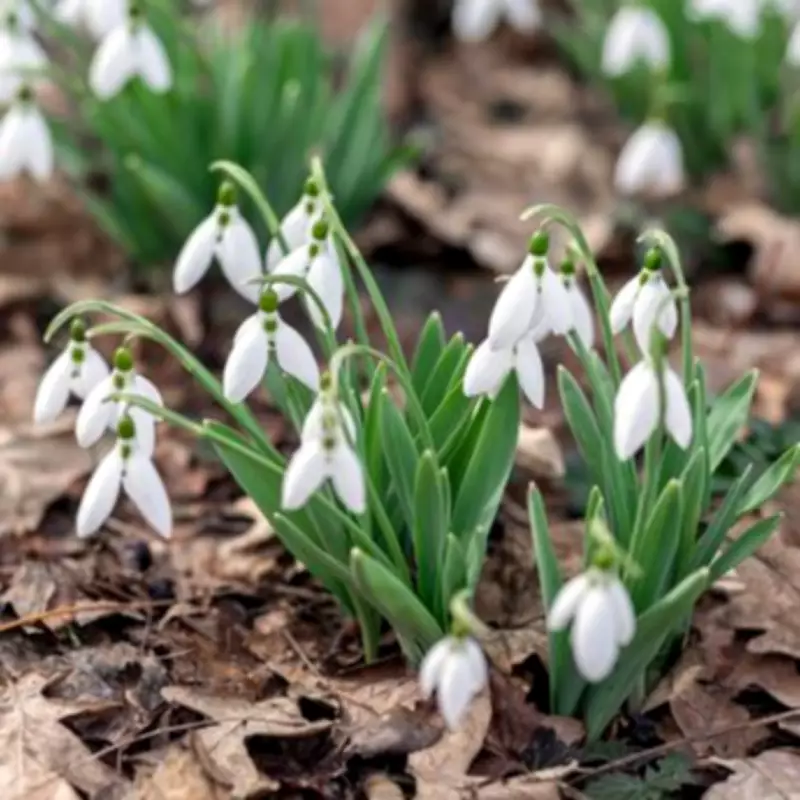
Gardeners' World favourite Carol Klein has revealed the secret to growing perfect snowdrops, insisting there is one particular method that guarantees brilliant results. Carol, 80, first appeared on the beloved programme back in 1989, going on to become a permanent presenter some 21 years ago.
Carol's Planting Advice
Appearing on the Pottering About podcast alongside Tom Allen, she shared her ultimate advice for cultivating snowdrops successfully. The charming plants, recognisable by their light-green foliage and distinctive white bell-shaped blooms, are amongst the earliest to flower in spring. To get the very best from them, Carol insists timing and technique are everything.
She explained: "You must always plant snowdrops in the green, in other words whilst they're in growth. But when you plant them, instead of doing what they do on the telly and digging a hole and putting them all in, be very patient and get you or your gardener to dig a separate hole for each one."

She recommends digging each hole four inches deep, acknowledging it "sounds mad" to go that far into the ground. She continued: "Water them in well and plant them in a nice random fashion so they'll look natural. Next January, February, they'll come up."
Expert Tips for Success
The RHS confirms that snowdrops thrive in almost any soil type, except waterlogged ground, preferring partial shade, with spots beneath trees and shrubs described as "ideal". Snowdrops are ideally planted when their foliage starts to die back, typically around late spring. Their bulbs are particularly susceptible to drying out, so purchasing them directly from a nursery or garden centre and planting them straight away is strongly recommended.
Gardeners are advised to place them in "moist but well-drained soil" enriched with leafmould or garden compost. The RHS stresses the importance of selecting soil that will not dry out during the summer months. This resilient flower, renowned for its ability to push through snow, requires no pruning once established. However, snowdrops do encounter certain challenges after being planted. They frequently fall victim to damping off, a fungal disease, and can suffer from grey mould during drier winters. Dry bulbs are also particularly vulnerable to being dug up by grey squirrels.
Further Insights from Gardening Experts
Former Gardeners' World presenter Alan Titchmarsh has previously noted that growing snowdrops can result in a thriving "colony". In a 2017 piece for the Express, he wrote: "The great thing about snowdrops is that they are happy in almost any soil and in full sun or partial shade – they grow happily in light woodland. Over the years your colony will multiply of its own accord and I wouldn't be at all surprised if you didn't become a galanthophile yourself."
According to Gardeners' World, snowdrops should be planted either in February and March or October and November, with flowering expected between January and March. Carol Klein's method of planting each bulb individually in a four-inch-deep hole, spaced randomly for a natural look, is a simple yet effective trick to ensure a stunning display year after year.