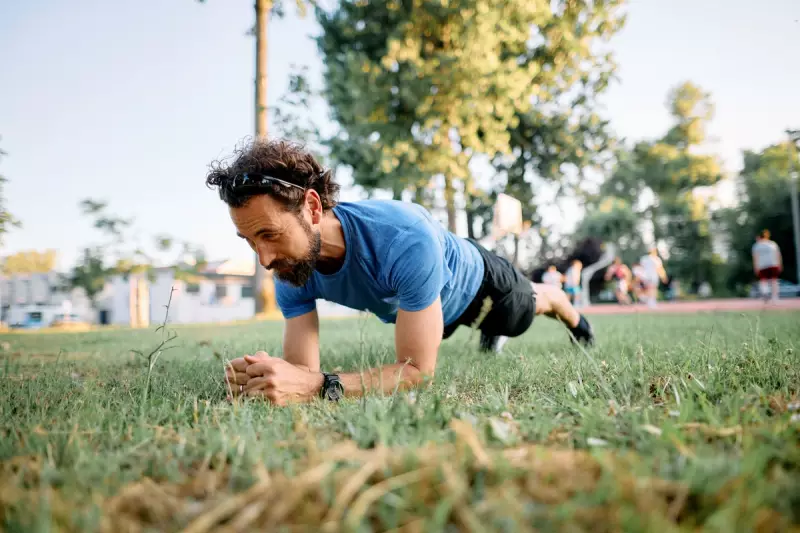
Your alarm shatters the morning silence. You drag yourself out of bed, pull on your workout gear, and head to the gym, only to find your usual weights feel impossibly heavy. If this sounds familiar, you are not alone or imagining it. A substantial body of evidence confirms that for most people, physical performance peaks later in the day.
The Body's Internal Clock and Your Workout
Your body operates on a natural 24-hour cycle known as your circadian rhythm. This internal clock, controlled by the brain and influenced by external cues like sunlight, regulates hormones, body temperature, and energy levels. It has a profound impact on when you feel most alert and when you are primed for sleep.
Research clearly demonstrates that this rhythm is intrinsically linked to exercise performance, which follows a predictable daily pattern. For the majority, the peak for strength, power, and endurance occurs between 4 pm and 7 pm. This explains why an afternoon session often feels easier and more productive than a gruelling morning one. The challenge is even more pronounced during winter months when sunlight is scarce.
Key Factors Making Morning Exercise a Struggle
Several physiological mechanisms are at play that make a dawn workout feel like an uphill battle.
Firstly, your core body temperature is at its lowest point around 5 am and gradually increases throughout the day. Since warmer muscles contract more efficiently, this temperature rise contributes significantly to the strength and power boost experienced in the afternoon.
Secondly, hormonal fluctuations play a critical role. In the morning, insulin levels are typically higher, which can lead to a decrease in blood sugar. This means there is less glucose available for your body to use as fuel, directly impacting your ability to push hard during exercise.
Furthermore, your nervous system appears to become more efficient at sending signals to your muscles as the day progresses. This improved neuromuscular communication allows you to recruit more muscle fibres during a workout, effectively making you stronger later on.
Are You a Morning Person or a Night Owl?
Your individual sleep chronotype—whether you are a natural 'early bird' or a 'night owl'—also influences your workout performance. Studies show that individuals with a late chronotype perform notably worse when exercising in the morning compared to their early-rising counterparts.
While the exact reasons are not fully understood, it is speculated that night owls may experience smaller daily fluctuations in hormones and body temperature. Interestingly, sleep deprivation throws a curveball into this dynamic. If you are sleep-deprived, research suggests your physical performance may actually be better the next morning than in the afternoon.
Ultimately, for general fitness goals like building strength or improving heart health, consistency is more important than timing. If you can feel yourself working, you are making progress. The best time to exercise is often the one that fits your schedule and motivation.
However, if you have a morning sporting event and typically train in the evening, you can adapt. Evidence indicates that repeatedly training in the morning can help close the performance gap, though it may take a few weeks for your body to adjust. And if evening workouts leave you too alert and disrupt your sleep, consider switching to gentler activities at night or moving your main session to an earlier time.