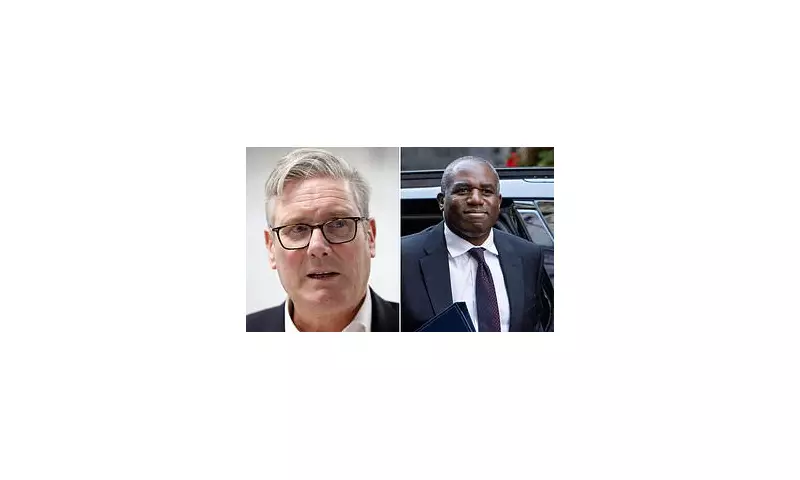
Prime Minister Keir Starmer has publicly acknowledged his government is examining multiple avenues to forge closer trading links with the European Union. This comes after his deputy, David Lammy, enthusiastically pointed to the economic advantages of rejoining the EU's customs union.
Starmer's Pragmatic Stance on Post-Brexit Trade
In a candid discussion on The Economist's The Insider podcast, Sir Keir attempted to distance himself from direct talk of rejoining the customs union. He emphasised respecting the 2016 referendum result, stating "we have to live in the world as it is, not as we wish it to be."
However, he immediately followed this by outlining a proactive approach to trade. "We can look at different ways to get closer in terms of trading," the Prime Minister said. "Look at the barriers that are in place and ask ourselves how do we reduce those barriers, particularly in relation to goods."

He launched a sharp critique of the previous Conservative government's negotiation strategy, accusing them of having "failed palpably" to secure a good Brexit deal. He attributed this failure to their "rude, aggressive, abusive and disrespectful" conduct during talks with Brussels.
Lammy's Repeated Refusal to Rule Out Reversal
The Prime Minister's comments followed a notable intervention from Deputy Prime Minister David Lammy. During an appearance on the News Agents podcast, Mr Lammy refused seven times to rule out ultimately reversing Brexit.
He argued that leaving the EU had "badly damaged our economy" and insisted Labour should seek greater integration with Brussels. While stating that rejoining the customs union was not "currently" government policy, he made a clear case for its benefits.
"You can see countries like Turkey with a customs union seemingly benefiting and seeing growth in their economy, and again, that's self-evident," Mr Lammy remarked. His comments have sparked accusations that Labour plans to reverse Brexit "by the back door."
The divergence in messaging prompted a public rebuke from within the government. Sir Keir's chief secretary, Darren Jones, told the Commons that Labour's policy would be announced in Parliament, not "on podcasts."
A Diplomatic Thaw and Forward Look
The internal Labour discussion on EU relations coincides with a notable diplomatic warming. During his state visit to the UK, German President Frank-Walter Steinmeier hinted at a post-Brexit reset, cleverly citing the Oasis song Don't Look Back in Anger.
Addressing MPs and peers, President Steinmeier acknowledged the disappointment and uncertainty following the UK's departure but said both sides had decided not to "stay stuck in these feelings." Declaring "our love remains," he urged Britain and the EU to look "together to the future."
He highlighted positive steps, including the first UK-EU summit since Brexit held in May and the UK-Germany partnership agreement, known as the Kensington Treaty, signed in July. Plans for a youth mobility scheme to facilitate exchanges were also underscored as a practical move to rebuild links.
Together, these developments signal a Labour government actively, if cautiously, seeking to redefine the UK's economic relationship with the European Union, against a backdrop of improving diplomatic relations and ongoing internal debate about the long-term direction.