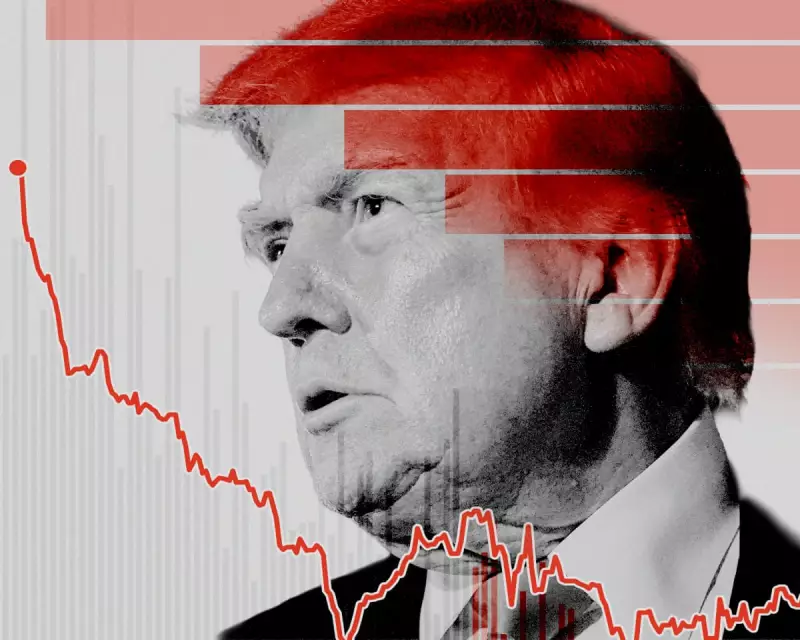
A Statistical Snapshot of Trump's Second Term in Office
The initial twelve months of Donald Trump's second presidential term have presented a complex and often contradictory picture, according to comprehensive data tracking by major news organisations. While certain policy areas show dramatic shifts, particularly in immigration enforcement, other economic and social indicators reveal a more nuanced and challenging landscape for the administration.
Immigration Enforcement: A Sharp Change in Detention Demographics
One of the most significant and immediate transformations has occurred within the realm of immigration policy. Data indicates that Immigration and Customs Enforcement (ICE) detention centres now hold a record number of individuals with no criminal history. This marks a substantial departure from previous enforcement priorities, establishing this group as the largest cohort within the immigration detention system.
Furthermore, the administration has implemented a sweeping visa suspension, affecting travellers from 75 different countries. This policy has abruptly halted processing for nations that were previously among the top issuers of visas to the United States in 2024.

Economic Performance: Stubborn Inflation and Slowing Job Creation
On the economic front, the data paints a mixed picture. A central pillar of Trump's campaign was revitalising the American economy, yet key metrics show ongoing challenges. Although the rate of inflation has receded from the peaks seen during the Biden administration, it remains persistently high. Concurrently, monthly job growth has been notably lacklustre, failing to meet the robust expectations set during the election cycle.
Energy costs have also followed an uneven trajectory. Contrary to campaign pledges to significantly reduce electricity prices, average household costs for electricity and natural gas have actually increased by nearly 5%. In a contrasting trend, the price of gasoline has seen a decline over the same period.
Public Sentiment and Market Resilience
Public opinion data reveals a steady decline in the president's approval rating throughout the first year of his second term. This suggests that the administration's policies and actions have not been met with widespread public support, marking a significant shift from his initial electoral mandate.
Despite this political uncertainty and apparent public dissatisfaction, financial markets have demonstrated notable resilience. The S&P 500 index recovered from initial volatility linked to trade and tariff announcements, ultimately climbing to achieve new record highs. This disconnect between Wall Street performance and Main Street economic indicators, alongside shifting public opinion, encapsulates the multifaceted nature of this presidential term's opening chapter.
The collective data from immigration, economic, and social tracking provides a vital, chart-based narrative of a consequential and chaotic year in American politics, defining the early legacy of Trump's return to the White House.