Fifty years ago, Australia witnessed one of the most dramatic and controversial events in its political history. On Tuesday, 11 November 1975, the nation's government was abruptly dismissed by the Queen's representative, plunging the country into a deep constitutional crisis.
The Day the Government Fell
The crisis culminated when Governor General Sir John Kerr used his reserve powers to break a growing deadlock in Canberra. The opposition, led by Malcolm Fraser, had been blocking the government's budget supply bills in the Senate for weeks, starving the Whitlam government of the funds needed to govern.
Summoning both Prime Minister Gough Whitlam and Opposition Leader Malcolm Fraser to Government House in Yarralumla, Kerr took the unprecedented step of sacking the elected prime minister. The official reason was Labor’s failure to obtain supply in the Parliament, a situation Kerr deemed required his direct intervention.
Immediately following the dismissal, Kerr commissioned Fraser as caretaker prime minister, but with strict conditions. Fraser was to immediately pass the stalled budget bills through parliament and call a general election.
Public Outcry and an Iconic Rebuttal
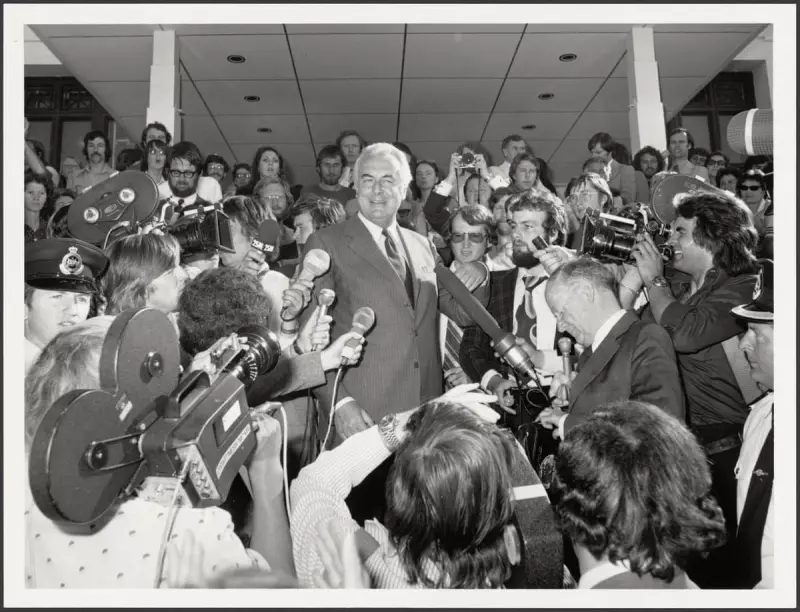
The political drama quickly spilled onto the steps of Parliament House. By about 4.50pm, an angry crowd had gathered outside the building after news of the dismissal spread.
As the governor general’s official secretary, David Smith, read the proclamation dissolving both houses of Parliament, a defiant Gough Whitlam looked on. Smith’s proclamation ended with the traditional phrase, ‘God save the queen!’. This prompted Whitlam to deliver his now-iconic rebuttal to the assembled crowd and reporters: ‘Ladies and gentleman, well may we say, “God save the queen”, because nothing will save the governor general.’
A few hours after being dismissed, Whitlam addressed the public and media, rallying his supporters against what he framed as an undemocratic act.
Aftermath and Legacy
The public reaction was swift and furious. The following day, a massive lunchtime rally of up to 5,000 people gathered outside Parliament House. Public servants, students, and transport workers joined the protest, with ACTU boss and Labor party national president Bob Hawke speaking to the crowd.
The rally passed a motion condemning Whitlam’s dismissal and symbolically called on workers to donate ‘a day’s pay for democracy’ to the Labor party.
Meanwhile, the new Fraser cabinet was swiftly sworn in at Government House, with photographs showing Malcolm Fraser, Sir John Kerr, and deputy prime minister Doug Anthony leaving the ceremony.
Voters ultimately went to the polls on 13 December 1975, electing Fraser, who remained prime minister until 1983. Whitlam stayed on as Labor leader until 1977 but never returned to government. Fifty years on, the events of 11 November 1975 remain a defining and deeply contested moment in the story of Australian democracy.