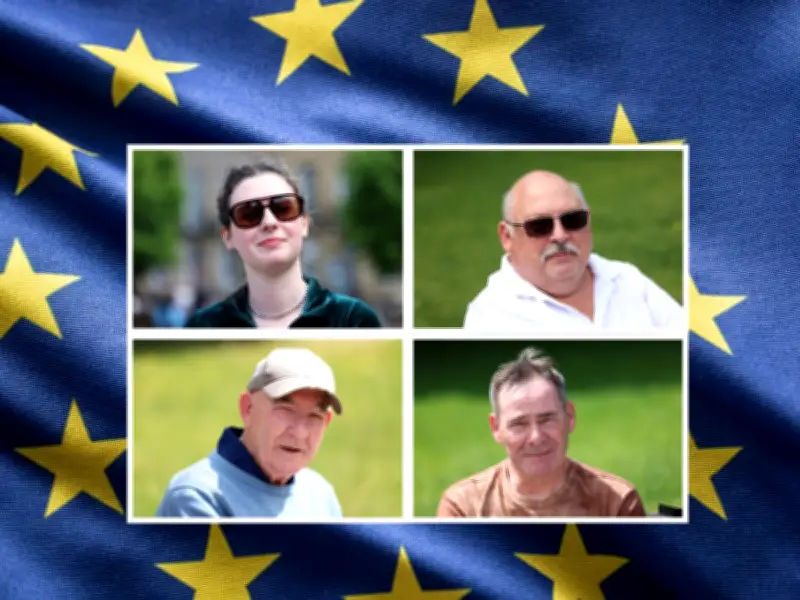
Almost a decade on from the most seismic political moment for generations, the public remains skeptical of Brexit. To mark nearly 10 years since the UK’s decision to leave the European Union, the Local Democracy Reporting Service took to the streets of Newcastle to gauge the public mood on Brexit’s impacts.
The 2016 Referendum and Its Aftermath
On June 23, 2016, the Leave campaign claimed victory with 17,410,724 votes to Remain's 16,141,241. The result paved the way for the UK’s eventual removal from the EU in 2020 amidst years of political turmoil. Ever since polling day, the result and the impacts have remained contentious, sparking fierce debate on the state of the country and its future.
Voices from Newcastle
Stafford native India Inskip, 27, who now lives in New Zealand, said: “I just missed out on the vote, I was too young and I wouldn’t have voted the way it went. It is frustrating for people my age who missed out and it now affects us more than the people who could vote then.” India also found obtaining a visa to study abroad was made more difficult due to the controversial 2016 Referendum. India continued: “I don’t think I would be able to afford a house here now, though it's hard to say whether that is to do with Brexit.”

Cramlington local Michael Douglass, 59, said: “Everything has gone up in price, everything. And with the businesses they are getting crippled by the extra costs.”
William Watson, 80, from Felling told the LDRS: “They didn’t back it did they, that’s what caused all the problems, Conservative and Labour are part of the reason. On his own disappointment over Brexit, William continued: “Closing our borders, I have nothing against immigration, but it's illegal immigration I have no time for. So we could've done something about that.”
Economic Impact and Border Concerns
On June 19 this year, analysis of data from the Bank of England found Brexit negatively hit the UK economy by 6%. The study examined lost business growth, citing general uncertainty and rising trade barriers introduced in 2021. The study has received some criticism for not taking into account US or tech investments, or the European energy shock four years ago.
So far this year, 9,852 people crossed the English Channel via small boats, marking a 40% reduction from the same period in 2025. However on June 15, more than 700 migrants on 11 separate boats crossed the water, the highest number in a single day. Home Office officials maintained they were “bearing down” on such crossings and hailed a £662m deal between France and the UK to prevent Channel crossings as a step in the right direction.
Mixed Views on Brexit Benefits
66-year-old Brian Scott from Inverness who voted to leave originally added: “I don’t think I would [now] just for going abroad and the queues and the price of everything has gone up, everything is a fortune now.”
Gateshead man John Kelly, 77, said: “We never got what we were told we would, we never got the benefits we should have done.” John added: “It’s [The EU] a big trading partner, I don’t mind it.”