The dramatic seizure of Venezuelan leader Nicolás Maduro and his wife, Cilia, has laid bare a profound and deliberate disempowerment of the United States Congress under Donald Trump's second term. In a brazen departure from established convention, the Trump administration executed the high-stakes international operation while keeping senior lawmakers completely in the dark.
A Stark Departure from Precedent
Far from acknowledging the legislative branch's right to be informed, the White House only notified the so-called congressional "gang of eight" after the mission to detain Maduro was already underway. This elite group comprises the top Republican and Democratic leaders from both the Senate and the House of Representatives, plus the chairs and ranking members of the intelligence committees.
This action represents a conspicuous break with recent history, even for Trump. During his first presidency in January 2020, the administration punctiliously consulted the same group before the targeted strike that killed Iranian commander Qassem Suleimani. The contrast in procedure is stark and intentional.

The move has effectively rendered the 1973 War Powers Resolution seemingly obsolete. This act, born from the anxieties of the Vietnam War era, mandates that a president must notify Congress within 48 hours of committing troops to hostilities and requires withdrawal after 60 days without congressional authorisation.
Legal Justifications and Democratic Outrage
Long before the raid, Trump had signalled his disregard for congressional limits. He issued executive orders labelling Maduro and his associates as "narco-terrorists," thereby attempting to place any action against them under the expansive legal umbrella of the post-9/11 "war on terror."
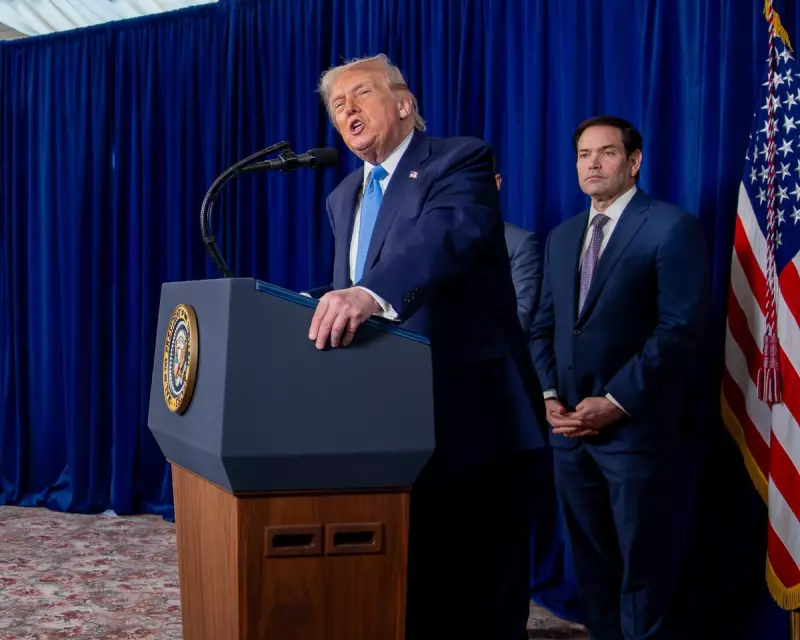
The administration's disdain for congressional oversight was made explicit by Senator Marco Rubio. Defending the secrecy, Rubio stated the mission was not one where you could "call people and say: 'Hey, we may do this at some point in the next 15 days,'" implying lawmakers could not be trusted with sensitive information.
Stung by this haughty disregard, Democratic leaders reacted with ferocious criticism. Former House Speaker Nancy Pelosi accused Trump of a "flagrant disregard for the Article 1 war powers of Congress," essential to the constitutional system of checks and balances. Senator Tim Kaine of Virginia warned, "It is long past time for Congress to reassert its critical constitutional role in matters of war, peace, diplomacy and trade."
Republican Acquiescence and a Weakened Congress
Despite the constitutional alarms, Republican criticism has been notably muted. A telling example is Senator Mike Lee of Utah. Initially expressing reservations about the lack of congressional authorisation, Lee swiftly changed his position after speaking with Rubio. He later argued that Maduro's arrest fell within "the president's inherent authority under Article II of the Constitution."
This shift was highlighted by Matt Duss, a former foreign policy adviser to Senator Bernie Sanders. Duss contrasted Lee's current stance with his past principled defence of congressional war powers during debates over US involvement in Yemen. "For him to come out now and say the president has inherent authority to invade a country and kidnap a foreign leader without any authorization from Congress, is just wild," Duss stated.
The episode suggests that the tools available to Congress, particularly the War Powers Resolution, are no longer fit for purpose in the current political climate. While legislation like the National Security Powers Reform Bill—once ironically co-sponsored by Sanders and Lee—has been proposed to rebalance authority, its prospects are dim. Any such bill would likely face a presidential veto, and overriding it would require a Senate supermajority that is presently unattainable.
The ultimate consequence is a significant consolidation of power in the executive branch, enabled by partisan loyalty. As Duss concluded, the constitutional system of checks and balances presumes leaders who care about its processes—an assumption now under severe strain.