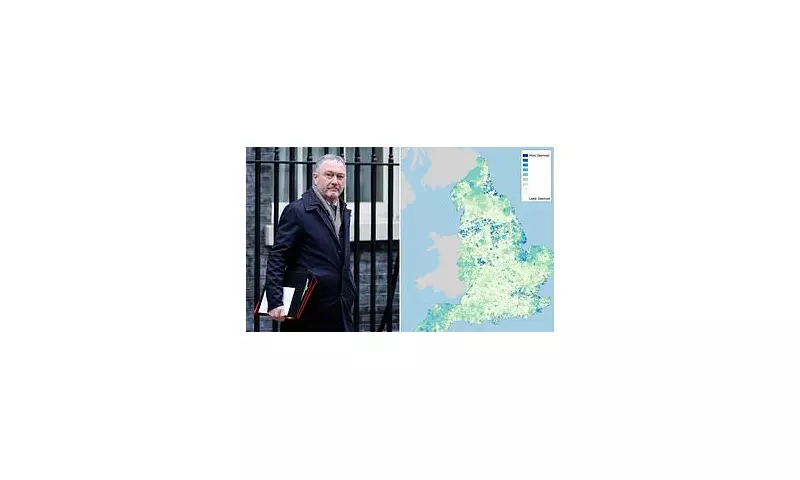
A major overhaul of how councils in England are funded is set to slash resources for authorities in London and the South East, while funnelling more central government cash to areas classified as suffering from higher levels of deprivation.
The New Funding Formula Explained
The government, led by Local Government Secretary Steve Reed, has unveiled what it calls a 'fairer' funding system. The core principle involves taking greater account of an area's ability to raise its own funds through council tax. This means councils in more affluent regions, which have historically managed to keep bills low, will receive less central support. Conversely, areas higher on official deprivation indices will see increased funding.
As part of this shift, ministers have removed the 5 per cent annual cap on council tax increases for five London authorities for the next two years. These boroughs – Wandsworth, Westminster, Hammersmith and Fulham, the City of London, Kensington and Chelsea, and Windsor and Maidenhead – are identified as having 'historically low' council tax levels. The Ministry of Housing, Communities and Local Government (MHCLG) stated that around 500,000 households in these areas have 'very low bills', with a typical Band D property paying between £450 and £1,280 less per year than the English average.

Political Backlash and Bankruptcies Loom
The move has ignited a fierce political row. The Conservative opposition has condemned the plan as a 'nakedly political power grab'. Shadow Local Government Secretary James Cleverly accused the Labour government of 'fiddling the funding model' to punish well-run councils that keep tax low and reward 'badly-run Labour councils that spend irresponsibly'.
Cleverly warned that the changes would force councils that lose out to either cut vital services or impose significant tax hikes. He claimed the average Band D household faces a cumulative council tax increase of £1,143 over the course of the current Parliament as a result.
Meanwhile, many county and district councils across England, a significant number of which are already on the brink of bankruptcy, have expressed deep concern. They warn they will face immense pressure to raise local levies simply to balance their books and maintain essential services.
A 'Chance to Turn the Page'
In stark contrast, the government frames the reforms as a necessary correction and an investment in local communities. Steve Reed stated: 'This is a chance to turn the page on a decade of cuts, and for local leaders to invest in getting back what has been lost – to bring back libraries, youth services, clean streets, and community hubs.'
The MHCLG argues the existing system allows some councils to build up substantial financial reserves while others 'struggle to cope'. The new formula aims to ensure 'all local authorities will be able to provide the same level of service to residents', regardless of their local tax base.
The funding shake-up is part of a broader plan to 'fix the foundations of local government'. This includes:
- Consolidating various grants.
- Reducing bureaucracy.
- Enabling investment in preventative services.
- Reforming children's social care.
- Introducing a new homelessness and domestic abuse grant.
Areces like Tendring, Blackpool, Rotherham, and Hastings, which rank highly on deprivation measures, are set to be among the primary beneficiaries of the redirected funds. The final funding settlements for individual councils are expected to be announced in detail shortly.