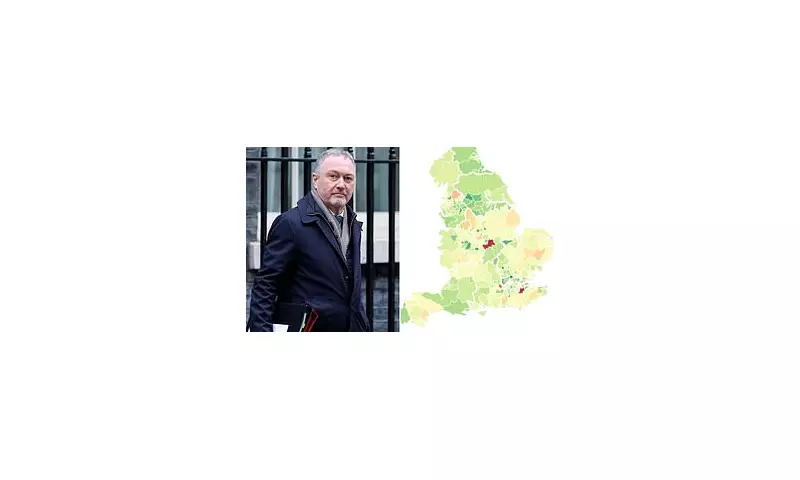
The government has unveiled a radical overhaul of council funding that will see significant tax rises in some of England's wealthiest areas, with bills in parts of London projected to jump by as much as 75 per cent. The new system, branded a "fairer" approach by ministers, redirects central resources towards local authorities classified as suffering from higher levels of deprivation.
A Major Shift in Funding Priorities
Under the new multi-year settlement, English councils will receive a total of £78 billion for essential services next year. The Ministry of Housing, Communities and Local Government (MHCLG) states that core spending power will increase by 23 per cent compared to 2024-25 by the end of the funding period in 2029. This money funds crucial services like bin collections, housing, and children's services.
However, the distribution of this funding marks a dramatic policy shift. The most deprived 10 per cent of councils will see a 24 per cent per head boost in their resources. Big winners include crisis-hit Birmingham, where core spending power is due to be 45 per cent higher by 2028-29. Other major beneficiaries are Luton (63.4%), Enfield (58.2%), and Newham (52.8%).

Conversely, dozens of councils, largely in more affluent parts of the country, face real-terms cuts. Among the biggest losers are Harborough (-15.8%), Tonbridge and Malling (-15%), and Runnymede (-12.5%).
The Council Tax Cap Lifted for Six London Boroughs
A highly controversial element of the plan is the removal of the 5 per cent annual cap on council tax increases for six London authorities with "historically low" bills. These are: Wandsworth, Westminster, Hammersmith and Fulham, the City of London, Kensington and Chelsea, and Windsor and Maidenhead.
The respected Institute for Fiscal Studies (IFS) think-tank analysed the government's figures and warned they assume "eye-watering 75 per cent rises" in Wandsworth and Westminster over the coming years. The MHCLG argues that 500,000 households in these areas already pay between £450 and £1,280 less per year for a typical Band D property than the English average.
Other town halls with below-average council tax levels are being told they can apply for "exceptional" permission to break the 5 per cent limit and are being urged to ramp up charges on second homes.
Political Battle Lines Drawn
The reforms have ignited a fierce political row. A Labour source declared: "The days of Rishi Sunak shovelling money to Tunbridge Wells then bragging about it at garden parties are over. Deprivation is now back at the heart of council funding."
Local Government Secretary Steve Reed said: "This is a chance to turn the page on a decade of cuts, and for local leaders to invest in getting back what has been lost – to bring back libraries, youth services, clean streets, and community hubs."
The Conservatives have condemned the move as a "nakedly political power grab." Shadow Local Government Secretary Sir James Cleverly accused the government of "fiddling the funding model to punish councils that keep council tax low and moving funding to badly-run Labour councils that spend irresponsibly." He warned the average Band D household faces a cumulative £1,143 increase over this Parliament.
Warnings of Service Cuts and Financial Strain
Council networks have expressed deep concern. The County Councils Network warned the settlement will be "extremely challenging" and could force more councils to apply for emergency financial support. Kate Ogden, a senior economist at the IFS, noted that with rising demands and costs, the government may find it "hard to hold the line" that large tax hikes will be limited to exceptional cases.
The government defends the system, stating it aims to ensure "all local authorities will be able to provide the same level of service to residents" by accounting for their differing ability to raise funds locally. The reforms also include letting councils keep all additional council tax from new homes and continuing a £600 million Recovery Grant for the hardest-hit areas.

The debate now centres on whether this significant redistribution from more affluent to more deprived parts of England represents long-overdue fairness or an unfair punishment for fiscal prudence.