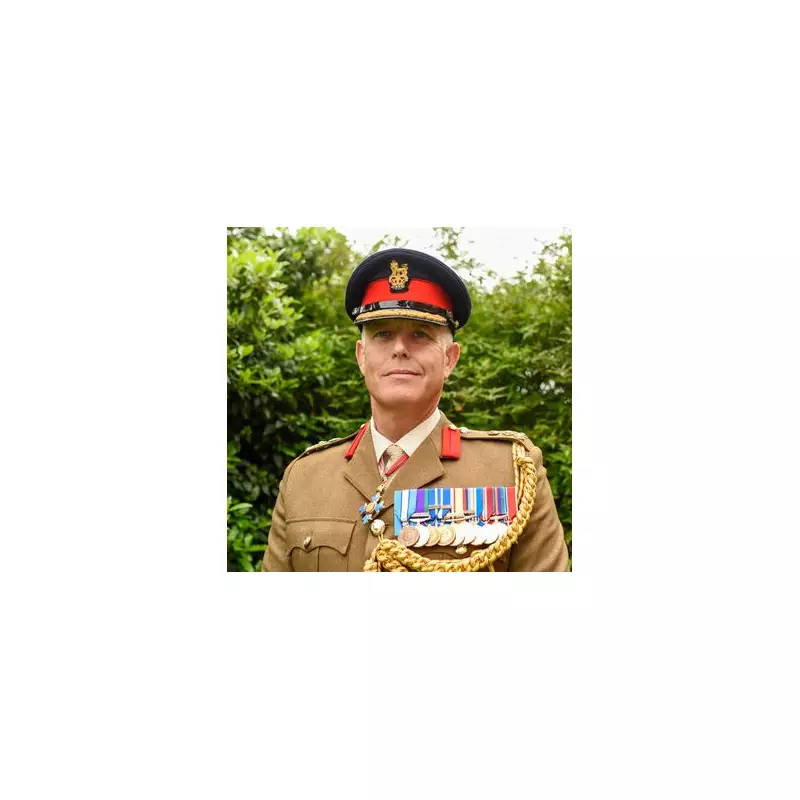
The indiscriminate carnage of the IRA's 1982 Hyde Park and Regent's Park bombings, which killed 11 military personnel and seven horses, proved a life-defining moment for a teenage Gareth Collett. The shocking news reports ignited a fierce determination in the 16-year-old to pursue a career where he could save, rather than take, life.
From Sandhurst to the world's most dangerous war zones
Now 59, the retired Brigadier has completed a remarkable 34-year career, making an estimated 75,000 explosive devices safe across some of the world's most perilous conflict zones. After attending Welbeck College and the Royal Military Academy Sandhurst, he was selected for specialist ordnance training, passing an intensive 14-month course involving 52 exams. The overall pass rate for such training is a mere 8%, a figure Gareth attributes to the stark reality that one mistake means certain death.
Gareth's first live device was in Scotland, a moment where training met terrifying reality. "You're carrying between 60 and 70 kilos of equipment... Then there's the suit, which can save you, but is also there to keep you relatively together if the device functions," he explains. He served extensively in Northern Ireland, Afghanistan, and Kosovo, but cites Iraq as the hardest theatre due to the unpredictable and poorly made devices used by multiple fighting factions.

The hidden cost: PTSD and a shocking cancer link
The psychological toll of his service, however, was immense. Gareth developed Post-Traumatic Stress Disorder (PTSD), which he believes stemmed primarily from overseeing the exhumation of a mass grave in Kosovo. The trauma was compounded by horrific incidents like a large market bombing in Iraq. "After that market bomb I had to come back to my family and pretend everything was ok. But it wasn't," he admits.
His breaking point came in Iraq, near Mosul. "I got out of the vehicle and the smell of death hit me. In an instant, I was back over that grave in Kosovo," he recalls. Retiring in 2018 after suffering appalling night terrors, he found limited help available due to the sensitive nature of his work under the Official Secrets Act. He eventually received crucial support from the charity Help for Heroes' Hidden Wounds team.
In a disturbing personal discovery, Gareth's own 2023 diagnosis of bladder cancer led him to research a potential link to his profession. His findings indicate that serving and veteran bomb disposal personnel under 70 have a five times higher incidence of bladder cancer compared to the general population, likely due to chemicals in high explosives.
Life after service: Writing, teaching, and a CBE
As a way of processing his experiences, Gareth has written a fictional account of a bomb disposal expert titled Blasted Religion. He was also awarded a CBE in 2013 for his life-saving work in Afghanistan. During the investiture, the late Queen Elizabeth II, recalling his time in royal protection, joked with him about whether corgis could be trained as sniffer dogs.
Today, as Executive Director at the University of Wales Trinity Saint David, he teaches an integrated degree apprenticeship in Ordnance, Munitions and Explosives. Despite the horrors witnessed and the personal costs endured, Gareth reflects on his career with conviction: "I wouldn't change what I've done for the world."