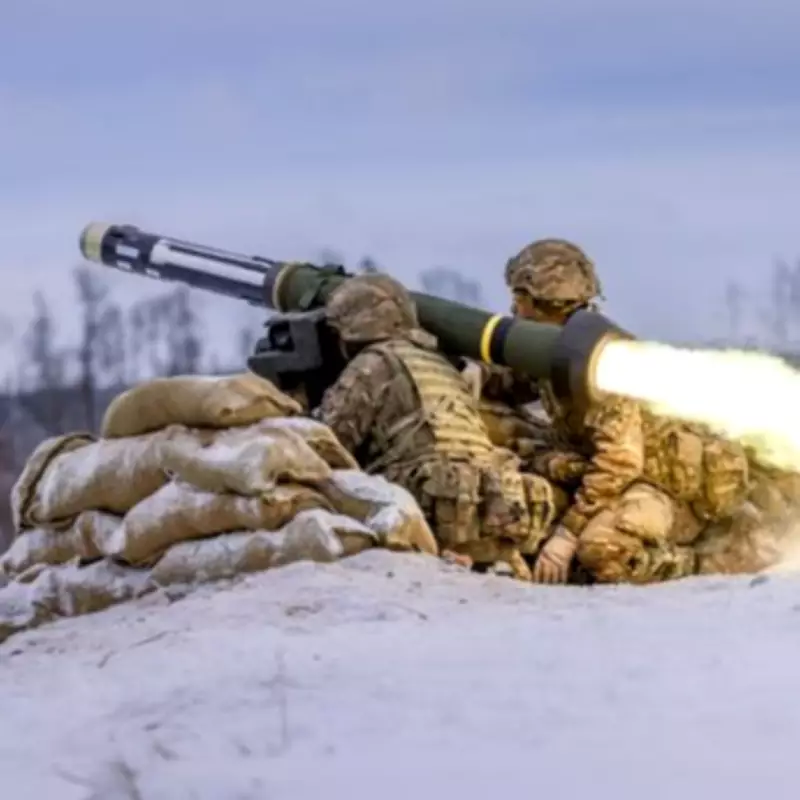
Brits Refusing Conscription Could Face Humiliating Alternatives in WW3 Scenario
As the United States and Israel launch coordinated attacks against Iran, with the Islamic Republic retaliating, fears of a third world war are intensifying. The conflict has already spilled over into neighbouring regions, with explosions reported in the UAE, Bahrain, and Qatar, prompting airspace closures and urgent safety advisories from the UK Foreign Office.
Geopolitical Tensions Reach Boiling Point
US President Donald Trump has dubbed the military campaign "Operation Epic Fury", citing Iran's nuclear programme and designation as a state sponsor of terrorism as primary motivations. Israeli Prime Minister Benjamin Netanyahu has long characterised Iran as an existential threat to his nation. Despite diplomatic negotiations showing significant progress according to Omani mediators, the situation has deteriorated rapidly.
Saudi Arabia has condemned Iranian attacks, while regional flights are being rerouted to avoid conflict zones. The British government has advised citizens in certain Middle Eastern areas to immediately shelter in place as tensions escalate unpredictably.

WW3 Fears and UK Military Preparedness
Ukrainian President Volodymyr Zelensky marked the fourth anniversary of conflict with Russia by declaring that "Putin has already started World War 3". This perspective finds support from UK Strategic Defence Review advisor Fiona Hill, who asserts that a third global conflict has commenced in forms not yet widely recognised by the public.
The British Armed Forces currently stand at their smallest size in two centuries, with approximately 70,000 professional personnel. This has sparked discussions about potential conscription implementation, particularly as nine NATO countries already enforce compulsory military service, while Germany and France have introduced voluntary service models.
Historical Precedents of Conscription Resistance
Dr Marco Giani from King's College London explains that "as WWI was approaching, some European countries used the death penalty against draft resistance". While modern punishments have evolved, refusal still represents significant concerns regarding national unity and equality principles.
During the First World War, conscientious objectors faced the notorious White Feather Campaign, where women publicly shamed non-uniformed men by presenting them with white feathers symbolising cowardice. More severe consequences included:
- Harsh imprisonment conditions with hard labour
- Extended periods of solitary confinement
- Initial death sentences later commuted
Professor Vincenzo Bove notes that "the consequences of refusing conscription vary substantially across countries and historical periods", with contemporary Russia imposing fines, criminal records, or imprisonment for refusal.
Evolving Attitudes and Practical Considerations
By the Second World War, social attitudes toward conscientious objectors had shifted significantly. Dr Linsey Robb from Northumbria University explains that civilian tribunals replaced military ones, creating fairer assessment processes. More fundamentally, practical manpower considerations drove policy changes.
"Punishments were labour-intensive", Dr Robb elaborates. "To work with conscientious objectors, when most were willing to contribute to war efforts, represented a more sensible use of state resources and available manpower." This pragmatic approach recognised Britain's critical balance between civilian and military labour requirements.
Current Public Sentiment and Future Prospects
Recent polling reveals concerning attitudes toward military service among British youth:
- Only 11% express willingness and enthusiasm to fight for the UK
- 41% declare they would refuse under any circumstances
- 38% indicate they might fight if they agreed with war motivations
Dr Giani suggests these attitudes could shift dramatically with changing geopolitical circumstances, but maintains that "Britain is not bringing back the draft anytime soon". He cites geographical factors, noting Britain's island status has historically reduced land-invasion threats requiring mass armies.

Instead, experts anticipate potential voluntary military schemes allowing young people to sample army life without compulsory service. Such programmes could address recruitment challenges while familiarising citizens with military structures, avoiding the controversies of enforced conscription.
As British Armed Forces Minister Al Carns observes eerie similarities between current geopolitics and pre-Second World War conditions, the nation faces complex questions about military preparedness, civic duty, and individual liberty in an increasingly volatile global landscape.