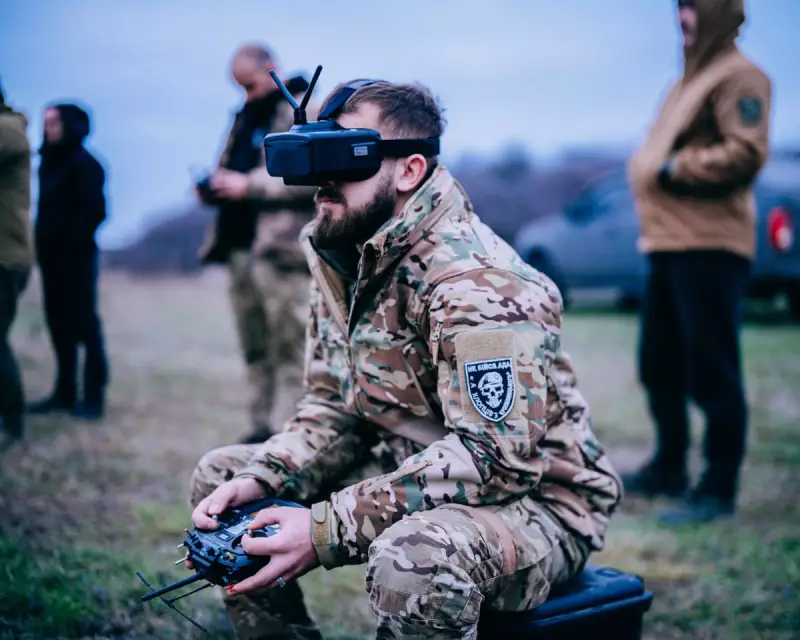
In the flat, unforgiving farmlands east of Zaporizhzhia, where Russia has made its most significant recent gains, Ukrainian drone crews are engaged in a relentless and exhausting battle to stabilise the front line. From within bunkers and frontline positions, pilots of specialist units like the 423rd unmanned systems battalion are conducting thousands of daily missions, becoming a critical, yet increasingly strained, component of Ukraine's defence.
The Vulnerable Front: A Battle of Terrain and Technology
The sector running roughly from Pokrovske to Huliaipole, some 50 miles east of Zaporizhzhia city, presents a unique challenge. Unlike the more defensible terrain of Donetsk, this is open, agricultural land dotted with destroyed villages. Captain Kostya, a commander with the 423rd, notes the strategic difficulty: "There are a lot of fields and if we lose a height advantage, we have to retreat for kilometres."
This vulnerability was exploited in November, when an opportunistic Russian attack east of Huliaipole overwhelmed the war-weary 102nd territorial defence brigade. Approximately six miles of territory was lost before the situation was stabilised by the redeployment of the 225th assault regiment. Military analyst Serhii Kuzan links this setback to Ukraine's intense defence efforts further east, which exhausted reserves.

From a command bunker lined with logs, operators like Dmytro, 33, monitor a dozen live feeds on the Delta battlefield system. The grainy images from one-way FPV (First Person View) drones mix with clearer footage from commercial Mavics, painting a real-time picture of a fluid and deadly battlefield.
The Drone War: Relentless Pressure and Stark Statistics
The Ukrainian response hinges on its drone units, which have evolved into a formidable force. The 423rd battalion, formed only in 2024, reported destroying an estimated 418 Russian soldiers in November alone. Nationally, drones are now responsible for an estimated 60% of Russian casualties, according to Ukraine's commander-in-chief, Oleksandr Syrskyi, with pilots flying up to 10,000 combat missions daily.
Pilots like Maksym, 29, and Serhii, 24, operate in mixed crews, launching FPV and Mavic drones with battery lives of around 20 minutes. Strikes can reach targets up to 9 miles away, or even 18 miles using a 'mother drone' as a relay. Their work is ceaseless. "You can always have enough [time] to sleep 15 minutes and you are OK," Maksym claims. A "regular, normal good day" might involve killing seven Russian soldiers and wounding three more.
However, Russian tactics adapt. They exploit autumn fog to mask infantry movements, pairing them with devastating 250kg glide-bomb strikes launched from jets operating safely behind Russian lines. Ukrainian electronic countermeasures can divert these bombs about 70% of the time, but defenders may have only four minutes' warning.
The Human Cost: Fatigue and an Uncertain Future
Despite their effectiveness, the strain on Ukraine's drone warriors is palpable. Battalion commander Vitaliy Hersak states his unit is "destroying one and a half battalions of the enemy a month." Yet, he voices a profound concern: Russia appears to have "infinite numbers" while Ukraine is "basically out of infantry," making holding the line ever harder.
Farther east, experienced pilots with the Da Vinci Wolves battalion question their endurance. One estimates he could maintain the intense pace of operations for only another six months. The war, however, shows little sign of abating.
The pipeline of new recruits continues, driven by a sense of duty. Sasha, 23, whose call sign is 'Lego', is a former 3D artist now learning to fly FPV drones. He told his father of his decision to enlist only as he was leaving, to avoid a long family debate. "There was a moment when I realised: I can't sit and do nothing and just live," he explains. For him, and for Ukraine on this vulnerable front, the immediate goal is starkly simple: "the first thing is just survive."