Germany's New Military Recruitment Strategy
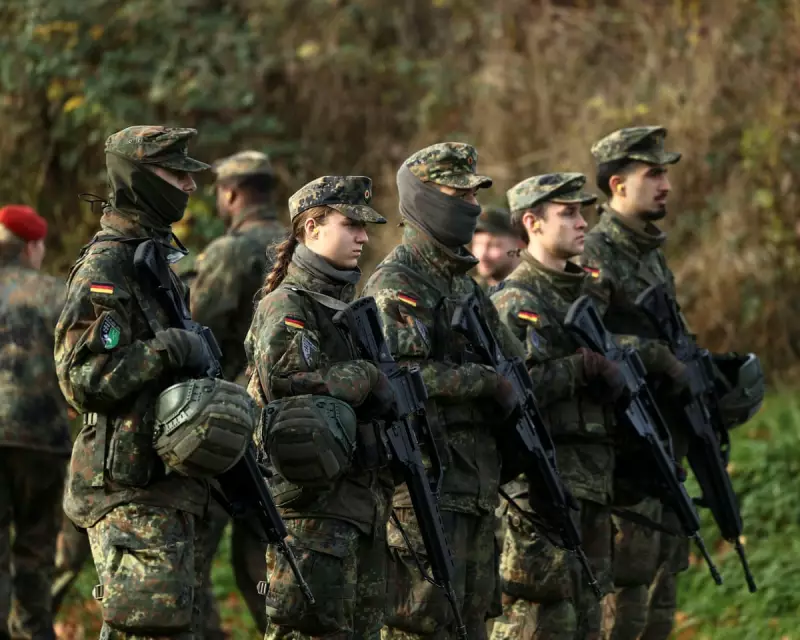
The German government has reached a crucial decision regarding the future of its armed forces, choosing to implement a voluntary recruitment system rather than reintroducing compulsory military service. This resolution follows extensive debate about how best to address the nation's depleted military capabilities in the face of growing international threats.
A Voluntary Approach with a Compulsory Backstop
Under the new plan, which is expected to become law by the start of 2026, all 18-year-old men born in 2008 will be required to register for potential service. This process will involve medical screening and completing a questionnaire where they can indicate their interest in joining. While women are encouraged to volunteer, they will not be subject to this mandatory registration.
The government is implementing significant incentives to make voluntary service more appealing. These include free driving licences, which typically cost thousands of euros in Germany, and a substantial increase in entry-level pre-tax pay to €2,600 per month.

Jens Spahn, parliamentary leader of Chancellor Friedrich Merz's Christian Democrats (CDU), emphasised that the goal is to "win over as many young people as possible for service to the fatherland." However, he acknowledged that if voluntary recruitment fails to produce sufficient numbers, the government would consider making service obligatory, though this would require new legislation and a separate parliamentary vote.
Rebuilding Europe's Conventional Forces
This recruitment overhaul comes as Germany faces the enormous challenge of expanding its military amid security concerns primarily driven by Russia's growing threat. Security officials have warned that Russia could be positioned to launch a full-scale attack on Germany and Europe within just a few years.
Germany currently maintains approximately 180,000 uniformed troops, but Defence Minister Boris Pistorius has stated ambitions to increase this number to 270,000, plus an additional 200,000 reservists by 2029. Pistorius has declared that Germany must become 'kriegstüchtig' or 'war-ready' by this deadline.
The urgency of military reform has been accelerated by pressure from the United States for Germany to assume greater defence responsibilities, coupled with uncertainties about Washington's long-term commitment to European security. Chancellor Merz pledged upon taking office to transform the Bundeswehr into "Europe's strongest conventional army."
From Cold War Conscription to Modern Defence
Germany maintained a military conscription programme from 1956 until its suspension in 2011 under Angela Merkel's government. At that time, the focus shifted toward creating a professional army suited for foreign missions rather than maintaining conscripts for potential warfare. Lawmakers preserved the legal basis for conscription by suspending rather than abolishing it, avoiding constitutional changes.
The recent agreement, reached after months of heated debate between the CDU and its junior coalition partner, the Social Democrats, represents a compromise aimed at rebuilding military capacity while maintaining public support.
Defence Minister Pistorius, who spearheaded the military revamp, expressed confidence that the voluntary model would prove successful, citing examples from other countries, particularly in northern Europe. He characterised compulsory service as a "last resort" and emphasised that creating an attractive service should boost confidence in Germany's defensive capabilities rather than provoke fear.
"There are no reasons to worry or be afraid," Pistorius stated. "The lesson is quite clear: the more capable and defensible our armed forces are, through weaponry, training, and personnel, the lower the likelihood that we will ever become a party to a conflict."

The military reforms follow substantial financial commitments to defence, including parliament's vote to raise billions of euros ahead of the Merz government taking power in May, and former Chancellor Olaf Scholz's decision after Russia's 2022 invasion of Ukraine to allocate €100 billion in military funding to refurbish Germany's ill-equipped armed forces.