Japan's government has moved swiftly to reaffirm its long-standing policy against nuclear armament, after reports emerged that a senior security official had suggested the country should acquire such weapons for deterrence.
Official's Remarks Prompt Swift Clarification
Local media, including the public broadcaster NHK, reported that an unnamed official from Prime Minister Sanae Takaichi's office had advocated for Japan to pursue nuclear weapons, citing a deteriorating security environment in the region. The official reportedly acknowledged the significant political obstacles such a radical shift would face.
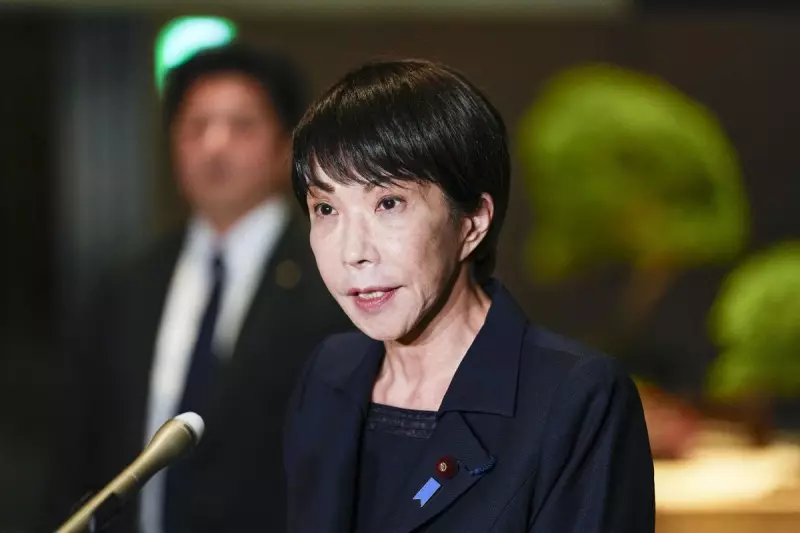
In response, Chief Cabinet Secretary Minoru Kihara confirmed during a press briefing in Tokyo on Friday, 19 December 2025, that Japan's nuclear policy remains unchanged. He stated the country's commitment to its three non-nuclear principles, which forbid the possession, production, and introduction of nuclear arms onto Japanese soil. However, Kihara declined to comment directly on the official's specific remarks or on whether the individual would remain in their government position.

Growing Debate Over Japan's Security Posture
This incident is not an isolated one. A Reuters investigation published in August revealed a growing appetite among some political circles and the public to reconsider the nation's foundational non-nuclear stance. This shift in sentiment is driven by dual concerns: the reliability of United States security guarantees under a potential second Trump presidency, and escalating threats from nuclear-armed neighbours China, Russia, and North Korea.
Japan hosts the largest overseas concentration of US military forces globally and has relied on its security alliance with Washington for decades. Some lawmakers within Prime Minister Takaichi's ruling Liberal Democratic Party have even suggested that the US should be permitted to bring nuclear weapons into Japan on submarines or other platforms to bolster deterrence.
Prime Minister Takaichi herself fuelled debate last month by declining to say whether her administration would alter the three principles when formulating a new defence strategy next year.
A Sensitive National and Regional Issue
Professor Stephen Nagy from the International Christian University in Tokyo noted that such "trial balloons" help build consensus for potential changes in security policy. He added that Beijing's assertiveness and growing missile cooperation between Moscow and Pyongyang are creating momentum for Japan to rethink its security approach.
Discussions on nuclear weapons are profoundly sensitive in Japan, the only country to have suffered atomic bombings. Any move towards acquiring or hosting them risks destabilising relations with neighbouring countries, particularly China. Ties with Beijing recently worsened after Takaichi stated that a Chinese attack on Taiwan which also threatened Japan could constitute a "survival-threatening situation," potentially triggering a Japanese military response.
The episode highlights the intense and ongoing internal debate within Japan as it navigates an increasingly volatile geopolitical landscape, balancing its pacifist constitution and historical trauma against modern security imperatives.