French President Emmanuel Macron has issued a stark warning that Russia would inevitably return to threaten European security if Ukraine is forced to accept military limitations under a proposed peace plan being advanced by Donald Trump.
European Leaders Push Back Against US Proposal
Speaking at the G20 summit in South Africa on Saturday, Macron joined other European leaders in expressing serious concerns about the one-sided nature of the American proposal. The French president emphasised that any credible peace agreement must include robust deterrence measures to prevent future Russian aggression.
"We know that if there are no elements of deterrence, the Russians will come back and break their promises," Macron told journalists gathered at the international gathering. He stressed that any workable plan "requires broader consultation" and must deliver both peace for Ukrainians and "security for all Europeans."

Trump's Controversial Peace Framework
Meanwhile, Donald Trump indicated outside the White House that the current US proposal does not represent his final position. "One way or the other, we have to get it ended," the US president stated, acknowledging the urgency of resolving the conflict that has now entered its 1,369th day.
The controversial plan, according to a draft seen by Reuters, would require Ukraine to make significant concessions including ceding occupied territory, accepting limits on its military capabilities, and renouncing its ambition to join NATO. While containing some elements that might prove objectionable to Moscow, such as requiring Russian forces to withdraw from certain captured areas, the proposal has drawn sharp criticism from US senators who described it as essentially a "wish list" for Russia.
Secretary of State Marco Rubio later countered these claims, insisting the framework was authored by Washington as "a strong framework for ongoing negotiations."
Military Developments and Diplomatic Manoeuvres
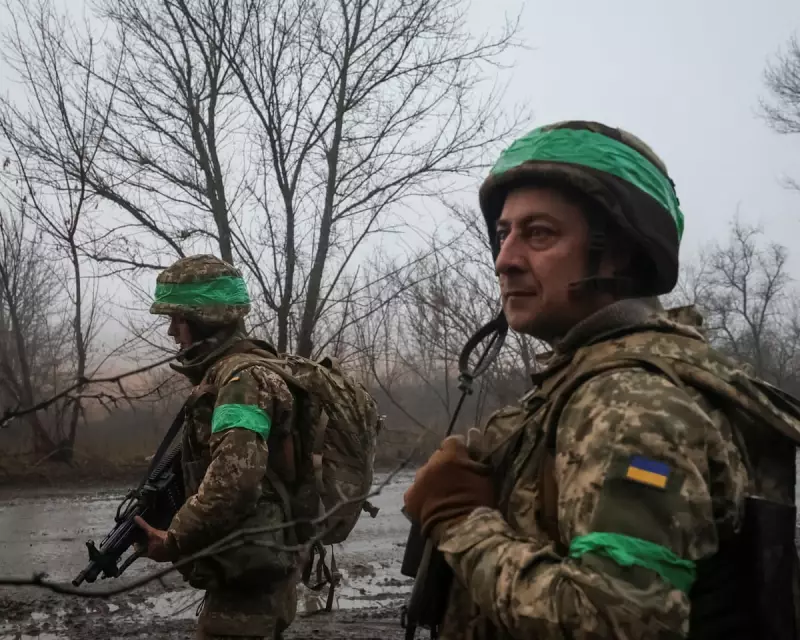
On the ground in Ukraine, military officials reported that Russian forces attempted to advance toward the central part of Pokrovsk in the Donetsk region under cover of fog. Ukrainian forces successfully repelled these attacks, with the enemy "being eliminated in the urban area" according to a statement from Ukraine's general staff on Telegram.
The diplomatic front remains equally active, with US officials reportedly pressuring Volodymyr Zelenskyy to accept a peace deal in the coming days. US Army Secretary Dan Driscoll briefed NATO ambassadors in Kyiv on Friday, warning that Ukraine could face a much worse agreement if it delays. "No deal is perfect, but it must be done sooner rather than later," Driscoll told the assembled diplomats.
President Zelenskyy responded by emphasising that any "dignified" peace must be founded on "guaranteed security and justice." He announced the formation of a Ukrainian negotiating team led by his chief of staff, Andriy Yermak, which will soon meet American counterparts in Geneva.
European leaders continue to assert their role in the peace process, with German Chancellor Friedrich Merz stressing that Europe must be involved in any resolution. "If Ukraine loses this war and possibly collapses, it will have an impact on European politics as a whole, on the entire European continent," Merz explained following a phone call with Trump.
The unified stance of eight Nordic and Baltic nations further reinforced European support for Kyiv, with Denmark, Estonia, Finland, Iceland, Latvia, Lithuania, Norway and Sweden issuing a joint statement affirming that "Russia has so far not committed to a ceasefire or any steps leading to peace."
As diplomatic efforts intensify, the human cost of the conflict continues to mount. Russia's defence ministry claimed capture of two more villages in eastern Ukraine, while a Ukrainian drone attack on energy facilities in Russia's Samara region resulted in two fatalities in the city of Syzran.