British Defence Industry Faces EU Sourcing Mandate Under Proposed £130 Billion SAFE Scheme
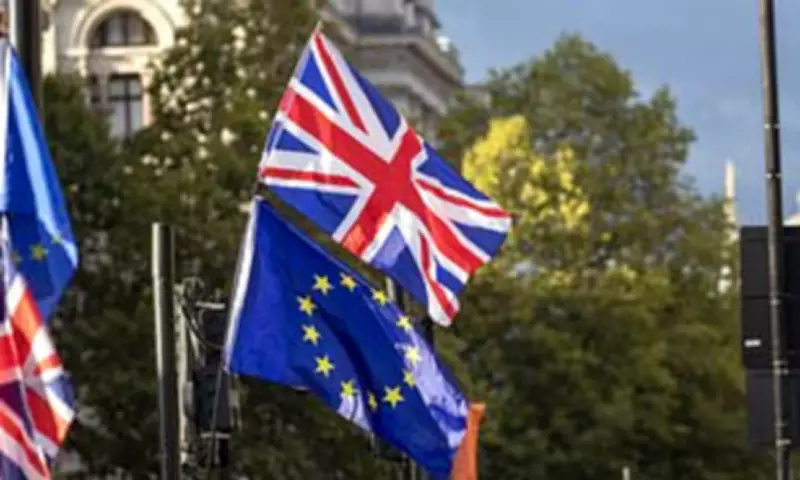
British defence firms will be mandated to source critical technology and essential components from European suppliers if Sir Keir Starmer commits the United Kingdom to a colossal £130 billion European Union defence fund, an exclusive investigation by The Mail on Sunday has uncovered. This contentious stipulation, discreetly inserted into the fine print during a closed-door meeting in Brussels last week, has been instantly denounced as the latest manoeuvre to impose European Union regulations on a post-Brexit Britain.
National Security Alarms Sound Over 'Utterly Deadly' Conditions
One prominent defence expert has issued a stark warning, labelling the conditions attached to the fund as 'utterly deadly for our national security'. This grave assessment stems from acute fears that participation could effectively block the United Kingdom from accessing cutting-edge American defence technology, thereby compromising strategic autonomy and military capability.
In addition to the sourcing requirements, Eurocrats have imposed a substantial £2 billion entry fee for UK accession to the Security Action For Europe (SAFE) scheme. The British government has, thus far, resisted this figure. The SAFE fund is designed to provide low-interest loans to European companies requiring 'urgent and large-scale' enhancements to military capabilities, including ammunition, drones, and missile systems.

Post-Ukraine and NATO Fears Drive EU Fund Creation
This initiative was established in direct response to Russia's full-scale invasion of Ukraine and growing apprehensions that a potential second Trump administration might diminish America's commitment to the NATO alliance. However, the accompanying 'non-divergence agreement', intended to reduce 'foreign dependency', has ignited significant concerns about Britain ceding sovereign control over vital defence decisions to Brussels.
French Defence Minister Catherine Vautrin acknowledged that the terms for UK participation in SAFE are 'very onerous'. She remarked that Britain 'chose to leave Europe with Brexit... and unfortunately that choice has consequences', highlighting the complex post-Brexit landscape.
Expert Warns Against Siding with EU Over US Alliance
Professor Gwythian Prins, a former member of the Chief of the Defence Staff's strategy advisory panel, cautioned that aligning with the EU over the United States would be a profound strategic error. 'This is utterly deadly for our national security. As with the bizarre Chagos giveaway, we must not pay for the privilege of damaging national security,' he stated.
Professor Prins further criticised the EU's approach, suggesting it operates like the proverbial 'Hotel California': 'You can check out any time you like but you can never leave. But we can – and we must – to defend our sovereignty.' Another insider source revealed that while the technical details of the SAFE deal may cause 'people's eyes to glaze over', the 'devil is in the detail', with profound implications buried within the complex agreement.
Costly Defence Deal Linked to Wider Negotiations
Accessing the SAFE fund would constitute a component of a broader and costly new defence arrangement, initially proposed at the Prime Minister's so-called 'Surrender Summit' convened in London the previous year. During those 'reset' negotiations, the Labour Party reportedly traded away fishing rights and indicated a willingness to facilitate increased immigration from Europe through a youth mobility scheme, a move critics argued diluted commitments to reduce net migration.
Sir Keir Starmer has publicly expressed his ambition for the UK to join the SAFE scheme. During a recent visit to China, he remarked, 'I do think on spend, capability and co-operation we need to do more together. I have made the argument that it should require us to look at schemes like Safe and others.'

Months of Wrangling Over Financial Terms Yield No Agreement
Despite this stated intent, officials from the UK and EU have been engaged in protracted negotiations for months regarding the financial contributions required for British membership, with no final agreement reached. Last week, Brexit Minister Nick Thomas-Symonds informed MPs, 'On participation in Safe… I always said throughout the negotiation that I would only sign up to things that involved value for money. I did not take the view that in this case, it did offer value for money.'
When previous discussions over the UK's financial contribution collapsed in November, the European Commission – the ultimate guarantor for any SAFE loans – indicated that negotiations could be revisited at a future date. A defence pact agreed with the EU in May of last year did create a pathway for UK-based defence companies to act as suppliers to European projects funded by the scheme. However, their involvement is strictly capped, limited to contributing a maximum of 35 per cent of the total value of any finished product, further underscoring the constraints of the proposed arrangement.