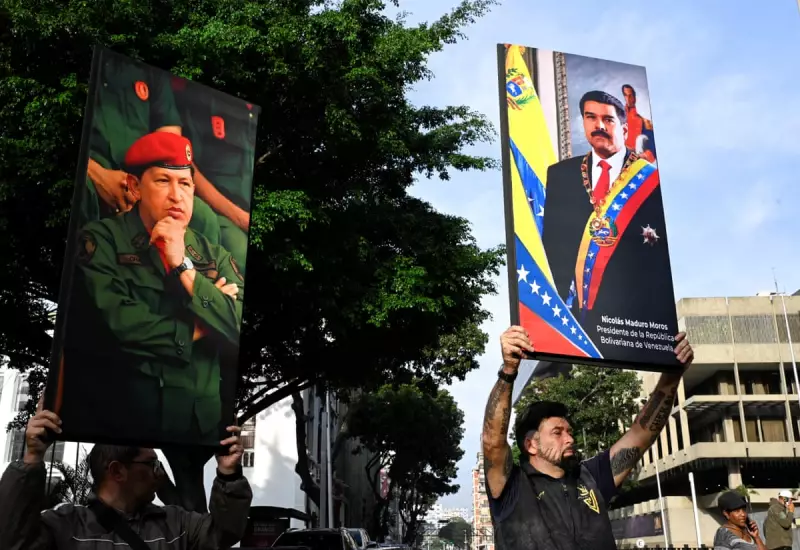
In a dramatic escalation of US policy towards Venezuela, American military forces successfully captured the country's president, Nicolás Maduro, during an operation in the capital Caracas on Saturday, 3 January 2026. The raid, which targeted multiple sites including military facilities in Caracas, La Guaira, Aragua, and Miranda, has ignited a fierce political debate in Washington over the mission's legality and its potential consequences.
Republicans Hail Enforcement of US Indictment
The Trump administration swiftly justified the action as the enforcement of a longstanding US indictment. US Attorney General Pam Bondi stated on social media platform X that Maduro and his wife, Cilia Flores, face charges in the Southern District of New York including narco-terrorism conspiracy and cocaine importation conspiracy. Bondi praised President Trump for "having the courage to demand accountability" and thanked the military for the "highly successful mission."
Secretary of State Marco Rubio reinforced this stance, declaring that "Maduro is NOT the President of Venezuela" and labelling his government a narco-terror organisation, the Cartel de Los Soles. However, many regional specialists express scepticism about applying the "narco-terror" label to Venezuela's distinct political-criminal landscape, which differs significantly from Mexican cartel structures.

Vice President JD Vance framed the capture as the inevitable result of Maduro ignoring warnings, stating, "The president offered multiple off ramps... Maduro is the newest person to find out that President Trump means what he says."
Democrats Decry Unauthorised 'Regime Change'
The reaction from Democratic politicians was one of sharp condemnation, accusing the administration of misleading Congress and recklessly endangering American security. New Jersey Senator Andy Kim accused officials of lying, having previously assured senators the operation was not about regime change. Kim warned the action "risks pulling our nation into another war" and violates constitutional requirements for approving armed conflict.
He further argued that targeting a head of state sends a "horrible and disturbing signal" to global powers like China and Russia, potentially justifying similar actions against US allies. The operation, he contended, would further damage America's international reputation and isolate it from crucial allies.
California Democrat Ro Khanna accused President Trump of betraying his political base by "launching a war of choice." He criticised a foreign policy establishment committed to militarism, arguing that it entangles the US in foreign conflicts while neglecting domestic issues like jobs and living costs. Khanna called for a public movement against "bloated defense budgets and warmongering."
Analysts Warn of High Risk of Instability
The strategic implications of the raid are profound. Tiziano Breda, a Latin America analyst for the conflict monitor ACLED, noted this marks the largest US military operation in Latin America since the 1989 invasion of Panama. He suggested the timing aimed to undercut the anniversary of Maduro's current term.
Breda warned that the critical factor now is the response from Venezuela's government and armed forces. While they have so far avoided direct confrontation with US troops, deployments on Caracas streets aim to contain unrest. The risk of resistance remains high, potentially from pro-regime armed groups, elements within the military, and Colombian rebel networks operating within Venezuela. A smooth political transition is considered highly unlikely, setting the stage for potential prolonged instability.
The event has left the international community watching closely, as the US administration's bold move to apprehend a sitting foreign leader on sovereign soil creates a significant and unpredictable precedent in global affairs.