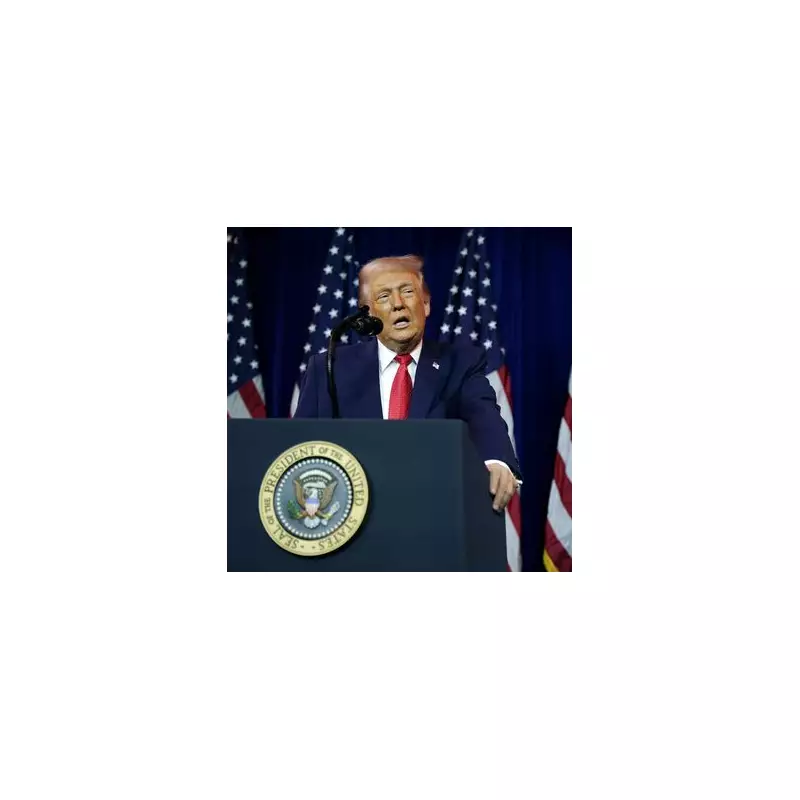
The White House has issued a startling statement confirming that President Donald Trump is actively pursuing the acquisition of Greenland and has not ruled out using American military force to achieve the goal.
A Strategic Priority in the Arctic
In a statement released on the evening of Tuesday, 6 January 2026, the administration framed the potential acquisition as a matter of urgent national security. The statement declared that "acquiring Greenland is a national security priority of the United States, and it's vital to deter our adversaries in the Arctic region." Officials confirmed that the president and his team are currently "discussing a range of options" to meet this foreign policy objective.
Most provocatively, the statement explicitly noted that "utilising the US military is always an option at the commander-in-chief's disposal." This bold declaration signals an unprecedented approach to territorial expansion in the modern era.

Context of Recent Military Action
This development follows closely on the heels of another dramatic military intervention authorised by President Trump. Just days prior, US commandos from the elite Delta Force unit seized Venezuelan President Nicolás Maduro and his wife from their home as they slept. Following that operation, President Trump stated that the United States intended to "run" Venezuela for the foreseeable future.
The back-to-back revelations concerning Venezuela and Greenland suggest a pattern of assertive, unilateral foreign policy actions centred on the direct application of US military power to achieve strategic aims. The Greenland statement, reported by outlets including Sky News, raises profound questions about international law and sovereignty.
Implications and Global Reaction
The explicit mention of a military option for Greenland is likely to send shockwaves through diplomatic circles, particularly in NATO allies and nations with interests in the Arctic. Denmark, which has sovereignty over Greenland, has previously and firmly rejected the idea of selling the autonomous territory when it was floated by the Trump administration in 2019.
The statement of 6 January 2026 represents a significant escalation, moving from a commercial proposition to a matter of potential military contingency. It places the vast, mineral-rich island of Greenland at the centre of a new and volatile geopolitical flashpoint, with the United States appearing willing to use extraordinary measures to secure its position against rivals like Russia and China in the rapidly changing Arctic.
Analysts will be watching closely to see how the Danish government and the Greenlandic home rule administration respond to this latest, more threatening posture from Washington. The situation remains fluid and is developing rapidly.