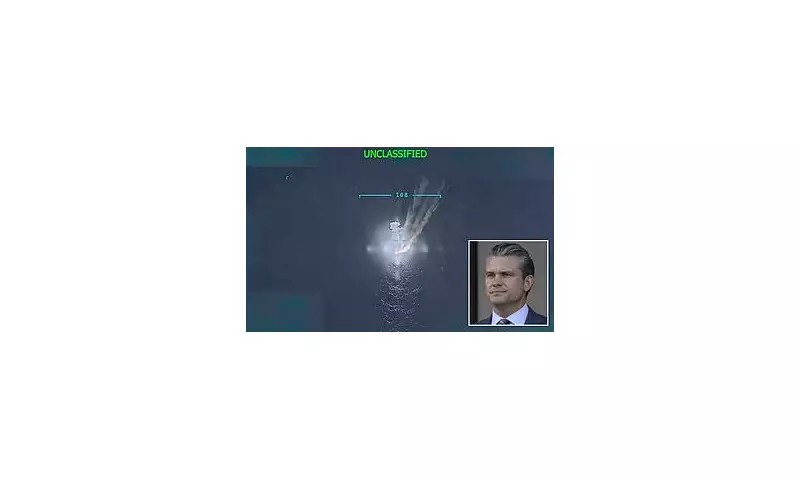
Fresh allegations have emerged surrounding a controversial US military operation in the Caribbean, suggesting survivors of an initial strike were seen waving before a fatal second attack was ordered. The incident, which occurred on September 2, is now under intense scrutiny, with legal experts and lawmakers questioning whether it constitutes a war crime.
Controversial Footage and Conflicting Interpretations
According to a report first published by The New York Times on Friday, at least two individuals aboard a vessel allegedly carrying drug traffickers were discovered to be alive following an initial strike. Footage reviewed by officials reportedly shows these survivors waving after the first attack. The interpretation of these gestures, however, is disputed.
Some observers believe the waving was a desperate attempt to signal the US aircraft above for a rescue, though it remains unclear if the survivors had spotted the plane. Others have suggested the signals may have been intended to summon help from other alleged drug traffickers in the area. Following this, a second, fatal strike was authorised, sinking the boat.

Congressional Scrutiny and the 'Fog of War' Defence
The attack was part of a two-month campaign in the Caribbean initiated by the Trump administration, which has seen strikes on more than 20 boats and resulted in over 85 fatalities. Admiral Frank Bradley, who executed the strike orders, testified before Congress behind closed doors on Thursday. He presented lawmakers with clearer footage of the incident.
Facing growing allegations, Secretary of War Pete Hegseth defended the decision, attributing it to the 'fog of war'. He stated that Admiral Bradley made the 'correct decision to ultimately sink the boat and eliminate the threat,' and affirmed that the administration had his back. When questioned, Hegseth claimed he had not personally seen any survivors, remarking, 'The thing was on fire.'
Political Fallout and Demands for Accountability
Lawmakers from both major parties are demanding answers. Senate Democratic leader Chuck Schumer labelled the events 'an incredibly serious matter' that could expose US troops to legal consequences. He criticised the lack of transparency, stating, 'the American public and the Congress are still not hearing basic facts.'
Senator Roger Wicker, who leads the Senate Armed Services Committee, promised an investigation 'done by the numbers' to 'find out the ground truth.' Meanwhile, President Trump stated he 'didn't know about the second strike' and was not involved, relying instead on Hegseth's counsel. He praised the commander involved as an 'extraordinary person.'
Some Republican senators have rallied in defence of the campaign. Senator Tom Cotton asserted the strikes were 'entirely lawful and needful,' clarifying that Bradley was given a detailed written order and was not instructed to 'kill them all.' Admiral Bradley confirmed to lawmakers that Hegseth issued no such order. As the investigation continues, the debate over the rules of engagement and accountability in modern conflict intensifies.