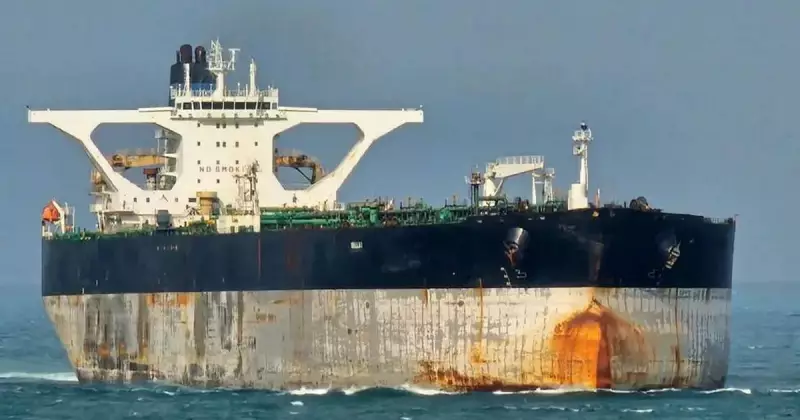
In a dramatic high-seas operation, American special forces have captured a Russian-flagged oil tanker with ties to Venezuela, launching their mission from a tiny airport in the far north of Scotland.
Remote Scottish Airport Becomes Mission Launchpad
The covert operation saw US military aircraft, including U-28A intelligence planes, touch down at Wick John O'Groats airport in Caithness earlier today. Aviation trackers recorded the movements, with aircraft subsequently heading north towards Iceland and the target vessel.
The Ministry of Defence confirmed that British forces provided crucial support to the American mission. This included RAF surveillance capabilities and the RFA Tideforce support vessel, underscoring the close defence cooperation between the UK and US.

The Chase and Capture of the Marinera
The target was the M/V Marinera, a deteriorating ship previously known as the Bella-1. US European Command stated the vessel was seized in the North Atlantic pursuant to a warrant issued by a US federal court for violations of American sanctions.
The tanker had allegedly slipped through what was described as a "total naval blockade" of Venezuela enforced by the Trump administration, which recently oversaw the overthrow and arrest of then-president Nicolas Maduro. The ship was captured in international waters after being tracked for days by the US Coast Guard cutter Munro.
Russia had deployed a submarine and naval ships in a bid to protect the Marinera, which was reportedly empty and not carrying oil. However, this effort failed when American forces successfully boarded the vessel.
International Fallout and Reactions
Russia's Foreign Ministry issued a strong protest, claiming their vessel was under "increased and clearly disproportionate attention" from US and NATO forces. They insisted the Marinera was navigating legally in international waters under the Russian flag and was approximately 4,000 kilometres from the American coast.
The operation highlights the escalating tensions in maritime enforcement of sanctions. The use of Wick John O'Groats airport, owned by Highlands and Islands Airports Limited, demonstrates how remote UK infrastructure can play a pivotal role in global security operations. The mission involved a coordinated air presence, with P8 Poseidon anti-submarine aircraft and KC-135 aerial refuelling planes also spotted heading towards the tanker's vicinity.