In a move that has sent shockwaves across the globe, former US President Donald Trump has declared that the United States will administer Venezuela following an extraordinary military operation that captured the country's leader, Nicolás Maduro.
Operation and Immediate Aftermath
The dramatic events unfolded in the early hours of Saturday 3 January 2026. American forces, reportedly the elite Delta Force, seized President Maduro from a military base. The operation involved explosions across Venezuela and low-flying aircraft over the capital, Caracas. The Venezuelan government condemned the action as an "imperialist attack" on civilian and military sites.
By Saturday night, Nicolás Maduro and his wife, Cilia Flores, were aboard a US warship en route to New York to face criminal charges. Trump publicly shared a photo appearing to show the 63-year-old leader in US custody.

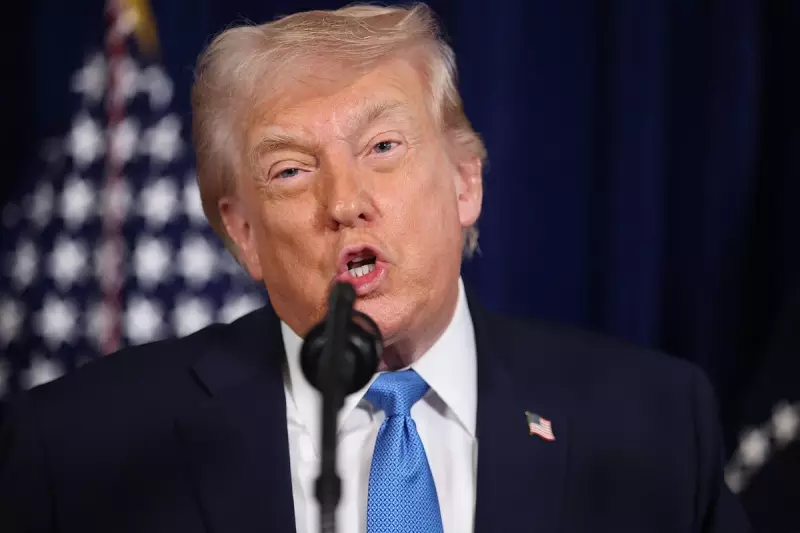
At a press conference at Mar-a-Lago, Trump stated, "We're going to run the country until such time as we can do a safe, proper and judicious transition." He warned the US was prepared to launch a second, larger wave of attacks "if we need to do so" and framed the raid as a warning to those threatening American sovereignty.
Political Fallout and International Reaction
The legal basis for the attack remains unclear, sparking immediate controversy. Trump indicated the US would seize control of Venezuela's vast oil infrastructure, suggesting American oil companies would invest billions to repair it. He appeared to endorse Maduro's deputy, Delcy Rodriguez, as an interim leader, sidelining recognised opposition figures like María Corina Machado and the 2024 US-recognised 'president-elect', Edmundo González Urrutia.
Venezuelan analysts expressed deep concern. María Corina Roldán Robles questioned the legal framework of US leadership, fearing a continuation of Chavismo under a different figure. Ana María Diez of the Coalition for Venezuela warned that the country's oil resources belong to its people, not outsiders.
Internationally, the raid drew swift condemnation from Venezuela's allies Russia, Cuba, and Iran, who called it a violation of sovereignty. Brazil's President Lula da Silva said it crossed "an unacceptable line," while Mexico also denounced the intervention. Conversely, Argentina's Javier Milei celebrated with his signature phrase: "Long live freedom, dammit!"
In the UK, Sir Keir Starmer stated Britain played no role but "sheds no tears" over Maduro's end, pledging to discuss the situation with US counterparts.
Unrest and Broader Context
Inside Venezuela, the situation was volatile. Citizens reported armed groups patrolling streets, and long queues formed at petrol stations as people feared being stranded. One resident said, "We never imagined this could happen... Now we have to see what happens."
The strike culminated a months-long pressure campaign by the Trump administration, including a military build-up off South America and strikes on boats suspected of drug trafficking. The US Justice Department released a new indictment accusing Maduro and Flores of narco-terrorism conspiracy. US Attorney General Pam Bondi vowed they would face "the full wrath of American justice."
As of Friday 2 January, the Trump administration reported 35 boat strikes resulting in at least 115 deaths, justifying the actions as part of an "armed conflict" with drug cartels.