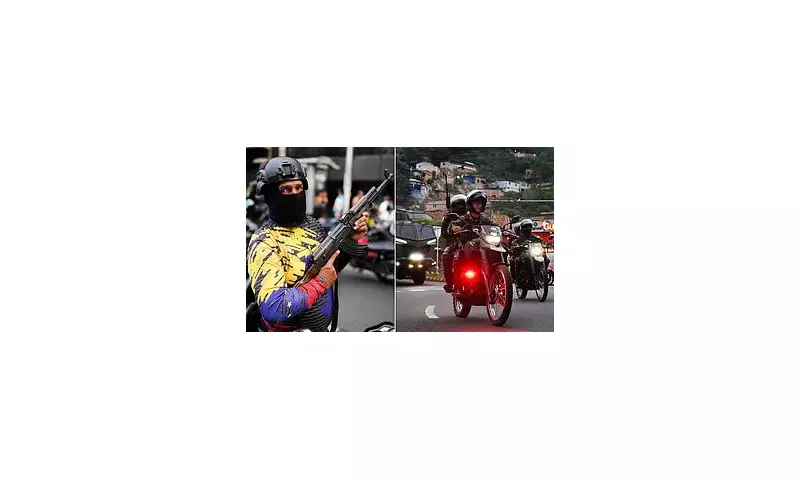
A week after the dramatic capture of Venezuelan dictator Nicolas Maduro by US special forces, the shock has not given way to liberation. Instead, a sinister paranoia has descended upon the capital, Caracas, where heavily armed militia patrol deserted streets and citizens live in fear of being 'disappeared'.
A City Gripped by Fear and Suspicion
Residents now only leave their homes out of absolute necessity, each journey risking kidnap, torture, or death in the regime's brutalist prison, El Helicoide. At makeshift checkpoints, the discovery of a single anti-government message on a phone can be a death sentence. Meanwhile, members of the national guard have shed their uniforms to mingle with civilians, listening for collaborators.
This insidious atmosphere extends beyond the capital. The secret police track foreign journalists to their hotels in border towns. Within the presidential Miraflores Palace, hastily installed interim leader Delcy Rodriguez invoked constitutional powers reserved for natural disasters within hours of the raid. She deployed the full force of the militarised state to hunt anyone involved in promoting the US attack.

Fragile Power and Rival Factions
Yet Rodriguez herself is suspected of betraying Maduro to secure American backing. Around her, ruthless rival factions within the Chavista regime, each controlling forces capable of unleashing chaos, weigh each other up. They are united only by a lust for power and held in check, for now, by the threat of another US Delta Force raid.
Should that threat fade, this nation—awash with an estimated six million firearms and plagued by narco gangs—risks exploding into a conflict that could spill over its porous border into Colombia, where a guerrilla war already rages. Key figures hold the balance of power:
- Diosdado Cabello: The hardline interior minister commands the feared 'Colectivos' paramilitary force of 7,000 armed men. He has taken to the streets, rifle on shoulder, railing against 'traitors'. The US has indicted him on drug charges and placed a £37 million bounty on his head.
- Vladimir Padrino López: The defence minister leads the National Bolivarian Armed Forces (123,000 active personnel) and a militia of up to 300,000 civilians. The military is deeply invested in the oil and drug trades and is sceptical of American intentions.
As Venezuelan journalist Hernán Lugo warns, "He [Cabello] can destabilise the country, start riots and ultimately make it so that nobody can rule."
An 'Unprecedented Experiment' and a Bleak Future
The US strategy, according to Secretary of State Marco Rubio, is a carefully scripted plan. America will first work with Rodriguez to stabilise Venezuela and secure its vast oil reserves before transitioning to a more democratic government, potentially involving exiled leader Maria Corina Machado.
However, Caracas-based analyst Benigno Alarcón calls this an "unprecedented experiment" born from US failures in Iraq and Afghanistan. It relies on the regime's own actors to dismantle the system that sustained them. Political consultant Edward Rodríguez summarises Washington's gamble: "Trump doesn't need an idealist; he needs someone capable of pressing a button... It is the crudest pedagogy of power."
For ordinary citizens, the initial euphoria of Maduro's capture has been replaced by sleepless anxiety and the grim realisation that their oppressors, save for Maduro himself, remain firmly in place. The question now is not if the fragile peace will break, but when. As one resident described the night of the raid, seeing their building shake and the sky turn a "war red, a blood red," the thought was clear: "It's happening. It's really happening." The surgical strike may be over, but the true challenge—preventing Venezuela from descending into a bloody civil war—has only just begun.