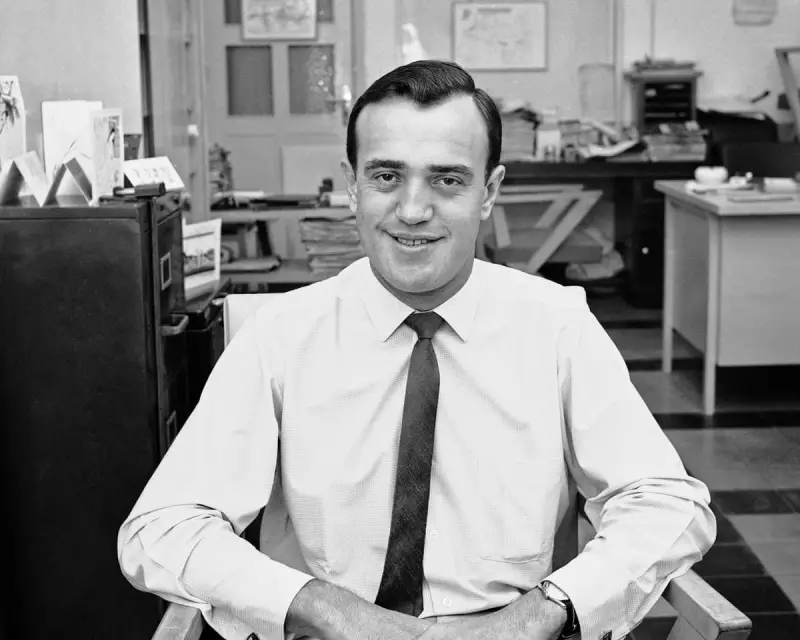
The world of journalism has lost one of its most intrepid voices with the death of Peter Arnett, the Pulitzer Prize-winning reporter whose fearless coverage defined war reporting from Vietnam to Iraq. He was 91.
A Life on the Front Lines
Arnett passed away on Wednesday in Newport Beach, California, surrounded by family and friends, his son Andrew confirmed. He had recently entered hospice care while battling prostate cancer.
Born in Riverton, New Zealand, on 13 November 1934, Arnett's journey into journalism began at his local paper, the Southland Times, after high school. His career took a pivotal turn when, en route to London, he stopped in Thailand and decided to stay. He worked for the Bangkok World and its sister paper in Laos, forging connections that led him to the Associated Press (AP).

His tenure with the AP began as its Indonesia correspondent, but he was swiftly expelled after reporting on the country's economic troubles. This early controversy was a precursor to a career marked by both acclaim and conflict.
Vietnam and the Pulitzer Prize
Arnett reported from Vietnam from 1962 until the war's end in 1975. In the AP's Saigon bureau, he worked alongside journalistic giants like bureau chief Malcolm Browne and photo editor Horst Faas. He credited Browne with teaching him survival skills that served him for decades, such as never standing near a medic or radio operator, as they were prime targets.
His commitment to being where the story was nearly cost him his life. In January 1966, he was standing next to Lieutenant Colonel George Eyster when a Viet Cong sniper's bullets tore through the map the soldier was holding and into his chest, just inches from Arnett's face.
For his courageous and insightful reporting, Arnett was awarded the 1966 Pulitzer Prize for International Reporting. As Saigon fell in 1975, he defied orders to destroy the bureau's papers, shipping them to New York instead, where they now reside in the AP's archives.
From CNN to Controversy
After leaving the AP in 1981, Arnett joined the fledgling CNN. A decade later, he became a household name worldwide during the first Gulf War in 1991. While most Western journalists fled Baghdad, Arnett stayed, delivering historic live reports via cellphone as missiles rained down on the city.
His reporting from conflict zones continued to generate headlines. He secured exclusive, though contentious, interviews with then Iraqi President Saddam Hussein and future 9/11 mastermind Osama bin Laden.
Controversy followed him. He resigned from CNN in 1999 after the network retracted a report he narrated. Later, while covering the 2003 Iraq war for NBC and National Geographic, he was fired for criticising US war strategy during an interview with Iraqi state TV, remarks denounced as anti-American back home. Undeterred, he was reporting for international broadcasters within a week.
Arnett authored a memoir, Live From the Battlefield, in 1995. After retiring in 2014, he and his wife, Nina Nguyen, settled in Fountain Valley, California. He is survived by his wife and their two children, Elsa and Andrew.