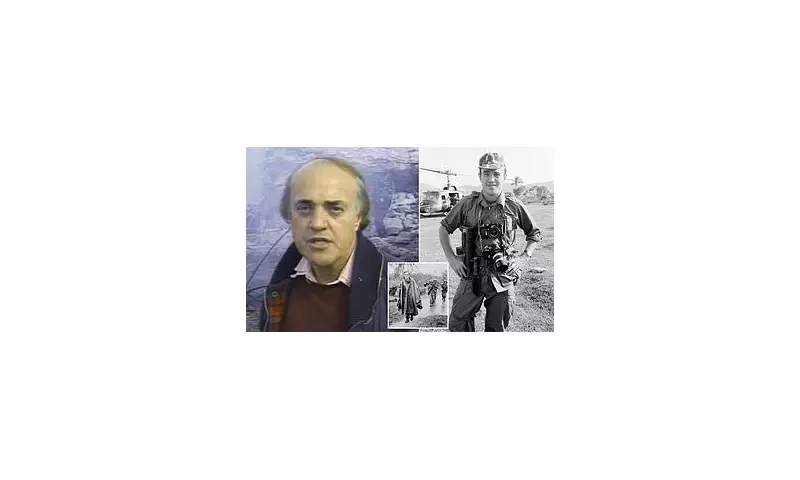
The world of journalism has lost one of its most intrepid voices with the death of Peter Arnett, the Pulitzer Prize-winning correspondent whose fearless reporting from the front lines of 17 wars defined an era. He was 91 and passed away in Newport Beach, California, after a battle with prostate cancer, his family announced on Wednesday.
A Life Defined by Conflict and Truth
Over a historic 45-year career, Arnett became an international household name, reporting from bloody conflicts across Asia, the Middle East, Europe, and Latin America. His colleague, fellow war correspondent Edith Lederer, described him as "one of the greatest war correspondents of his generation - intrepid, fearless, and a beautiful writer and storyteller." She added that his work would remain a legacy for aspiring journalists and historians.
Arnett's raw and devastating accounts of battle were honoured with the 1966 Pulitzer Prize for International Reporting for his coverage of the Vietnam War while working for The Associated Press (AP). His career, however, spanned far beyond a single conflict. He secured exclusive interviews with figures like President Saddam Hussein of Iraq – twice – and with Osama bin Laden in Afghanistan in 1997.

From Vietnam's Jungles to Baghdad's Hotel Rooms
Arnett's decade-long coverage of the Vietnam War cemented his reputation. He arrived a year after joining AP as its Indonesia correspondent and stayed long after others had left. He was the last Western reporter in Saigon in 1975, documenting the fall of the city to Communist forces, the panic at the US Embassy, and refugees desperately clinging to departing helicopters.
His reporting often challenged official narratives. While Washington spoke of victories, Arnett told of American and South Vietnamese forces being overrun. His famous 1968 report quoting a US major saying, ‘It became necessary to destroy the town to save it,’ came to symbolise the war's moral contradictions. His truth-telling drew ire from top figures, including President Lyndon B. Johnson, who sought his removal.
In 1981, he joined the fledgling CNN, where his live broadcasts from Baghdad's Al Rashid Hotel during the 1991 Persian Gulf War forged a global reputation for both himself and the network. As missiles rained down, Arnett provided a live, first-hand account via cellphone, with air-raid sirens blaring in the background, offering the world a window into the unfolding conflict.
A Legacy of Courage and Controversy
Arnett's commitment to getting the story was legendary. His first war zone assignment was covering a coup in Laos in 1960. When tanks blocked standard communications, he swam a river with his typed report, passport, and money clamped in his teeth to file the story from Thailand.
His career was not without controversy. He resigned from CNN in 1999 after the network retracted an investigative report he narrated. In 2003, while working for NBC, he was fired for criticising US military strategy during an interview with Iraqi state TV, remarks condemned as anti-American at home. Undeterred, he was reporting for other international outlets within a week.
After retiring in 2014, he settled in California with his wife, Nina Nguyen. He is survived by her and their two children. Reflecting on his remarkable life, retired AP photographer Nick Ut, a friend for half a century, said simply: "His death will leave a big hole in my life." Peter Arnett's fearless pursuit of the truth from the world's most dangerous places leaves an indelible mark on the history of journalism.