Reform UK's Scottish Leader Imposes Decade-Long Ban on Independence Referendum Talks
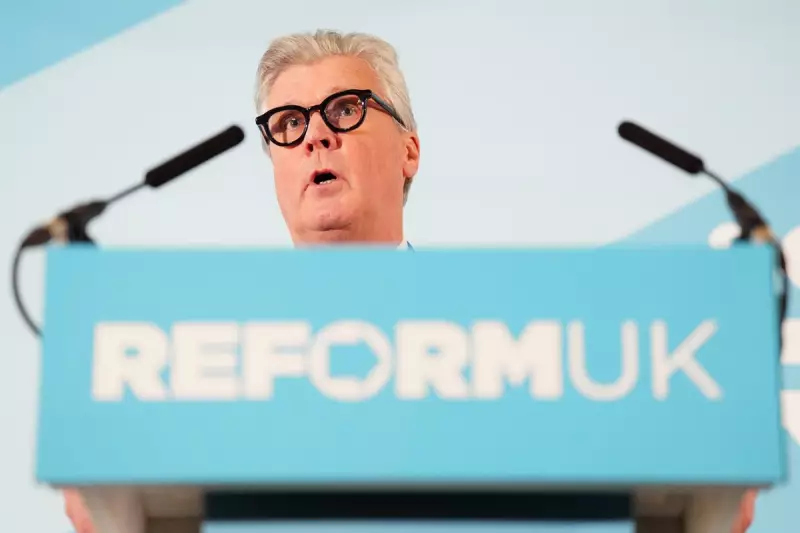
Malcolm Offord, the recently appointed Scottish leader of Reform UK, has made a definitive statement that his party will not entertain the possibility of a second Scottish independence referendum for at least ten years. Speaking at a press conference on Monday, Offord outlined a vision that prioritises economic revitalisation over constitutional debates, marking a significant shift in the political landscape as the party positions itself ahead of upcoming elections.
A Call for Unity and Economic Focus
In his address, Offord issued a direct "appeal to Scots" to "deal with the constitution later" and instead unite around a shared ambition for prosperity. He argued that both moderate Unionists, who he claims are no longer represented by the Conservative Party, and rational nationalists, disillusioned with the SNP, could find common ground. This, he believes, would foster a collective drive to transform Scotland into "the most successful and the most fair country in the world."
"My appeal to all Scots is to unite their own common vision of prosperity and justice for all now, and deal with the constitution later," Offord stated. "Reform UK is the only party in Scotland with that vision." He emphasised that a decade of focused effort is required to turbocharge Scotland's economy, which he asserts is the foundation for improving public services like healthcare, education, housing, and infrastructure.

Tax Cuts and Policy Proposals
Alongside the moratorium on independence discussions, Offord announced key fiscal policies. He pledged to re-align Scotland's tax system with the rest of the United Kingdom and implement an immediate 1p-in-the-pound cut across all income tax bands. Over the first five years of a hypothetical Reform UK government, he promised a cumulative reduction of 3p from income taxes, aiming to stimulate economic growth and individual financial relief.
Political Reactions and Context
The independence issue has remained a dominant force in Scottish politics since the 2014 referendum, where voters rejected independence by 55% to 45%. Offord's comments come just 11 days after his appointment as Reform UK's Scotland leader, signalling the party's strategy to capitalise on perceived vacuums in Unionist and nationalist representation.
In response, SNP depute leader Keith Brown launched a sharp critique, linking Reform UK to Nigel Farage's controversial views. "Nigel Farage has been candid that he wants to privatise our NHS and we know he couldn't care less about Scotland," Brown said. He contrasted this with First Minister John Swinney's focus on NHS priorities and the cost-of-living crisis, urging voters to support the SNP in the upcoming May elections for strong leadership and a push toward independence.
Offord clarified that while ruling out a referendum for the next decade, he does not dismiss the possibility entirely in the future. "That is why I say no to distraction of another referendum, or at least another 10 years, without ruling one out in the future," he concluded, framing the moratorium as a necessary pause to address pressing economic and social challenges first.