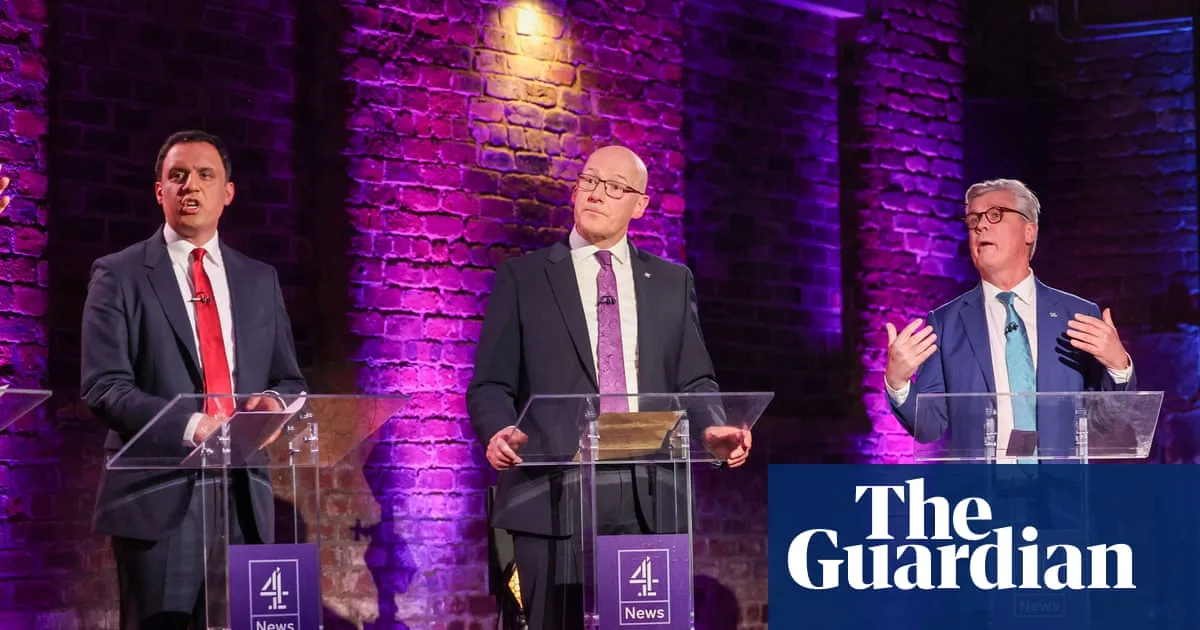
Anas Sarwar has dismissed as “a desperate lie from a desperate man” claims by Reform UK’s Scotland leader, Malcolm Offord, that he offered to do a deal with the right-wing party to keep the Scottish National Party (SNP) out of power. The allegation was made during Tuesday evening’s Channel 4 Scottish leaders’ debate, with Offord claiming Sarwar approached him at an event in December last year suggesting they “work together to remove the SNP”.
Speaking to reporters after the debate, Sarwar insisted there had been “no stitch-ups, no deals, no backroom chats, no back-channel contact with Reform”. He accused Offord of desperation from a party whose campaign had “completely flunked”. The row escalated when Reform UK candidate Thomas Kerr claimed Sarwar had made similar overtures to him months earlier, and the SNP posted the exchange on social media, alleging it was evidence of a “grubby deal”.
SNP leader and First Minister John Swinney suggested that if his party wins the Holyrood elections on 7 May but falls short of an overall majority, Scottish Labour might seek Reform UK support. Under Scottish parliament rules, a first minister must be elected by MSPs, and while the convention is to elect the leader of the largest party, Labour and the Liberal Democrats hope to collectively have enough MSPs to elect Sarwar with Conservative support. However, with Reform expected to win up to 10 seats, Offord could hold the balance of power.

Senior Labour and Liberal Democrat sources have adamantly stated they would never court Reform votes, believing Offord would abstain in such a scenario, allowing Swinney to win. During the debate, Sarwar highlighted Reform’s history of attacks on him, including racist adverts and calls to deport Muslims, which he said would include his own children. Offord countered that Sarwar had approached him in Paisley without staff, saying: “Interesting move to Reform. I always thought you was more of a unionist than a Tory, Malcolm,” and suggested they work together to remove the SNP.
Sarwar challenged the SNP’s response, saying: “For John Swinney to jump on this when he is happy to call out Reform’s lies and racism elsewhere but somehow chooses to imply we are doing a deal with them when it concerns racism directed at me, is deeply disappointing.” Reform has had a faltering start to the Holyrood campaign, with five candidates stepping down or being suspended, and Offord dismissing questions about historical offensive tweets as a “slippery slope”.