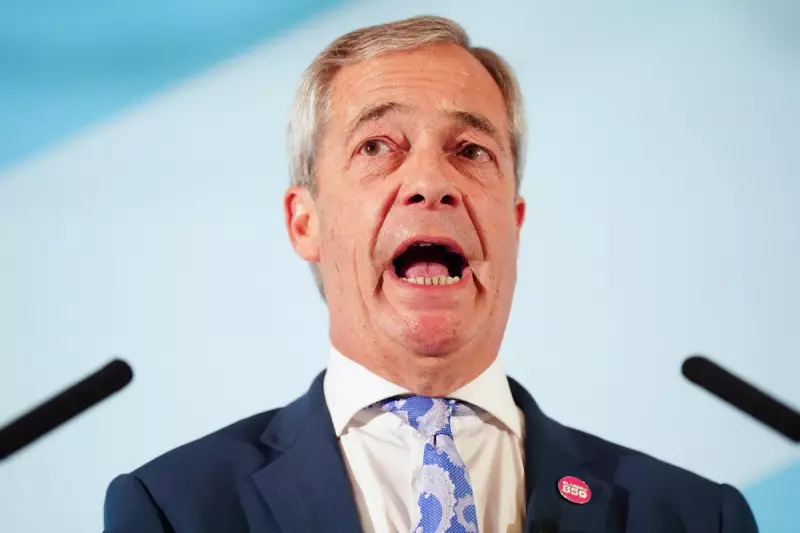
Scotland's First Minister John Swinney has delivered a dramatic warning that the Scottish Parliament's existence could be threatened if Nigel Farage becomes Prime Minister of the United Kingdom. The SNP leader has accused the Reform UK figurehead of holding Holyrood in "total contempt" and being a long-standing opponent of devolution.
Dire Warning Over Holyrood's Future
Speaking to the Press Association in Cumbernauld, Swinney issued his most explicit warning yet about what a Farage-led government might mean for Scottish self-government. "Nigel Farage has been a long-term opponent of the Scottish Parliament and devolution," Swinney stated. "He holds the Scottish Parliament in total contempt, so his contesting of the elections is just about trying to undermine the institution."
The First Minister went further, suggesting that Farage's potential rise to power could spell the end for Holyrood as an institution. "If Nigel Farage becomes the Prime Minister of the United Kingdom, I think the Scottish Parliament's days are numbered," Swinney declared. He framed this as a fundamental reason for Scottish voters to support independence in upcoming elections, arguing it would "secure the self-government of Scotland."

Reform UK's Growing Scottish Presence
The warning comes as Reform UK demonstrates increasing political ambition in Scotland. Recent polling suggests the party could place second or third in the Scottish Parliament elections scheduled for May, with even stronger numbers reported in England. The party has reportedly been allocated a substantial £1 million war chest specifically for the Scottish campaign.
Last week, Farage appointed former Conservative minister Lord Malcolm Offord as Reform UK's first Scottish leader, signalling serious intent to compete north of the border. This organisational development has clearly alarmed the SNP leadership, who view Reform UK as both an electoral threat and an existential challenge to devolution itself.
Historical Context of Farage's Views
Swinney's accusations draw on Farage's historical positions on constitutional matters. During his time as UKIP leader in 2014, Farage called for a "new constitutional settlement" across the UK, arguing that England lacked a "fair voice" within the union. While he spoke at the time about creating "devolution that works for everybody," he has also advocated scrapping the Barnett Formula that determines Scotland's funding allocation from Westminster.
These positions have led Swinney and other Scottish nationalists to conclude that Farage represents a fundamental threat to Scotland's current constitutional arrangements, regardless of his recent rhetoric about making devolution work more effectively.
Financial Contrasts in Scottish Politics
The political confrontation occurs against a backdrop of contrasting financial fortunes for Scotland's main political parties. While Reform UK appears well-funded for its Scottish campaign, the SNP has faced significant financial strain in recent years. The party has suffered heavy losses from declining membership and a reduced number of MPs at Westminster.
Despite these challenges and an ongoing police investigation into party finances, Swinney insisted the SNP remains in a "strong financial position." He added confidently: "We will raise more money before the election, and I'm confident we will fight a very significant and comprehensive and well funded election campaign."
Meanwhile, Scottish Labour has received a substantial boost with a six-figure donation from billionaire businessmen Sandy and James Easdale, indicating that multiple parties are preparing for what promises to be a fiercely contested election period.
Reform UK's Response and Counter-accusations
Reform UK representatives have dismissed Swinney's warnings as alarmist and politically motivated. Graham Simpson, Reform MSP for Central Scotland, responded sharply to the First Minister's comments. "The comments from John Swinney are ludicrous and are a sign of panic," Simpson stated.

He presented Reform UK's position as fundamentally different from Swinney's characterisation. "Reform UK Scotland wants the next Scottish Government to use its extensive devolved powers to improve the lives of the people in Scotland," Simpson explained. "Our party wants devolution to work, and we want the Parliament to be far more effective than it has been before."
Simpson emphasised that Reform UK opposes Scottish independence, framing the choice as between effective governance and constitutional division. "Reform is completely against independence," he stated. "It is time to rid Scotland of the negativity that John Swinney and the SNP bring to the Scottish government. This is about governing rather than division."
This exchange highlights the deepening constitutional tensions as Scotland approaches crucial elections, with the future of devolution itself becoming a central battleground between competing political visions for the nation's governance.