Warrington's Economic Surge: A Blueprint for National Prosperity
In the heart of the north-west of England, Warrington stands as a beacon of economic resilience and growth. Local leaders are optimistic that the town will gain even more autonomy under the government's devolution agenda, potentially unlocking further opportunities for development and investment.
A Model of Sustained Growth in Challenging Times
According to a recent report from the Centre for Cities, Warrington has achieved economic growth that is 2.2 times faster than the national average since 2013. This remarkable performance has positioned the town as the most prosperous urban location in northern England, with workplace wages exceeding the UK average. If this level of growth had been replicated across the country, the thinktank estimates that the average UK urban resident would have an additional £3,200 in their pocket, and the British economy would be 4% larger—enough to offset the economic impacts of Brexit.
Andrew Carter, the chief executive of the Centre for Cities, emphasises the significance of this achievement. "Increasing living standards at more than twice the national average is a significant accomplishment, and Warrington demonstrates what sustained, place-based growth can deliver," he states. "These places offer practical lessons for how growth can be unlocked elsewhere in the UK."

Strategic Advantages Driving Success
Warrington's economic vitality is underpinned by several key factors:
- Transport Connectivity: The town boasts exceptional transport links, including three motorways (M6, M56, and M62), the west coast mainline railway, two east-west rail lines, the Manchester Ship Canal, and proximity to two major airports. This infrastructure has been instrumental in attracting investment for decades, from Ikea's first UK store in 1987 to a booming logistics sector at developments like Omega.
- Nuclear Sector: A quietly thriving nuclear industry, rooted in a wartime munitions factory chosen in 1946 for Britain's nuclear programme, supports over 6,000 highly skilled jobs. This cluster has helped draw other fast-growing industries, such as cyber and cloud computing, contributing to a doubling of knowledge-intensive jobs in the past decade.
- Innovation and Adaptation: The town has a history of reinventing itself, as seen in projects like the conversion of the former Unilever soap factory into a datacentre. Carl Oates, director of Dante Group, notes, "As one industry closes, Warrington has been quite good at opening new ones—and we hope datacentres is one of those new spaces."
Challenges and Controversies Amid Progress
Despite its economic outperformance, Warrington faces significant challenges. The town grapples with wide local inequalities, particularly between affluent Cheshire suburbs to the south and poorer areas to the north. Food bank use has surged by more than 200% since 2019, a third of children live in poverty, and nearly one in six people require debt advice.
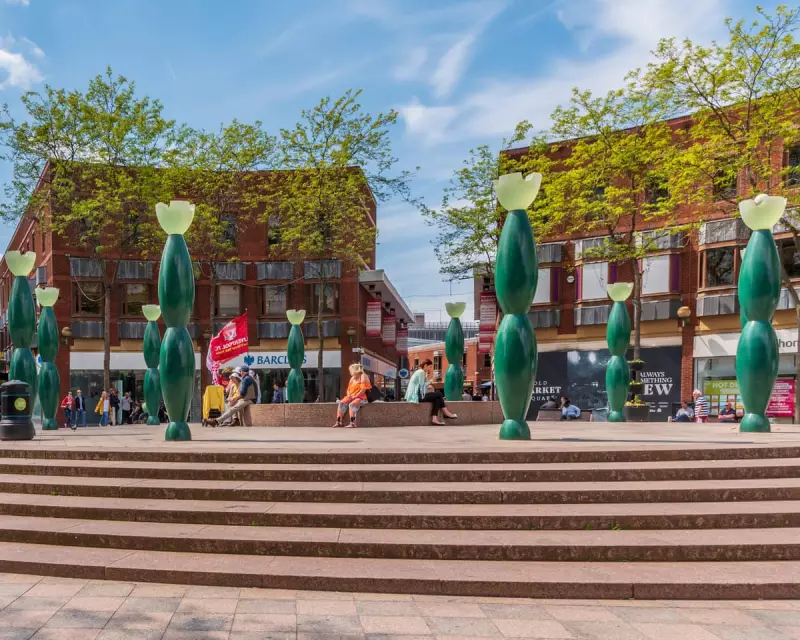
The Labour-led council has adopted an activist approach to support the local economy, accumulating debts of £1.5bn to fund investments. While this strategy has financed revenue-generating assets and award-winning regenerations like Time Square, it has drawn criticism for being overly ambitious. Hans Mundry, the council leader since 2023, acknowledges the need for correction, stating, "Everyone else told us it went too far. So when I came in, that was my job to try to put things right. And we've been turning the corner."
Political Dynamics and Future Prospects
Warrington's political landscape is shifting, with Nigel Farage's Reform UK predicted to win comfortably in the next general election. This reflects broader frustrations among voters, despite the town's economic success. Charlotte Nichols, one of Warrington's Labour MPs, admits, "It's not unreasonable for people to expect change quicker than they've seen it. We're doing better than a lot of places, but we're still not where anyone would want us to be."

Looking ahead, local leaders hope that the planned Cheshire and Warrington combined authority, with mayoral elections in 2027, will provide more freedom under devolution. This could address feelings of being overlooked compared to neighbouring Manchester and Liverpool, which have benefited from vocal mayors like Andy Burnham and Steve Rotherham.
Stephen Fitzsimons, chief executive of Warrington Chamber of Commerce, summarises the town's unique position: "If you took the whole economy and plonked us in the south-east, we wouldn't look out of place. It is a southern economy in the north of England." As Britain seeks ways to boost economic progress, Warrington offers a compelling template for growth, blending innovation, strategic location, and resilient adaptation to change.