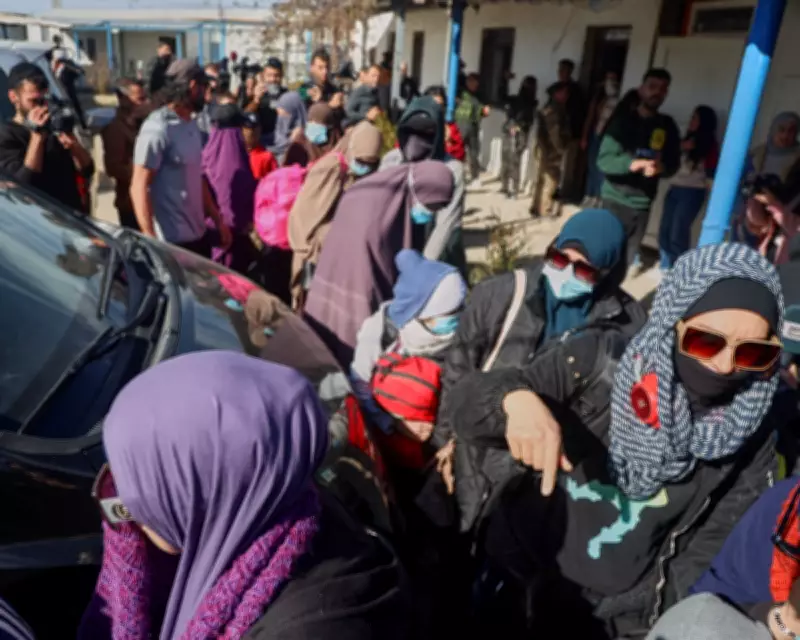
Australian Families in Syria Forced Back to Camp After Government Threat
A group of 34 Australian women and children, associated with suspected Islamic State militants, were compelled to return to the al-Roj detention camp in Syria last week after Syrian government forces issued a direct threat to open fire on their convoy. The incident occurred as the families attempted to travel from the camp to Damascus for repatriation to Australia.
Failed Escape Attempt Amid Lack of Coordination
On Monday, 16 February, the Australian families left al-Roj camp under a Kurdish military escort, aiming to reach Damascus airport for a flight back to Australia. However, approximately 50 kilometres from the camp, Kurdish security forces received a warning from Damascus authorities. According to Çavre Afrin, an intelligence officer and head of al-Roj camp's security administration, the Syrian government stated that the convoy would be "struck" if it entered territory under their control.
Afrin explained that the threat arose because the Australian government had failed to coordinate with Syrian officials prior to the repatriation effort. A Syrian official separately confirmed that Damascus only learned of the attempt after the families had departed the camp, emphasising that any future travel permissions would depend on Australian government coordination.

Distress and Health Impacts on Families
The aborted journey left the Australian families in a state of severe distress and shock. Zahra Ahmad, a 33-year-old mother of three from Melbourne, collapsed and experienced what she described as a seizure upon returning to the camp. Her 14-year-old son, Mohammed, lost sensation in his hands for several days following the brief release. Other children were reported sobbing as they recounted being forced back into detention.
Many of these children had never seen the world outside the camp before. Upon their return, they found their tents disassembled and possessions missing—a standard procedure according to camp administration—though most belongings were later recovered and tents rebuilt.
Background and Political Reactions in Australia
The group comprises 11 women and 23 children, who are the wives, widows, and offspring of alleged IS members. They have been held in Kurdish-guarded camps since at least 2019, following the territorial defeat of Islamic State. Most women claim they were coerced or unaware of the situation in Syria, and none have faced formal charges or court appearances.
Rights groups, including Save the Children Australia, have criticised the detention as arbitrary and highlighted the squalid conditions in al-Roj, where disease spreads easily, particularly affecting children. The families now fear reprisals from more radical camp residents due to their repatriation attempt, amid a resurgence of IS activity in Syria.
In Australia, the incident has sparked significant political controversy. Home Affairs Minister Tony Burke stated that the government does not support the women and children's return and is "actively making sure we do nothing to help them." Prime Minister Anthony Albanese expressed contempt for the adults involved, though he sympathised with the children, noting they were "put in that position by their parents."
The federal opposition, led by Angus Taylor, announced plans to introduce legislation criminalising assistance to individuals linked to terror organisations re-entering Australia. This follows previous repatriations under former Prime Minister Scott Morrison in 2019 and under Albanese's government in 2022, which faced political and media backlash.
Legal and Humanitarian Implications
Australian law generally cannot prevent citizens from returning home, except through temporary exclusion orders (TEOs), which can bar entry for up to two years for security risks. One woman in the group has been issued a TEO. The women have repeatedly stated their willingness to face trial upon return to Australia.

Human rights organisations continue to urge the Australian government to fulfil its legal obligations by repatriating stranded citizens, especially children, arguing that political efforts should focus on protection rather than obstruction. As the situation remains tense, the families' future in al-Roj camp hangs in the balance, dependent on diplomatic coordination between Australian and Syrian authorities.