Australia's Timid Response to Iran Strikes Risks Being Seen as Complicity
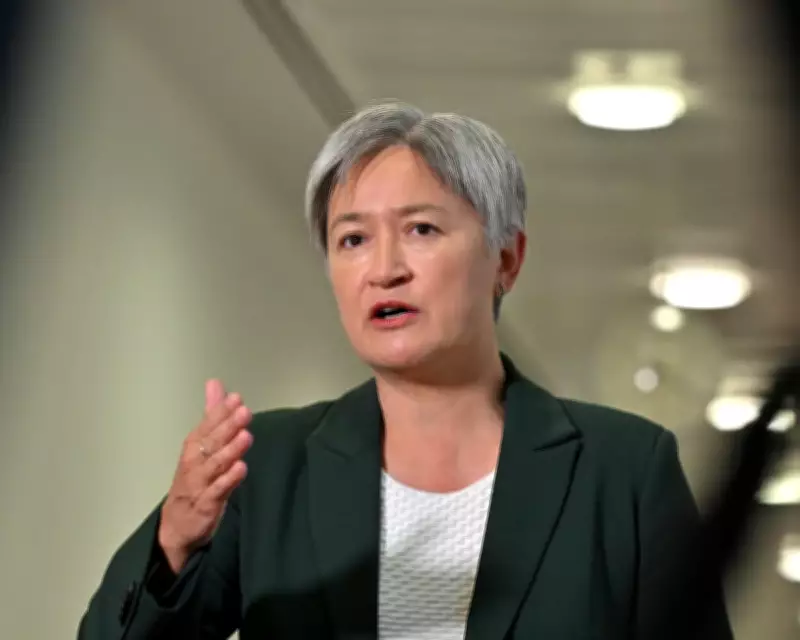
Australia's foreign affairs minister, Penny Wong, has stated she will 'leave it for the United States and Israel' to speak about the legal basis for their recent attacks on Iran. This cautious approach, while seemingly deferential, risks positioning Australia as complicit in actions that may violate international law, according to legal experts.
International Law Under Threat in Modern Conflicts
The 1945 United Nations Charter was established to impose significant constraints on military aggression following the devastation of World War II. However, nearly eight decades later, there is a growing perception that the world operates on a 'might is right' principle, especially when powerful nations like the US and Israel deploy military force without clear adherence to international norms.
Australia has historically supported efforts to curb Iran's nuclear ambitions and has not expressed sorrow over the death of its leader. Yet, Minister Wong's reluctance to address the legal justifications for the strikes suggests a stance of neutrality that could be interpreted as tacit approval.

The Importance of Global Reactions to Aggression
While the primary responsibility to justify such actions lies with the attacking nations, how other states respond is crucial. Silence or ambiguous statements from countries like Australia can be seen as complicity, undermining the very international legal framework they claim to uphold.
Australia has a strong record of supporting the UN Charter since its inception, but its current position appears inconsistent. The Albanese government frequently cites international law in disputes, such as those involving China in the South China Sea, highlighting a need for consistent application rather than selective adherence.
Legal Justifications for Military Force: A Critical Analysis
Under the UN Charter, military force is typically justified only in two scenarios: authorization by the UN Security Council or acts of self-defense. In this instance, no Security Council resolution has authorized force against Iran, and there is no evidence of an imminent armed attack justifying self-defense by the US or Israel.
Former US President Donald Trump has claimed the strikes targeted Iran's nuclear capabilities, but experts argue there was no immediate threat of a nuclear strike. This lack of legal merit raises questions about the attacks' compliance with international law.
Global Responses and the Erosion of Legal Norms
International reactions to the US-Israel actions have largely focused on containing Iran's nuclear ambitions, with few addressing legal violations. Norway stands out as an exception, explicitly stating the attacks were 'not in line with international law.'
This incident follows other conflicts, such as Russia's assault on Ukraine and Israel's war in Gaza, which collectively threaten core principles of international law. Trump's dismissive attitude toward the UN and potential military actions, like targeting Greenland, further jeopardizes the global legal order.
Call to Action for Australia
Now is not the time for silence. Australia must clearly articulate its support for international law to avoid being perceived as complicit in aggression. By taking a firm stand, it can help reinforce the constraints on military force that are essential for global stability.
Donald Rothwell is a professor of international law at the Australian National University.