Kemi Badenoch Condemns 'Childish' Donald Trump Amid UK-US Diplomatic Tensions
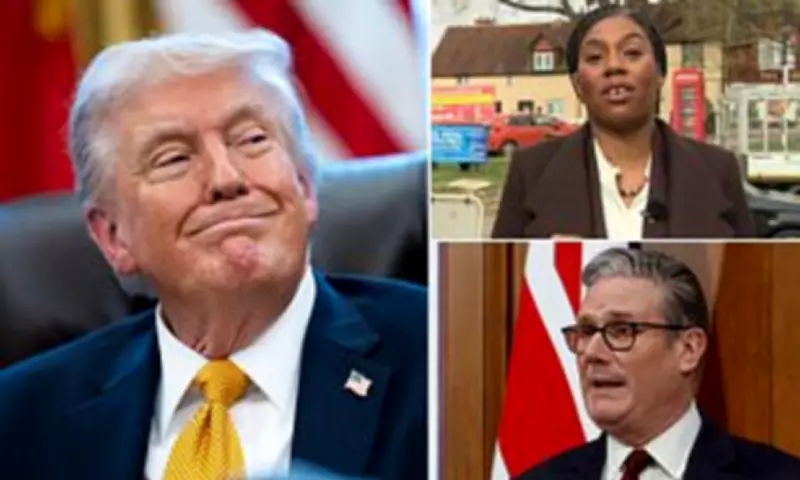
Conservative leader Kemi Badenoch has launched a stinging rebuke of former US President Donald Trump, labelling his behaviour as "childish" in the midst of a growing transatlantic rift with Prime Minister Keir Starmer. The political firestorm erupted after Trump publicly criticised Britain for its lack of offensive support in his faltering war with Iran, describing the UK's reluctance to engage militarily in the Middle East as "terrible".
Trump's Fury Over Britain's Military Hesitation
Amid a notable low point in the historic "special relationship" between the two nations, Trump vented his frustration overnight, directly targeting Prime Minister Starmer. The former president claimed that Sir Keir had initially offered to dispatch two British aircraft carriers to the region—an assertion firmly denied by Downing Street. In reality, only one of the UK's carriers is currently operational, with that vessel scheduled for deployment to the Arctic rather than the Middle East.
Sir Keir has consistently insisted that Britain will not be drawn into a "wider war" following recent attacks launched by the United States and Israel. This position has found support among other European powers, with both France and Germany similarly dismissing the notion of taking an active combat role while conflict continues to rage.
Badenoch's Blunt Assessment of the Situation
Despite acknowledging her own frequent criticisms of the Prime Minister, Mrs Badenoch described Trump's broadside as "shocking" during a visit to Surrey. "The last thing we need is a war of words—he was quite childish as well—a war of words between the White House and Downing Street," she stated emphatically.
The Conservative leader further emphasised the unfortunate timing of the diplomatic spat, noting: "We have Ukrainian President Zelensky in the UK today; the western alliance having a spat is unhelpful." Her comments underscore the delicate balancing act facing British diplomacy as it seeks to maintain focus on Ukraine's campaign against Russian invasion while navigating tensions with a key ally.
European Powers Reject Trump's Naval Demands
The verbal barbs emerged as European powers collectively rejected Mr Trump's call to deploy warships to reopen the crucial Strait of Hormuz. Approximately one-fifth of global oil supplies typically traverse this strategic channel, but Iran has effectively maintained its closure through sustained missile and drone strikes.
Prime Minister Starmer—who will host Volodymyr Zelensky at Downing Street today—has repeatedly stressed the paramount importance of maintaining focus on Ukraine's defensive campaign against Russian aggression, even as Middle Eastern tensions escalate.
Trump's Detailed Grievances and Contradictions
Mr Trump's annoyance boiled over once again during his late-night remarks, presenting Sir Keir with another significant diplomatic challenge. "I was very surprised with the United Kingdom. Two weeks ago I said, 'Why don't you send some ships over?' And he really didn't want to do it," the former president recounted.
He continued with pointed criticism: "You're our oldest ally, and we spend a lot of money on NATO and all these things to protect you. I mean, we're protecting them. I think it is terrible. I was not happy with the UK. I think they will be involved, maybe, but they should be involved enthusiastically."
Trump further claimed: "We requested two aircraft carriers which they had. And he did not really want to do it. And after the war had essentially ended, I mean after they were obliterated, he said 'I would like to send the aircraft carriers'. I said 'I don't need them after the war has ended, I needed them before the war'."
In a seemingly contradictory addition, Mr Trump noted that he approached Britain, France, and other allies "not because we need them, but because I want to find out how they react"—a statement that has raised questions about the strategic purpose behind his public criticisms.
Royal Visit Concerns Amid Ongoing Conflict
Meanwhile, senior Labour MP Dame Emily Thornberry has suggested it might be "safer to delay" King Charles's planned state visit to the United States next month due to the ongoing Middle Eastern conflict. The historic visit—expected to commemorate the 250th anniversary of American independence with stops in Washington and New York—has yet to receive official announcement.
As chair of the Foreign Affairs Select Committee, Dame Emily expressed concern during an interview with BBC Radio 4's Today programme: "If it was to go ahead, it would go ahead against a backdrop of a war, and that, I think, is quite difficult—and the last thing that we want to do is to have Their Majesties embarrassed."
When questioned about potentially postponing the visit, she responded: "I don't know what the programme would involve, but I think it needs to be thought through very carefully as to whether or not it's appropriate to go ahead now, or maybe have a limited programme or delay it—but we can't just pretend that there isn't a background of war." She concluded: "I suspect it would be safer to delay it, but I don't know the details."
Diplomatic Context and Public Opinion
Mr Trump was previously honoured with a second state visit to the United Kingdom last year—an unprecedented distinction for an American leader. The royal family's soft power diplomacy is widely viewed as an important and unique method of engaging with the billionaire-turned-politician, who has demonstrated notable affection for the monarchy throughout his career.
Buckingham Palace has indicated that state visit arrangements remain a governmental matter, undertaken specifically on the advice of the Foreign Office. Recent polling data from YouGov reveals divided public sentiment, with 46 percent of Britons believing the King should cancel his official visit and refrain from travelling to the US this year. Conversely, 36 percent support proceeding with the visit as planned, while 18 percent remain undecided.