David Bowie's Daughter Releases Personal Home Videos on Tenth Anniversary of His Death
The daughter of legendary singer David Bowie has shared deeply personal home videos of the late music icon, marking a decade since his passing from cancer. Bowie died at his New York City apartment on January 8, 2016, at the age of 69, following a private battle with liver cancer that had been diagnosed eighteen months earlier. His final album, Black Star, was released on the very day of his death.
An Introspective Journey Through Memory
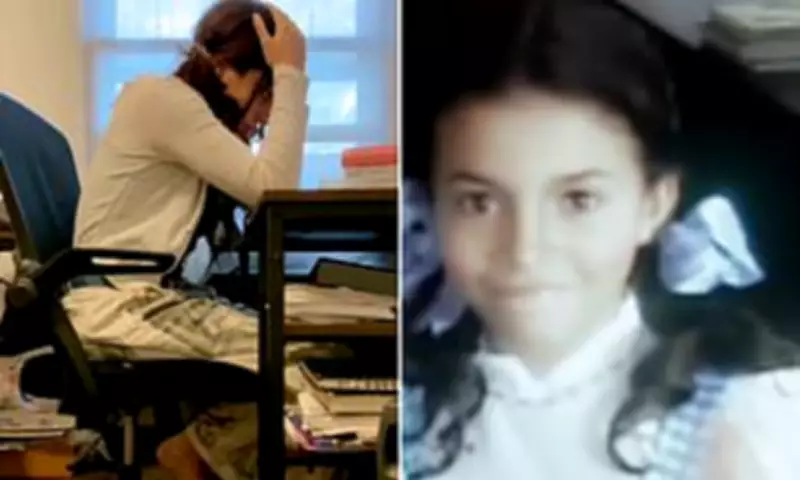
On Tuesday, Bowie's daughter, Alexandria 'Lexi' Jones, his only child with supermodel Iman, posted an introspective video on Instagram. In the footage, the 25-year-old artist is seen seated at a writing desk, attempting to capture fading childhood memories of her father in a journal. She begins a sentence with the words 'He was' but struggles to continue, reflecting on the elusive nature of memory.
In a poignant internal monologue, Lexi explains, 'He was. I start there because it feels like the right beginning, but the sentence never seems to go anywhere. I sit here trying to remember clearly, like if I close my eyes long enough the picture will come back the way it was. But memory doesn't work like that.'
She describes remembering movement, voices, and feelings more than specific details, noting, 'The moment never finishes the way it should, like a door that opens but never quite does.' The video is interspersed with shaky home footage, including childhood clips of Lexi dressed as Dorothy from The Wizard of Oz, with Bowie praising her off-camera, and never-before-seen shots of her father in bed.
Reflections on Loss and Time
Lexi adds, 'It's strange what stays and what disappears. I can remember the way a room felt, the way laughter sounded from down the hall, the way someone walked away from me. But when I try to see him standing right in front of me, the memory slips somewhere else.'
She contemplates the softening effect of time on memories, stating, 'Maybe that's just what time does, it doesn't take everything, just the details, just the sharp edges, just the parts we thought would stay forever. What remains is softer - fragments, moments. A feeling that someone existed before you for a while, that you shared the same rooms, the same days, the same small pieces of life.'
Concluding her monologue, Lexi suggests, 'So maybe finishing a sentence isn't the point, maybe it was never meant to be finished. Maybe the truth is just this. He was. And for a long time, that was enough.'
Addressing Past Struggles and Family Dynamics
In a separate Instagram post from February, Lexi addressed her past experiences, clarifying that she does not blame her family for forcibly removing her from home and sending her to multiple treatment centres, which caused her to miss her father's final days. She wrote, 'My story was never meant to place blame on my parents. I love my parents deeply and I don't hold resentment towards them. They were trying to help a child who was struggling in ways none of us fully understood at the time.'
Lexi explained that her intention was to discuss the experience of being a young person in the teenage treatment system, not to create a narrative of family conflict. She emphasised, 'Those feelings can exist at the same time as love for the people who were trying to help you. Both things can be true.'
Recalling a Traumatic Intervention
Lexi previously described how, at age 14, two men over six feet tall arrived to take her to a treatment facility. Her father had written a heartfelt letter, with the closing line, 'I'm sorry we have to do this.' She recalled resisting, screaming, and being physically removed, feeling stripped of her rights as she was driven away in an SUV with strangers.
She spent 91 days in a wilderness therapy programme, living outdoors in winter conditions with minimal privacy, showering once a week, and being monitored during bathroom use. Wilderness therapy, a controversial mental health treatment in the US, combines outdoor activities with counselling for behavioural and substance abuse issues.
Childhood Challenges and Coping Mechanisms
Reflecting on her youth, Lexi said she felt like an 'idea' rather than a real person, with constant projections from others. She began therapy before age ten after teachers and parents noticed issues, leading to anxiety attacks, depression, bulimia at 12, and self-harm at 11. She struggled with learning disabilities and feelings of inadequacy compared to her successful parents.
Following her father's cancer diagnosis, Lexi turned to alcohol and drugs as an escape, not for fun. She described becoming someone who lashed out and sought respect through fear. Her journey through treatment and recovery has shaped her perspective, which she shares to help others feel less alone.