Britain's Global Standing Diminished After Week of Iran Conflict
Seven days have now elapsed since the outbreak of the new Iran war, a period that has starkly illustrated how rapidly a nation's fortunes can shift on the world stage. The political adage attributed to Harold Wilson – that a week is a long time in politics – has taken on a grim new meaning, applying not just to ministerial careers but to Britain's entire international standing.
Deteriorating International Position
Since the first missiles struck Tehran last Saturday, Britain's global reputation has unquestionably deteriorated due to Sir Keir Starmer's perceived quibbling and hesitation in supporting allied nations. Britain was once the world's pre-eminent military power, playing a crucial role in NATO since its inception even after the privations of the Second World War. Under the current Prime Minister's leadership, however, centuries of hard-earned repute appear to have been cast aside.
Immediate Domestic Threats Emerge
The Metropolitan Police's announcement yesterday that four individuals – one Iranian and three dual British-Iranians – were arrested on suspicion of assisting a foreign intelligence service underscores that the Iranian threat is not confined to distant Middle Eastern conflicts. The mullahs of Iran pose a clear and present danger here in Britain, making this conflict immediately relevant to domestic security.
Chronic Military Under-Investment
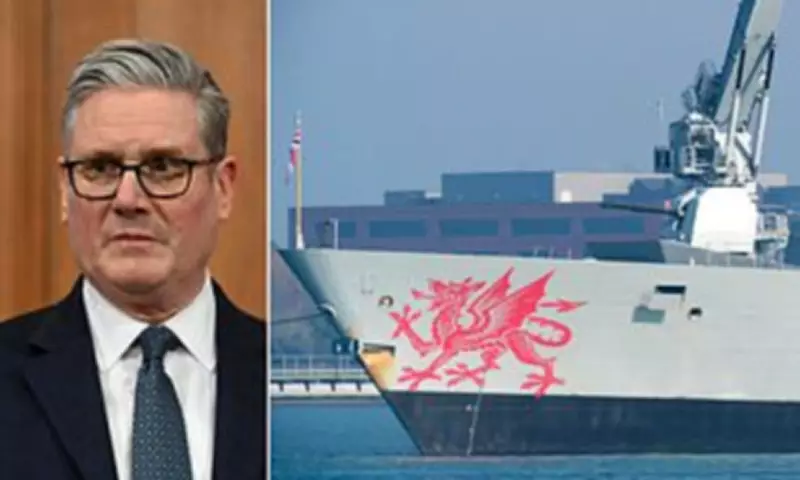
Decades of systematic under-investment in Britain's military have severely damaged both capability and readiness. The Type 45 air defence destroyer HMS Dragon, pictured loading with missiles, will not be ready to deploy from Portsmouth to the Eastern Mediterranean until next week. Military leaders and expert analysts have repeatedly warned that Britain's Armed Forces lack sufficient personnel and material, with the regular Army now at its smallest size since the Napoleonic Wars.
While successive governments share responsibility for this neglect, there was previously an assumption that political leaders would make the right decisions when needed. This confidence has evaporated under the current Labour Government and its leader, Sir Keir Starmer – a human rights barrister with no natural affinity for military matters.
Defence Spending Priorities Questioned
Labour's approach to public spending reveals a troubling inconsistency: while advocating for a generously funded public sector, the party applies different standards to the Ministry of Defence. This must change immediately. Straightforward savings could free billions for defence if the Prime Minister and his Cabinet demonstrated sufficient courage to act.
Essential measures include:
- Tackling excessive welfare state expenditure
- Exiting the European Convention on Human Rights to secure Britain's borders
- Substantially reducing migrant-related financial support
Broader Economic and Security Challenges
Should Middle Eastern oil supplies be disrupted, triggering another energy crisis, Britain must lighten the tax and regulatory burden on businesses to ensure they can respond nimbly to global pressures. The world faces multiple simultaneous threats: an emboldened Tehran, an increasingly assertive Beijing, and a bloodthirsty Kremlin hungry for European territory. An unpredictable American presidency further complicates this dangerous landscape.
After this consequential week, world history appears to have entered a new and perilous chapter. In this context, Labour's traditional preoccupations – class warfare rhetoric, deference to trade unions, and channeling funds to supporters through the benefits system – seem more indulgent and irresponsible than ever before. Britain's response to these challenges will determine its place in the emerging global order.