Cuba Discloses New Information on Fatal US Boat Shooting Incident
Top officials from Cuba's Ministry of the Interior have, for the first time, publicly disclosed the items they claim were aboard a Florida-flagged speedboat that engaged in a fatal shooting against Cuban troops earlier this week. The incident occurred in waters off the island's north coast, with soldiers responding to the attack and resulting in the deaths of four suspects.
Second Boat on Mission Failed, Forcing Supply Transfer
In a significant revelation, officials informed The Associated Press that authorities have established the ten Cuban suspects departed from the United States using two boats. However, one of the vessels experienced a failure, compelling the group to transfer all their supplies to the remaining functional boat and abandon the other adrift at sea. The detained suspects reportedly provided these details and emphasized that they immediately contacted the U.S. Coast Guard following the incident.
Weapons and Equipment Found on Board
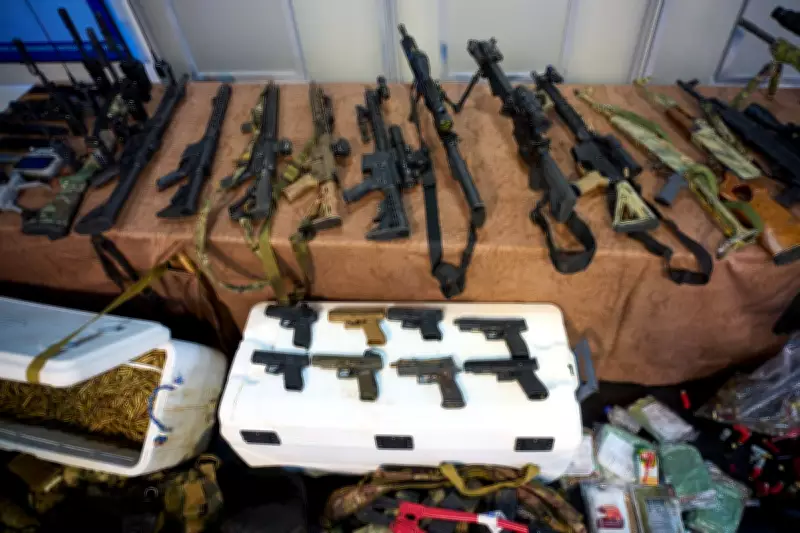
Among the items Cuban officials stated were aboard the speedboat were a dozen high-powered weapons, including one equipped with a scope, a large cooler containing over 12,800 rounds of ammunition, eleven pistols, heavy-duty boots, helmets fitted with cameras, and camouflage backpacks. First Colonel Ivey Daniel Carballo of the Cuban Border Guard Troops told the AP, "We were clearly able to assess that we were facing a terrorist action from a boat coming from the United States."

Details of the Confrontation and Aftermath
According to Colonel Carballo, a 30-foot border patrol boat detected an intruder on Wednesday morning and approached to within approximately 600 feet to investigate. The patrol was met with high-caliber gunfire, leading to an immediate response. Three attackers were killed on the spot, while a fourth sustained injuries and later died. The speedboat was located about one mile northeast of Cayo Falcones off the north coast, and the border guard commander was injured during the exchange.
Victor Eduardo Álvarez Valle, a head of Criminal Investigation for State Security at the Ministry of the Interior, expressed surprise at the level of resistance encountered, stating, "We didn't expect it, especially with that many people and weapons." He added that the military equipment found on board has been identified by the assailants, including details on acquisition, training received, and financing sources. Officials noted 13 bullet holes on the border guard boat and 21 on the suspect's vessel, indicating a combat situation.
Legal Consequences and U.S. Response
Cuba's chief prosecutor, Edward Robert Campbell of the Attorney General's Office, indicated that the six arrested individuals, all of Cuban origin, could face terrorism charges. These charges carry potential sentences of 30 years in prison, life imprisonment, or even the death penalty, although the latter has been under a moratorium for over a decade. The Cuban government had previously reported one person captured on land, but Álvarez clarified there is no current information suggesting the suspects had any support network on the island.
The Associated Press was granted access to Cuban military officials and shown the items displayed at the headquarters of the former Cuban Institute of Radio and Television, ahead of a program that presented them to the public for the first time. In response, U.S. Secretary of State Marco Rubio has stated that this was not a U.S. government operation and that the American government is independently gathering its own information regarding the incident.