The recent US-led operation to remove Venezuelan President Nicolás Maduro has sent shockwaves through Havana, placing Cuba's already precarious economic and political future under unprecedented strain. The deep, decades-long bond between the two socialist nations, a cornerstone of Cuba's survival strategy, now faces its most severe test.
A Partnership Under Siege
On Havana's well-kept Fifth Avenue, a giant billboard outside the Venezuelan embassy features the late Hugo Chávez with the steadfast message: "Hasta Siempre Comandante." This week, that promise of eternal solidarity appears dangerously fragile. The alliance, forged by Chávez and maintained by his successor Maduro, has been a lifeline for Cuba, providing subsidised oil in exchange for extensive security and intelligence support. The US operation directly targeting Maduro threatens to sever this vital connection, forcing Cubans to confront an alarming question: can their nation withstand the withdrawal of Venezuelan support?
Discussions across the island are dominated by the potential implications. With Cuba already mired in a severe financial crisis, the loss of Venezuelan oil shipments could be catastrophic. The confrontation has already turned deadly; Havana has acknowledged that 32 Cuban personnel died during the US military action in Venezuela. While many social media posts from grieving relatives have been removed, one aunt mourned her 26-year-old nephew, Fernando Báez Hidalgo, comparing his sacrifice to that of Cuba's 19th-century independence heroes, the mambís.
Cuba's Precarious Position and US Strategy
For Washington, Cuban intelligence has been a persistent obstacle. A previous attempt to oust Maduro in 2019 is widely believed to have been foiled by Cuban agents. In response, the Trump administration intensified sanctions against Cuba. However, analysts note a distinct approach from the US president himself. Unlike his fervently anti-Castro Secretary of State, Marco Rubio, Donald Trump has often seemed less focused on direct action against Havana. His statement this week that "Cuba is ready to fall" and no US intervention would be necessary encapsulates a strategy of applying maximum pressure while waiting for internal collapse.
Part of the potential peace deal for Venezuela involves ending its support for Cuba. The exact scale of this support is murky—both economies are shattered and data is scarce—but the consistent flow of oil has been critical. Terrible island-wide blackouts, like those seen again this Monday, have become a grim常态, a symptom of the chronic energy shortages that would worsen without Venezuelan fuel.
Signs of Strain Within the Regime
US hawks see encouraging signs of fragmentation within Cuba's communist government. The vaunted unity of the regime is showing cracks. In early December, former economy minister Alejandro Gil was sentenced to life imprisonment not only for corruption but, more startlingly, for espionage. Furthermore, a key five-year party conference, expected to facilitate a leadership transition, has been postponed. This delay was prompted by a letter from 94-year-old Raúl Castro, who remains a powerful figure despite resigning as head of the Communist party four years ago. He cited the adverse economic climate.
Yet, few experts predict an imminent collapse. "We've been there before in the 1990s [after the Soviet Union collapsed] and I don't necessarily believe further rapid deterioration of the Cuban economy leads to regime change," said Michael Bustamante, chair of Cuban and Cuban-American Studies at the University of Miami. The government's will to survive, and its ability to attribute all hardship to the 60-year US embargo, remains potent.
Historical Ghosts and Future Hopes
The bitter history between the US and Cuba weighs heavily on the current crisis. The island has not forgotten the US military intervention after its war of independence from Spain in 1898, when American troops led by Theodore Roosevelt—a hero of the current US president—effectively sidelined Cuban leaders and initiated a commercial takeover. This history fuels deep-seated resentment; any appearance of US helicopters over Cuban skies would be met with fierce hostility.
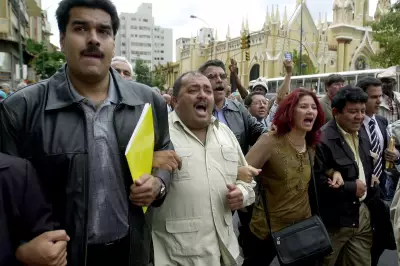
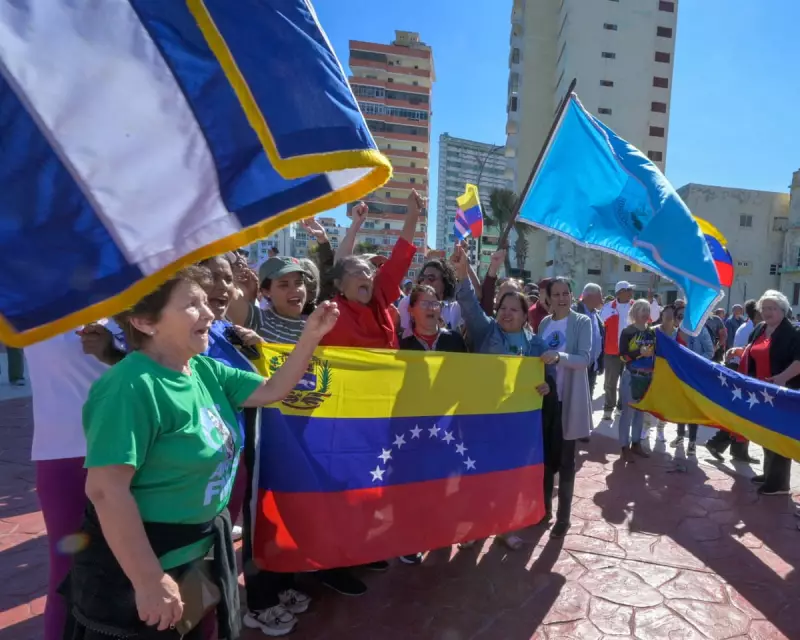
Amid the uncertainty, some hope the authorities might use this moment for crucial economic reforms. Carlos Alzugaray, a former Cuban ambassador to the EU, stated: "The Cuban government has to finally do what everybody here thinks they should do, which is open up the economy." He clarified this did not mean supporting US intervention, noting he attended a pro-Venezuela demonstration to explicitly reject American actions.
Nevertheless, Cuba is weaker than ever, while the Trump administration, emboldened by its success in Venezuela, adopts an increasingly muscular stance in the hemisphere, summed up by Marco Rubio's tweet: "This is our hemisphere." The billboards in Havana may still proclaim "Socialism or Death," but the immediate question for Cuba is one of survival, as its most important ally is forced from power.