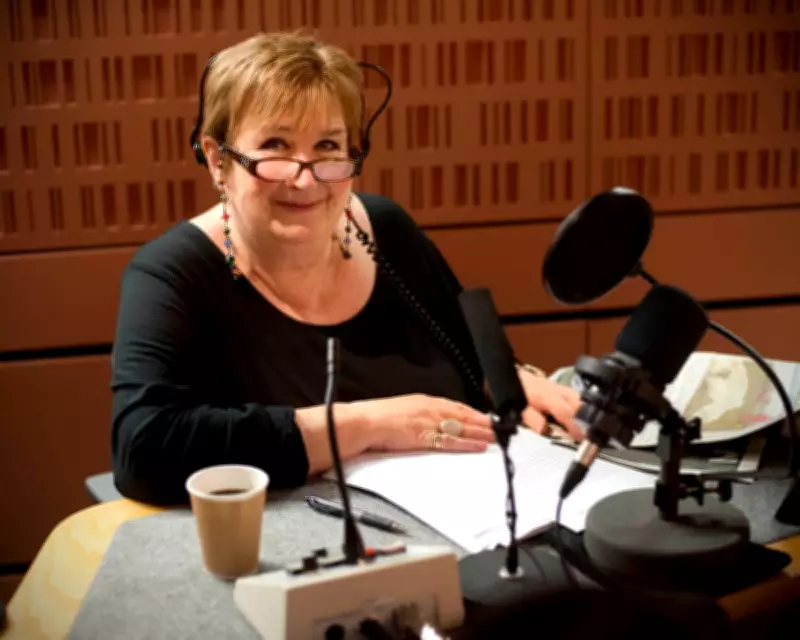
Dame Jenni Murray: A Pioneering Broadcaster Who Redefined Woman's Hour
Dame Jenni Murray, the longest-serving presenter of BBC Radio 4's Woman's Hour, has passed away at the age of 75. Over her remarkable 33-year tenure from 1987 to 2020, she brought calm authority and fearless intelligence to the iconic programme, transforming it from its origins in 1946 with cooking tips and romantic serials into a vital platform for discussing critical issues such as the menopause, domestic violence, genital mutilation, and sexual politics.
Fearless Interviewing and Feminist Advocacy
Murray was renowned for her thoughtful and incisive questioning of a diverse range of guests, including politicians, film stars, authors, and everyday individuals. In a landmark 1990 interview with Prime Minister Margaret Thatcher, she highlighted ideological differences on childcare and gender equality, later noting it was the first time she had heard Thatcher admit, "I don't know." This encounter underscored Murray's commitment to advancing feminist causes through government action.
Her interviews often probed ethical dilemmas, such as in 2002 with Edwina Currie, where she questioned the morality of Currie's affair with John Major. Murray's personal experiences, like being refused a mortgage without a male signature in the 1970s, informed her probing of public figures, including Labour's Tessa Jowell in 2006 on financial independence.

Personal Connections and Programme Evolution
Beyond politics, Murray cherished interviews with cultural icons like Jack Nicholson and Joan Baez, whom she admired since her school days in Barnsley. In 1990, Woman's Hour faced potential cancellation as Radio 4 considered replacing it with a show targeting more men. Although it moved to a morning slot in 1991 and gained a 40% male audience, Murray felt the programme was under threat, describing it as a place where she felt "completely in my skin."
She shared personal struggles on air, including her menopause experience, detailed in her 2001 book, a breast cancer diagnosis in 2006, and weight-loss surgery in 2015. This openness fostered a deep collusion with her audience, creating a sense of fellowship among women.
Controversies and Later Career
In 2017, Murray faced backlash for a Sunday Times Magazine article where she argued that trans women should not call themselves "real women," citing shared female experiences. The BBC warned her to remain impartial on controversial topics, leading to her being silenced on the issue. Subsequent anti-Brexit views resulted in a ban from covering the 2019 general election on Woman's Hour.
Upon leaving the show in 2020, she wrote in the Daily Mail about feeling "cancelled" and desiring freedom from constraints. Her final episode concluded with Helen Reddy's feminist anthem I Am Woman, symbolising her legacy.
Early Life and Career Beginnings
Born in Barnsley in 1950, Murray was the only child of civil servant Win and electrical engineer Alvin Bailey. Her mother, an avid Woman's Hour listener, sent her for elocution lessons to soften her Yorkshire accent. At 11, she stayed with grandparents while her parents moved to India, attending Barnsley Girls' High School.
She studied French and Drama at Hull University, abandoning acting plans. Working holidays at a Findus factory taught her, as she recalled, "more about feminist politics from the fishwives of Hull than I ever did from The Female Eunuch." Her broadcasting career began at BBC Radio Bristol in 1973, progressing to TV roles with BBC South and Newsnight, while hosting Woman's Hour from Bristol from 1976 to 1986.
Awards and Personal Life
Woman's Hour won the Television and Radio Industries Club's award for best radio programme in 2004, and Murray received two Sony awards in 2010 and 2011. Her TV work included documentaries on ethical issues, such as Stand by Your Man and Breaking the Chain, and she wrote columns for the Daily Express and Daily Mail.

Murray authored several books, including The Woman's Hour: 50 Years of Women in Britain (1996) and Votes for Women! (2018). She was made OBE in 1999 and a dame in 2011. Married first to Brian Murray in 1971, they divorced in 1978. She later wed David Forgham in 2002 for inheritance reasons, with him taking on parenting duties for their two sons, Edward and Charlie, who survive her.
Jenni Murray's legacy as a fearless broadcaster and advocate for women's issues continues to inspire, marking her as a pivotal figure in British media and feminist history.