Dubai's Safe Oasis Image Shattered by Iranian Missile Strikes in Retaliation
The United Arab Emirates has long marketed itself to international investors and tourists as a sunny, secure, and tax-free oasis in the Middle East. However, that carefully cultivated image was violently shattered over the weekend as Iranian weaponry rained down on Dubai and Abu Dhabi, setting fire to luxury hotels, threatening the world's tallest building, and causing casualties at the capital's airport.
Retaliation for US-Israeli Attack Sparks Regional Chaos
Iran launched these strikes against the UAE and several neighboring countries in direct retaliation for a major attack by United States and Israeli forces. The assault has instilled widespread fear and chaos in a region that, until Saturday, was known for its predictable calm and stability.
Cinzia Bianco, a Persian Gulf expert at the European Council on Foreign Relations, commented on the profound impact, stating on social media platform X: "This is Dubai’s ultimate nightmare, as its very essence depended on being a safe oasis in a troubled region. There might be a way to be resilient, but there is no going back."

Iconic Landmarks Damaged in Unprecedented Assault
While UAE officials attempted to reassure the public, highlighting their advanced air defense systems which intercepted drones and missiles, the fallout was severe. Debris from downed weapons ignited fires at some of Dubai's most famous locations:
- Flames were seen at the prestigious Fairmont hotel on the artificial Palm Jumeirah island.
- The iconic Burj Al Arab hotel facade was licked by fire.
- Smoke plumes rose near the Burj Khalifa, the 2,723-foot skyscraper.
- A fire broke out at Jebel Ali Port, a critical shipping hub.
- Dubai International Airport sustained damage, with four employees injured.
The Ministry of Defense reported that over two days, air defenses engaged with 165 ballistic missiles, two cruise missiles, and more than 540 Iranian drones. One person was killed and seven others were injured at Abu Dhabi's airport.
Tourists and Residents Grapple with New Reality
The attacks have directly undermined the Emirates' diplomatic efforts to de-escalate tensions with Iran, leading to the closure of the UAE embassy in Tehran on Sunday. For a nation that relies on its serene image to attract wealthy tourists, businesspeople, and future residents—nearly 90% of its 11 million population are foreigners—this represents a severe reputational blow.
British racehorse trainer Jamie Osborne, present for the Emirates Super Saturday event, described the scene as "pretty surreal," noting, "You’re standing in the paddock watching missiles get shot through the sky."
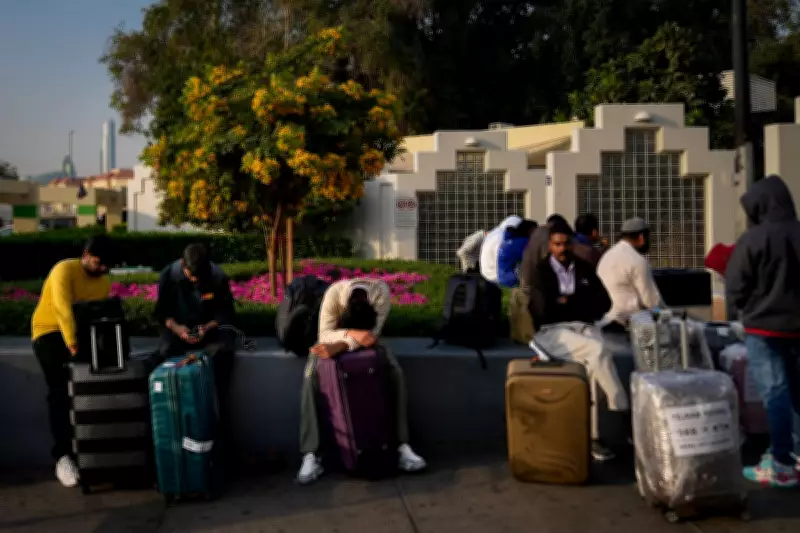
Tourists expressed their shock and reconsidered future travel plans. Kristy Ellmer, on a business trip from New Hampshire, reported hearing numerous explosions, calling the experience "unsettling." Louise Herrle, an American tourist whose flight was canceled, suggested this might be a sign to avoid the region during heightened tensions, remarking, "Maybe the universe was trying to tell us something."
The oil-rich federation now faces the daunting task of rebuilding not just physical structures, but also the global perception of security that has been fundamental to its economic success and international appeal.