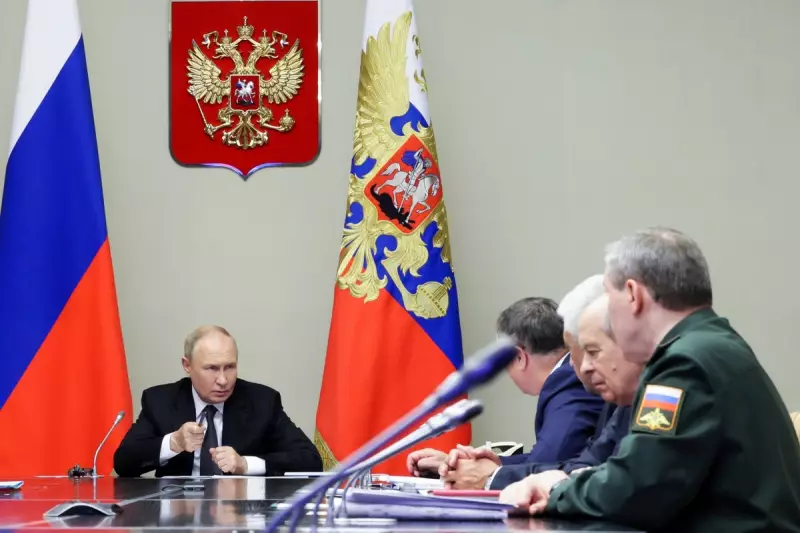
A deep and significant fracture has emerged within the European Union over the contentious issue of using frozen Russian state assets to fund Ukraine's war effort and economy. The dispute, which came to a head at this week's EU summit, reveals a bloc divided by fear of legal reprisals and concerns over the sanctity of international finance.
The Summit Showdown: Loan Over Confiscation
Despite nearly four years of remarkable unity following Russia's full-scale invasion, European solidarity is showing its first major crack. The core issue is money. Facing a cash-strapped Ukraine, the proposal was to tap into the €210 billion (£184bn) of Russian assets frozen in EU banks since February 2022. However, led by Belgium, at least seven member states objected, fearing massive retaliation from Moscow.
Instead of confiscation, EU leaders agreed on a compromise: a two-year, interest-free loan of €90 billion to Kyiv. This sum, to be divided between 24 European states, is estimated to be only about two-thirds of what Ukraine needs to survive 2026 and 2027. The decision underscores a pivotal moment where caution overrode the initial impetus to make Russia pay directly for its aggression.
The Coalition of the Cautious: Who Opposed and Why
While Hungary and Slovakia's dissent was expected due to their sporadic ties with Moscow, they were far from alone. They were quietly joined by Belgium, Italy, Malta, the Czech Republic, and Bulgaria. France also expressed misgivings regarding some €18 billion of Russian assets frozen within its borders.
The objections are rooted in profound principles and practical risks. A powerful argument against confiscation is that it would constitute "theft" and jeopardise a foundational pillar of global finance: the safety of sovereign assets held abroad. Critics warn it could trigger a worldwide free-for-all, leaving no nation's overseas holdings safe from political confiscation.
Furthermore, there is a palpable fear that Russia could sue in international courts and win, leaving individual EU nations and their financial institutions liable for the enormous bill. This risk is particularly acute for Belgium, as Brussels-based clearing house Euroclear holds a disproportionate €150 billion of the total frozen assets. Belgium's insistence that all EU countries share this legal risk equally found little appetite among its partners.
Legal Labyrinths and a Brexit Echo
The deadlock prompted convoluted efforts to find a legally bulletproof route to use the assets, all of which proved elusive. An earlier, less controversial plan involved using only the interest accrued on the frozen funds for Ukraine's benefit. With the United States turning away from Kyiv, however, the need for far larger sums brought the principal assets into play.
Last week, EU Commission President Ursula von der Leyen and EU chief diplomat Kaja Kallas, both strong proponents of using the assets, suggested a radical path: declaring an emergency to suspend normal voting rules and force the measure through. This tactic, however, not only highlights the legal tenuousness of the move but also raises questions about EU democratic deficits and infringements on national sovereignty—arguments that echo those made by Brexiteers in the UK.
Although Brexit removed the UK from the EU's internal debate, London remains deeply involved. As a global financial centre holding frozen Russian assets, the UK faces the same dilemmas. While Prime Minister Keir Starmer has suggested willingness to contribute Russian funds frozen in Britain, the banking establishment is reportedly warning against it for reputational reasons.
In a notable move just hours before the EU summit, Foreign Secretary Yvette Cooper gave multiple interviews, ordering former Chelsea FC owner Roman Abramovich to transfer £2.5 billion from the forced sale of the club to Ukraine within 90 days. Analysts saw this as a symbolic gesture of support, potentially designed to divert attention from the UK's broader hesitation on the larger pool of frozen state assets.
Conclusion: A Frozen Stalemate
The EU's decision represents a major victory for financial caution over wartime exigency. While Moscow may crow that "illegal moves...failed," the reality is a continued stalemate. The €210 billion remains frozen in limbo, unavailable to Russia but also, for now, largely out of reach for Ukraine. The episode exposes the limits of Western unity when confronted with the monumental risks of rewriting the rules of international finance, even in the face of blatant aggression. The chilling effect of potential Russian reprisals has proven powerful enough to fracture the alliance's consensus, leaving Ukraine to rely on more traditional, and limited, forms of aid.