Europe Drawn into Iran Conflict: Military Bases Defended, Citizens Evacuated
Europe finds itself increasingly entangled in the escalating U.S.-Israeli military campaign against Iran, despite maintaining a stance of non-direct combat involvement. The continent is now compelled to take defensive measures to safeguard its military installations and coordinate large-scale evacuations of citizens caught in the crossfire of Middle Eastern hostilities.
Strategic Imperatives and Defensive Postures
The Middle East represents a critical region for European interests, housing vital trading partners and essential maritime routes. Significant European populations reside in cities like Beirut, Dubai, and Jerusalem, while substantial communities from Turkey, Egypt, and Gulf states have settled across Europe. Although European governments were not consulted prior to the U.S.-Israeli operation, they are now managing its extensive repercussions.
While Britain, France, and Germany have explicitly refused to join the war directly, they have committed to collaborating with the United States to counter Iranian attacks. The United Kingdom has agreed to permit U.S. forces to utilize British bases for strikes against Iranian missile launch sites.

However, Europe remains vulnerable to retaliation. Cyprus, currently holding the European Union's rotating presidency, was forced to publicly deny involvement after a Shahed-type drone damaged a British air base on the island's southern coast. These Iranian-developed drones have previously been deployed in Europe by Russia during its war on Ukraine, prompting several European nations to enhance security at transportation hubs like rail stations and airports.
Political Divisions and Humanitarian Priorities
European leadership has largely refrained from criticizing the U.S.-Israeli offensive, with many officials welcoming the weakening of an Iranian regime that has detained European citizens and challenged economic interests for years. Spain stands as a notable exception, with Prime Minister Pedro Sánchez condemning the military intervention as "unjustifiable, dangerous, and outside of international law."
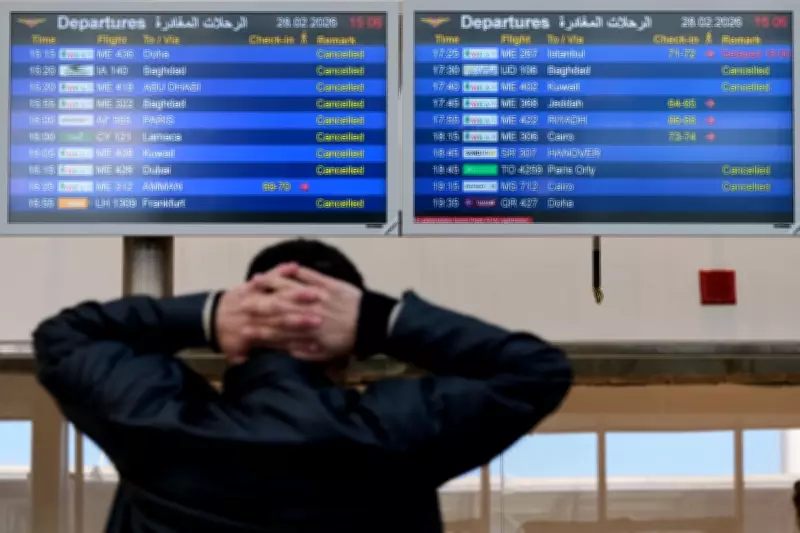
The immediate priority for European governments is ensuring the safety of thousands of citizens stranded by the spreading conflict. An emergency meeting of EU foreign ministers addressed evacuation challenges, though no joint operation has yet been launched. Germany reports approximately 30,000 tourists trapped on cruise ships, in hotels, or at closed airports across the Middle East and beyond, with military evacuations hampered by airspace closures.
The Czech Republic has initiated evacuation efforts, dispatching aircraft to Egypt and Jordan to retrieve nationals, with plans to send additional planes to Oman for an estimated 6,700 citizens in the region.
Economic and Diplomatic Dimensions
Iran's threats to shipping in the Strait of Hormuz—a crucial passage for one-fifth of globally traded oil—have escalated calls for European naval protection. In response, France is deploying two additional warships to reinforce Operation Aspides, the EU's naval mission, though they will operate in the Red Sea and Gulf of Aden rather than near Iranian waters.
Established two years ago to defend maritime traffic from Houthi rebel attacks, Operation Aspides may see its mandate reviewed and rules of engagement tightened, though immediate changes are unlikely. The Houthis, while expressing support for Iran, have not yet undertaken military action on its behalf.
EU foreign policy chief Kaja Kallas emphasized the bloc's commitment to regional stability, condemning Iran's retaliatory strikes and planning diplomatic engagement with Gulf Cooperation Council countries. "Iran's attacks are inexcusable. The events must not lead to further escalation that could threaten the region, Europe, and beyond," Kallas stated following emergency talks.
The European Union continues diplomatic efforts to de-escalate tensions and prevent Iran from acquiring nuclear weapons, despite the collapse of the nuclear development deal after the U.S. withdrawal.

Future Leadership and Institutional Stances
European officials maintain they have no preferred candidate to succeed Iran's current leadership, expressing solidarity with the Iranian people and support for their human rights. They acknowledge a recent popular movement against the regime that was suppressed with severe violence, resulting in thousands of deaths and detentions.
Critically, the EU is unlikely to engage with any leadership influenced by Iran's Revolutionary Guard, which was added to the bloc's terror list last month, effectively precluding serious diplomatic dialogue.