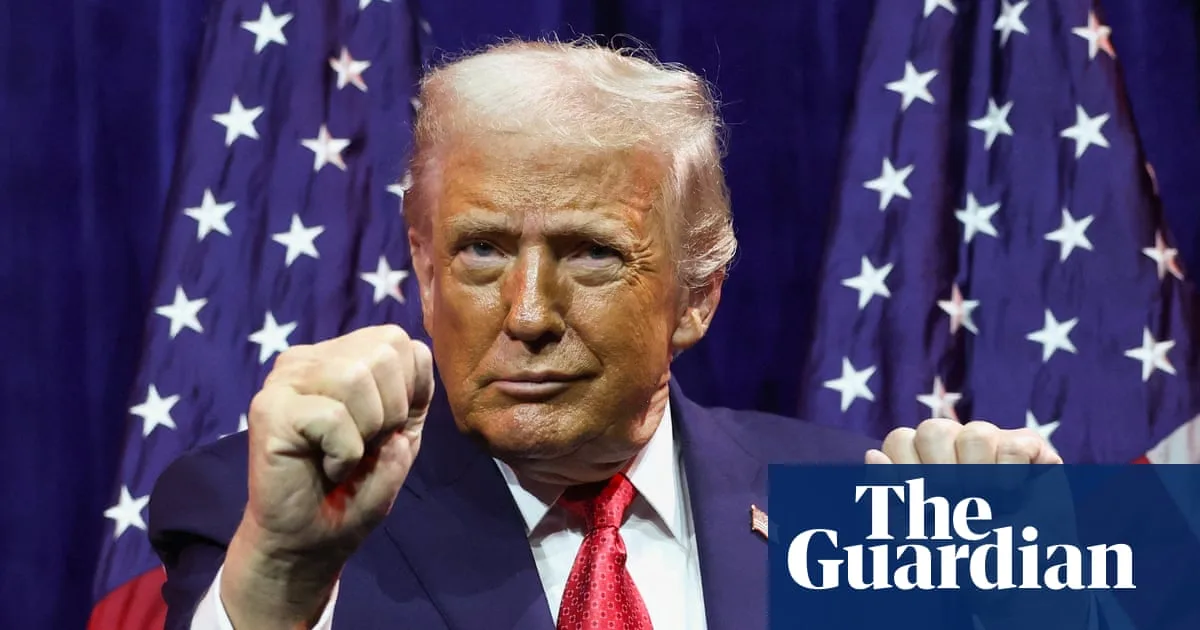
European leaders find themselves in a profound and uncomfortable diplomatic bind following former US President Donald Trump's military operation in Venezuela and his repeated threats regarding Greenland. Their cautious responses have exposed deep divisions and vulnerabilities within the EU's foreign policy framework.
A Tepid European Response to Caracas Raid
In the immediate aftermath of the US operation, which saw American aircraft attack Caracas and special forces seize Venezuelan President Nicolás Maduro, the European Commission's public communication was notably silent on the matter. Instead of addressing an action widely condemned as a violation of international law, the EU's executive body focused on social media posts about holiday travel and consumer rights.
This stark contrast highlighted the bloc's predicament. While adept at promoting internal policies like free movement, it struggled to mount a unified, principled stance against a powerful ally's controversial military intervention. National responses across Europe varied significantly, revealing a lack of cohesion.
French President Emmanuel Macron stated he would "shed no tears" for Maduro, while German Chancellor Friedrich Merz called the legal assessment of the raid "complex." Italy's Giorgia Meloni went further, labelling the attack "legitimate" self-defence. Only Spanish Prime Minister Pedro Sánchez offered a clearer rebuke, stating Spain would not recognise an intervention that violates international law, despite not recognising the Maduro regime.
The Core Dilemma: Principles vs. Security
Experts argue this weak position stems from an impossible choice. Alberto Alemanno, a professor of EU law, summarised the core dilemma. If Europe acquiesces to US actions in Venezuela, it risks undermining the very legal principles it invokes to oppose Russia's invasion of Ukraine. Conversely, condemning Washington alienates Europe's primary security guarantor at a critical juncture for collective defence against Moscow.
This fear of antagonising the US President, who has shown open contempt for European leaders, has left the EU appearing hesitant. Dr John Cotter, a researcher in EU constitutional law at Keele University, argued that European leaders' "mealy mouthed responses" out of fear of Trump's ire only heighten his contempt. He suggested they have sacrificed dignity for a security guarantee from an ally who clearly does not value their opinion.
A Firmer Stance on Greenland Emerges
In contrast to the Venezuela response, European leaders have adopted a notably firmer tone regarding Trump's ambitions for Greenland, a self-governing Danish territory. Led by Denmark, a more unified front has emerged.
Danish Prime Minister Mette Frederiksen was direct, stating, "The US has no right to annex any ... of the Kingdom of Denmark." Greenland's own Prime Minister, Jens-Frederik Nielsen, accused the US of "completely and utterly unacceptable" rhetoric. This position was bolstered on Tuesday by the leaders of France, Germany, Italy, Poland, Spain, and the UK, who jointly affirmed that Greenland belongs to its people and decisions concerning it are for Denmark and Greenland alone.
Despite this stronger verbal rebuff, few are willing to speculate on what concrete steps Europe would take if the US attempted any form of action on the strategically vital, resource-rich Arctic island. Mujtaba Rahman of the Eurasia Group consultancy warned that a possible US intervention in Greenland presents the "biggest source of risk to the transatlantic alliance"—even greater than the fallout from the war in Ukraine.
Broader Implications for European Sovereignty
The episode has laid bare the EU's ongoing struggle to assert itself as a coherent geopolitical actor. Populist figures in Europe, like France's Marine Le Pen and Jordan Bardella, seized the opportunity to criticise mainstream leaders for their weakness, championing state sovereignty as "inviolable and sacred."
Analyst Nathalie Tocci of Rome's Istituto Affari Internazionali warned that the more European countries act as colonies, unwilling to stand up to Trump, the more they will be treated as such. The divergent responses to Venezuela and Greenland illustrate a European foreign policy caught between principle and pragmatism, leaving its credibility and strategic autonomy in question as it navigates an increasingly volatile transatlantic relationship.