Security Concerns Arise as Trump Aide Wears Fitness Tracker During Iran Bombing
Donald Trump's top loyalist, Susie Wiles, is facing significant blowback after she was photographed wearing an electronic fitness device next to the President during the bombing of Iran. The incident has ignited a fierce debate over security protocols in sensitive government settings.
Images From Mar-a-Lago Situation Room Spark Controversy
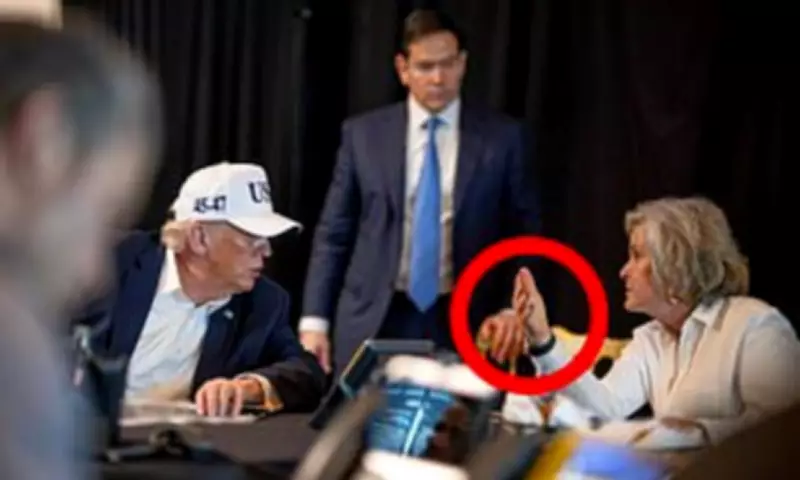
The White House released photos from Trump's makeshift Mar-a-Lago Situation Room on Saturday morning as he oversaw the launch of Operation Epic Fury, a military action that resulted in the death of Iran's Supreme Leader Ayatollah Ali Khamenei. One image clearly shows Wiles, engaged in conversation with Trump, wearing a personal electronic wrist device. Initially mistaken by some online observers for an Apple Watch, the device was later identified as a WHOOP fitness tracker.
Critics were quick to label it a potential security breach, questioning how a Bluetooth-enabled fitness tracker could be permitted in such a highly classified environment. Concerns were raised that the device could be hacked remotely and used to spy on the president during the top-secret military operation.

Defense from WHOOP and the White House
In response to the controversy, WHOOP CEO Will Ahmed issued a statement clarifying the device's capabilities. He emphasized that the WHOOP tracker does not include a microphone, GPS, or cellular capability of any kind. Ahmed further noted that it has long been on the National Security Agency's (NSA) approved list for personal electronic devices.
The White House also defended Susie Wiles in a statement to the Daily Mail, asserting that WHOOP devices are secure by design and have been cleared by the NSA for use during classified briefings. However, critics pointed out that while some devices may be approved for limited secure uses, most intelligence agencies strictly ban personal Bluetooth-enabled wearables—including smartwatches and fitness trackers—in the Situation Room.
Broader Criticisms of the Mar-a-Lago Setting
The controversy extended beyond the fitness tracker to the very location of the operation. Many observers bashed the White House for launching the attack on Iran from Trump's Palm Beach club, Mar-a-Lago, rather than from a secure room inside the White House. Atlantic staff writer Tom Nichols voiced a common sentiment, writing, The president just started a war. He should be in DC, as should his national security team, and he should have been on TV last night in the Oval Office—and without a dopey grandpa hat.
Further criticism was directed at the makeshift nature of the Mar-a-Lago Situation Room. One X user noted, The 'situation room' at Mar-a-Lago doesn't even have walls. You can literally see people listening in. These are just drapes tossed over some ceiling beams. Completely open for people to see and overhear what's going on.
Political Figures and Aftermath of the Operation
Vice President JD Vance was not present at Mar-a-Lago with Trump during the bombing. Instead, Vance, along with National Intelligence Director Tulsi Gabbard, were stationed inside the White House Situation Room in Washington, D.C. The released images also showed Trump speaking with White House Chief of Staff Susie Wiles while Senator Marco Rubio stood in the background, marking the first visuals of Trump's reaction to the military operation.
In the wake of the attack, Iran has carried out retaliatory strikes across the Middle East. Tehran claims to have hit targets including the Fifth Fleet service center in Manama, Bahrain, and bases in Qatar, the United Arab Emirates, and Kuwait. The ayatollah's palace was destroyed by missiles as part of the US-Israeli military operation. Iran is also employing kamikaze drones to strike residential buildings and airports in the region.
The number of civilian casualties from Iran's revenge strikes remains unclear. However, CENTCOM announced on Sunday morning that three US troops have been killed in the operation thus far, highlighting the escalating conflict and its human cost.