Gaza Ceasefire Momentum Stalls as New Iran Conflict Threatens to Overshadow Crisis
Palestinians in Gaza are reacting with alarm to a potential shift in global focus from the Israel-Hamas ceasefire to a burgeoning regional conflict with Iran. This comes just over a week after U.S. President Donald Trump secured billions in reconstruction pledges and attempted to advance the fragile truce.
Residents express deep fears of neglect and deprivation, exacerbated by Israel's closure of all crossings into the shattered territory following weekend strikes. The enclave, home to over 2 million people, faces renewed isolation.
Markets in Panic as Memories of Famine Resurface
Haunted by memories of severe food scarcity during last year's months-long Israeli blockade, Palestinians rushed to markets as news of the Iran strikes spread. Reports indicate that part of Gaza, particularly around Gaza City, had previously been found to be in famine conditions.

"When the crossings shut down, everything was suspended from the market," said Osamda Hanoda from Khan Younis. "The prices go up, and people live in misery." Indeed, prices for basic goods like flour have risen sharply, prompting widespread hoarding.
Hassan Zanoun, displaced from Rafah, voiced common anxieties: "We are afraid of not finding milk and diapers for the kids, or food and water." The Israeli military body COGAT, overseeing civilian affairs in Gaza, stated that food supplies are expected to suffice for an extended period, but did not comment further on the closures or their duration.
Ramadan Disrupted Amid Renewed Closures
The war in Gaza, initiated by the Hamas-led attack on Israel in October 2023, has long been characterised by severe restrictions on movement and supplies. A month ago, the main Rafah border crossing reopened briefly, allowing limited Palestinian traffic but no cargo.
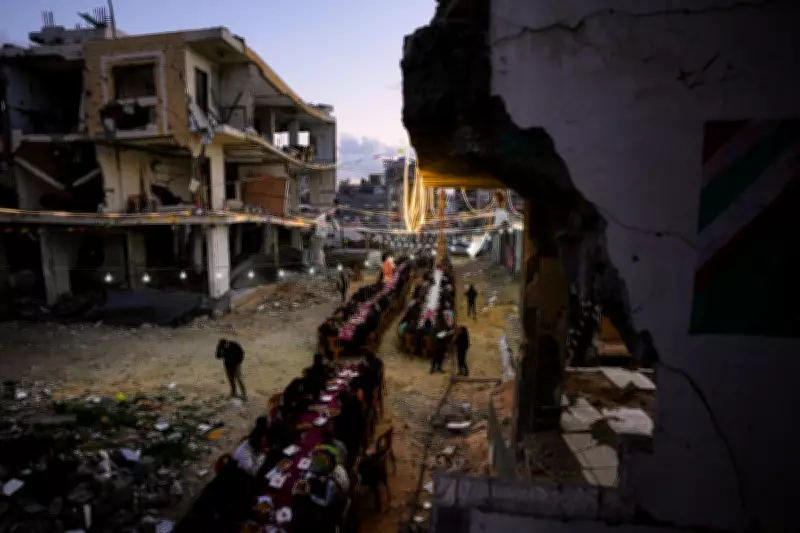
Now, all crossings are closed again during the holy Muslim fasting month of Ramadan, a time traditionally marked by chosen deprivation, evening feasts, and prayer. Images show Palestinians lining up at tables amidst bombed-out debris, their routines shattered by the escalating conflict.
"All the people rushed to markets, and they all wanted to shop and hide," said Abeer Awwad, displaced from Gaza City, describing the panic as word of explosions in Tehran spread.
Ceasefire Challenges and Humanitarian Struggles Persist
Under the U.S.-brokered ceasefire from October 10, the heaviest fighting has subsided, though regular Israeli fire continues. The U.N. World Food Program reported some progress, with households averaging two meals per day in February 2026 compared to one in July, but noted that one in five households still consumes only one meal daily.
Refocusing global attention on Gaza poses a significant challenge for aid groups as Iran scrambles for new leadership and explosions ripple across the Middle East. Trump has warned of continued bombing and unprecedented force if Iran escalates attacks, a stark contrast to his recent launch of the Board of Peace aimed at resolving conflicts including Gaza.
Major hurdles remain for the ceasefire, including disarming Hamas, deploying an international stabilisation force, and establishing a new Palestinian governance committee in Gaza.
A Silver Lining for Some Amid the Chaos
As the Middle East pivots to another war, some Palestinians see a benefit: Israel's military distraction. Ahmed Abu Jahl of Gaza City noted, "The good thing is that the sound of booms and demolitions is rare now near the yellow line." He added that drone activity has decreased, offering a temporary respite in the ongoing crisis.