UK Government Explores All Options to Aid Stranded Britons as Limited Flights Resume
Prime Minister Sir Keir Starmer has declared that the government is "looking at all options to support our people" as a small number of flights departed from Abu Dhabi on Monday. This statement comes amid intensifying conflict between Iran and US-Israeli forces, which has led to widespread airspace closures across the Middle East.
Flight Operations Resume with Caution
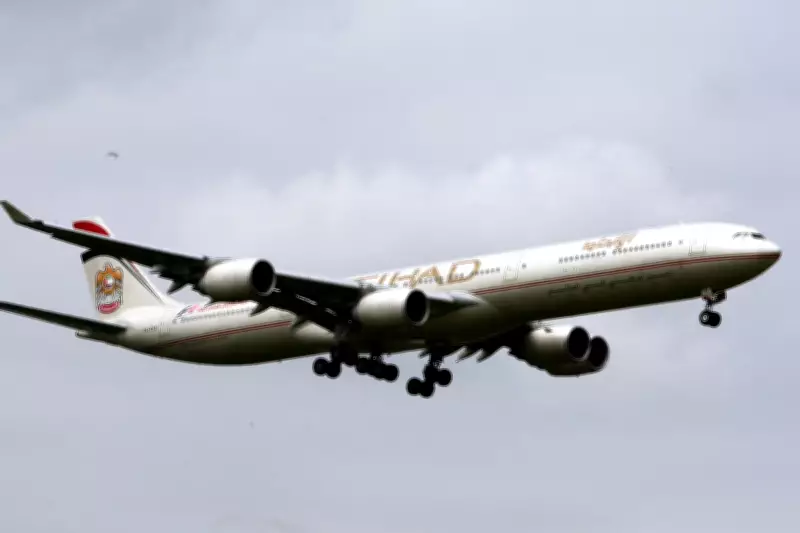
Etihad Airways flight EY67, likely carrying stranded UK nationals, departed from the United Arab Emirates capital and was expected to land at London's Heathrow Airport at 7.14pm at Terminal 4. This flight represents one of the few commercial movements in a region where airspace remains largely closed.
In a three-hour window on Monday, some 15 Etihad Airways flights departed from Abu Dhabi, which flight tracking company Flightradar24 suggested were "likely helping to clear transit passengers who have been stuck there since the start of the conflict."

Meanwhile, the Government of Dubai Media Office announced that airlines Emirates and Flydubai would begin operating a limited number of flights, with priority given to customers with earlier bookings.
Government Response and Support Measures
Addressing the House of Commons, Sir Keir Starmer acknowledged that "the situation on the ground may remain challenging for some time" but emphasized the government's commitment to supporting British citizens. Key measures include:
- Sending rapid deployment teams to the region to provide on-the-ground support
- Maintaining close contact with the travel industry and regional governments
- Keeping FCDO phone lines open for consular support
- Making ministers available to meet with MPs about individual cases
Foreign Secretary Yvette Cooper revealed that approximately 102,000 British nationals had registered their presence in the region, with an estimated total of 300,000 British citizens in Gulf countries targeted by Iran.
Travel Disruptions and Safety Advisories
The airspace closures have resulted in significant flight cancellations. Analytics company Cirium reported that 49 of 144 flights scheduled to depart from the UK to the region on Monday were cancelled, representing more than a third of planned services.
Major airlines have implemented various measures:
- British Airways cancelled "a number of our flights to the Middle East"
- Virgin Atlantic axed two flights to Heathrow from Dubai and Riyadh
- EasyJet and BA cancelled some flights to Cyprus after a drone hit RAF Akrotiri
The Foreign Office has expanded its travel advisories, now recommending against travel to Jordan in "all but essential" circumstances. British nationals in Bahrain, Israel, Kuwait, Palestine, Qatar, and the UAE are urged to register their presence with the Foreign Office online.
Airline Guidance and Passenger Rights
Etihad Airways continues to advise passengers not to travel to the airport unless they have been contacted directly and told to do so. The airline has suspended all scheduled commercial flights to and from Abu Dhabi until 14:00 UAE time on Wednesday March 4, though some repositioning, cargo, and repatriation flights may operate with UAE authorities' approval.
Rory Boland, editor of Which? Travel, emphasized passenger rights: "Passengers due to travel must be offered the choice of a refund or rerouting on airlines that are still flying." He advised travelers to monitor updates from their airlines and follow Foreign Office guidance rather than cancelling bookings themselves.
The government remains focused on ensuring British nationals "can return home as swiftly and safely as possible" while navigating the complex security situation in the region.