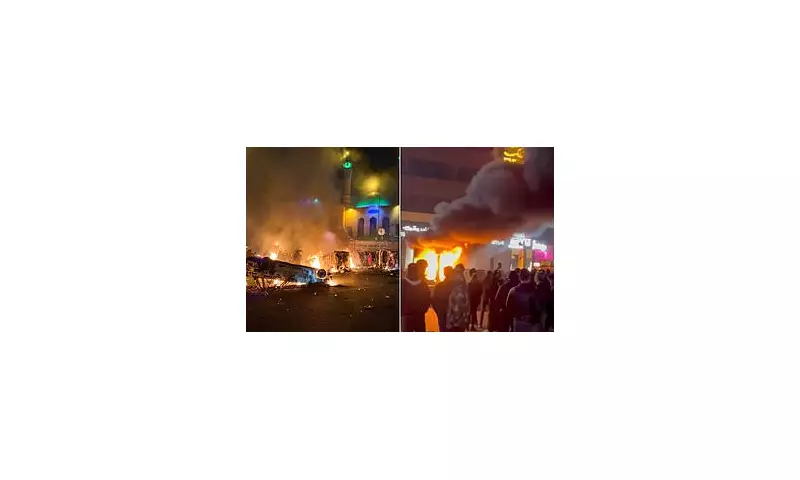
Iranian security forces are feared to have killed hundreds of protesters over the weekend as the regime fights to quell a nationwide uprising against clerical rule. The unrest, now spanning all 31 of Iran's provinces, has drawn a stark warning from the country's leaders, who declared participants 'enemies of God' – a charge punishable by death.
Nationwide Unrest and a Brutal Response
What began on December 28 as demonstrations against soaring inflation has rapidly transformed into a political movement demanding an end to the Islamic Republic's rule. Extraordinary footage posted online shows fresh protests erupting in neighbourhoods across Tehran and in major cities including Rasht, Tabriz, Shiraz, and Kerman. Reports detail buildings set ablaze, overturned vehicles, and crowds chanting 'death to the dictator'.
Despite a near-total internet blackout imposed by the regime on Thursday night, evidence of a bloody crackdown is mounting. Iranian activist and journalist Masih Alinejad stated that 'hundreds of protesters' had been killed by security forces. A doctor in Tehran told Time magazine that just six hospitals in the capital had recorded at least 217 protester deaths, with 'most by live ammunition'.
Medical staff at three hospitals told the BBC their facilities were overwhelmed. One medic in Tehran described victims suffering 'direct shots to the heads of the young people, to their hearts as well'. A doctor in north-western Iran reported large numbers of injured, some badly beaten, being brought to hospitals since Friday.
International Reaction and Threats of Escalation
The scale of the violence has raised the spectre of international intervention. Former US President Donald Trump warned Iran would 'get hit very hard' if it repeated past mass killings, later posting on Truth Social that 'Iran is looking at FREEDOM' and that the 'USA stands ready to help'. The Wall Street Journal reported that the White House has held 'preliminary discussions' on plans for a potential strike, with one option being a large-scale aerial strike against Iranian military targets.
The UK Government stated it is 'deeply concerned by reports of violence against protesters in Iran who are exercising their legitimate right to peaceful protest and are monitoring the situation closely.'
Regime's Desperate Measures and Internal Rumours
The Iranian regime has taken drastic steps to maintain control. Beyond severing internet and phone lines for its 85 million citizens, authorities reportedly turned off public lighting in some areas, plunging crowds into darkness, with demonstrators using mobile phones for light. Tehran's mayor claimed attacks on 25 mosques, 26 banks, and the headquarters of the Basij, a feared branch of the Revolutionary Guard.
Iran's prosecutor-general, Mohammad Movahedi Azad, suggested all protesters could face the death penalty. Meanwhile, rumours swirled that Supreme Leader Ayatollah Ali Khamenei was making plans to leave and that other clerics had fled. In a separate development, Iran's Revolutionary Guards intelligence wing claimed it arrested a foreigner suspected of spying for Israel.
The situation remains volatile, with the regime's survival seemingly pitted against a population's demand for fundamental change, amid a rising and alarming death toll.