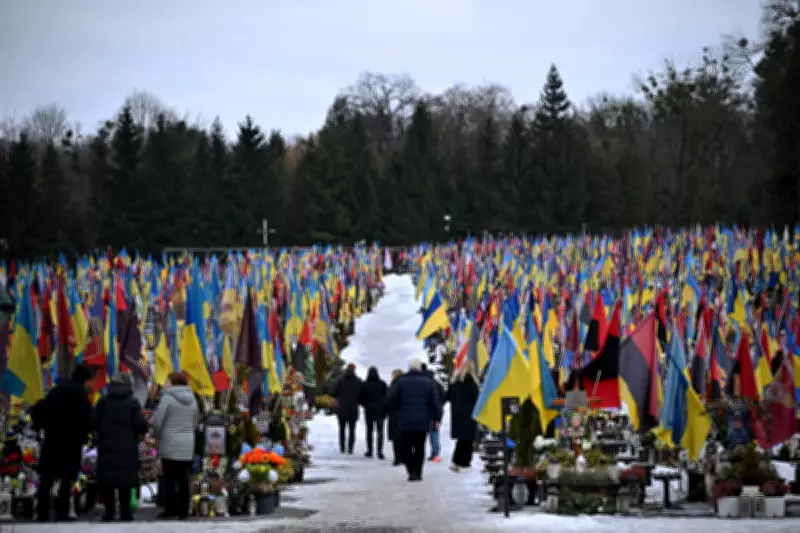
The graves of Ukrainian soldiers at Lychakiv cemetery in Lviv stand as a sombre testament to the ongoing conflict, now entering its fifth year. This poignant image underscores the human cost of a war that many analysts had foreseen but which western powers failed to prevent through effective diplomacy and credible intelligence.
Pre-War Intelligence Warnings Ignored
Shaun Walker's investigative report reveals how the CIA and MI6 obtained detailed plans of Russia's impending invasion in 2022, yet these warnings were largely dismissed. This mirrors historical failures, such as the US inability to anticipate the attack on Pearl Harbor, attributed by historian David Kahn to 'mirroring' – a cognitive bias where analysts project their own tactics onto adversaries, blinding them to unconventional strategies.
Despite clear signals, NATO leadership and allied governments remained out of touch, as highlighted by Simon Tisdall's analysis of diplomatic failures since the invasion began. The reliance on traditional military responses, like calls for massive rearmament, has proven inadequate against the evolving nature of modern warfare.

The Shift to Asymmetric Warfare
The conflict has increasingly highlighted the vulnerability of conventional military logistics to soft power and anarchic tactics. Drones now steer battlefield dynamics, while heavy artillery merely pulverises infrastructure, leading to a costly stalemate. This evolution underscores a fatal weakness in western strategy: an overemphasis on military solutions at the expense of diplomatic, financial, and intelligence avenues to counter Vladimir Putin's regime.
Refugee Policy Exposes Further Failings
The chaos in the UK's response to Ukrainian displacement post-invasion reveals another layer of institutional failure. While the EU granted fleeing Ukrainians three-year residency and work rights, the UK imposed visa requirements without providing adequate consular services in Ukraine. Home Office minister Kevin Foster's rushed references to seasonal work schemes exemplified the government's disorganised approach.
Four years on, Ukrainians in Britain remain in legal limbo – not classified as refugees nor granted stable migrant status. They must renew their right to reside every 18 months, hindering career development, housing security, and educational opportunities. This policy vacuum demonstrates that inattention to humanitarian crises extends beyond intelligence and diplomacy into domestic governance.
Questionable Diplomatic Gestures
If UK and US intelligence accurately predicted Russia's invasion plans by 2021, the British government's decision to send then foreign secretary Liz Truss on a tank ride in Estonia that November appears particularly misguided. Such symbolic gestures failed to deter Putin's military ambitions, highlighting a disconnect between intelligence assessments and political action.
The collective failure to leverage intelligence for preventive diplomacy has left Ukraine mired in conflict, with western powers grappling with the consequences of their credibility deficit from past missteps like the Iraq war.