Iran's Calculated Strategy Against Western Powers
Iran has masterfully identified how to manipulate President Donald Trump against his traditional allies, employing a sophisticated playbook that prioritises economic pressure over conventional military confrontation. The regime in Tehran, drawing parallels with historical adversaries like the North Vietnamese communists and the Taliban, recognises its limitations in direct warfare against a superpower. Instead, it has unleashed a devastating economic onslaught, plunging the global community into a profound crisis with far-reaching implications.
Diplomatic Tensions and Legal Disputes
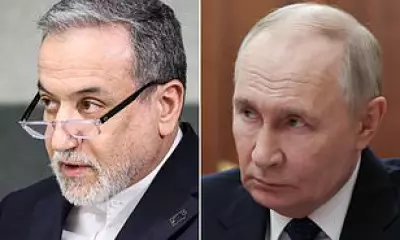
British Prime Minister Sir Keir Starmer, a respected lawyer known for his measured approach, faces stark opposition from Iran's fiery Foreign Minister, Abbas Araghchi. Araghchi has explicitly warned the United Kingdom that Iran views its decision to permit American use of British military facilities in the region as "participation in aggression." This stance dismisses careful legal advice provided to Sir Keir by Attorney General Richard Hermer, which asserts the UK's right to allow defensive operations from its bases.
From Iran's perspective, this position is understandable, given that senior regime figures like Araghchi could potentially become casualties of so-called "defensive" actions by their enemies. Consequently, Sir Keir's efforts to maintain Britain's distance from the conflict appear increasingly futile, as Iran's rhetoric escalates tensions and challenges diplomatic norms.

Economic Warfare as a Primary Tool
Iran's overarching objective is to exacerbate the global energy crisis, thereby pressuring the United States and Israel to cease hostilities and negotiate peace terms favourable to Tehran. The leadership in Iran has astutely determined that influencing President Trump is most effectively achieved through economic channels, particularly via indicators like the Dow Jones Industrial Average and broader market forces.
Similarly, Iran targets American public opinion, leveraging widespread Western hostility to the war. The mullahs understand that while they cannot defeat a superpower in traditional combat, guerrilla tactics and asymmetric strategies offer a viable path to success. Unlike Western democracies, Iran's leadership need not heavily consider domestic public sentiment, granting them greater flexibility in protracted conflicts.
Exploiting Western Divisions
Iran derives significant satisfaction from the deepening rift between the United States and the United Kingdom, whom they derogatorily label the "Great Satan" and "Little Satan." This discord is further amplified by President Trump's unconventional diplomacy, which has strained alliances and emboldened adversaries like Vladimir Putin. Putin undoubtedly relishes the fractures within the Western alliance, exacerbated by Trump's lack of statesmanship.
Trump's recent social media outbursts, accusing NATO partners of cowardice, underscore his divisive approach. While his assertion that "NATO IS A PAPER TIGER!" without US support may hold some truth, it overlooks America's reliance on loyal allies for strategic operations, such as securing the vital Strait of Hormuz.
The Strait of Hormuz and Global Implications
The ongoing conflict has highlighted the critical importance of the Strait of Hormuz, a key chokepoint for global energy supplies. A coordinated international effort to secure this seaway and alleviate the energy crisis remains possible, but it requires a feasible, multilateral plan with input from all partners. Demanding such collaboration is not cowardice but prudent strategy, especially given the mission's inherent risks.
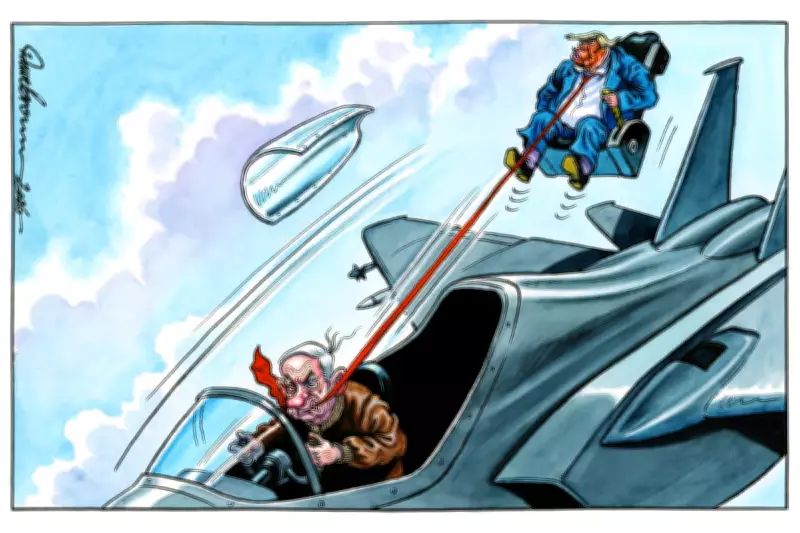
Trump's criticisms are particularly galling considering his own avoidance of military service during the Vietnam War, casting his aspersions in a hypocritical light. After a month of intensified hostilities—prompted by Israeli Prime Minister Benjamin Netanyahu's persuasion to abandon talks with Iran in favour of relentless bombing—there is little indication of resolution.

Strategic Outcomes and Future Projections
Despite significant military losses, including a sunk navy and the assassination of a supreme leader, the Islamic Republic persists, representing a form of victory in asymmetric warfare. Iran has gained the initiative through tactics that hold the global economy hostage, enabling it to project power even if the US and Israel were to halt operations immediately.
The net result of the conflict thus far is a weakened United States and a more divided Western alliance, with strains even emerging between the US and Israel. Astonishingly, the most formidable military-industrial alliance in history, led by America, finds itself outmanoeuvred and humiliated by Iran and Russia—nations characterised by corruption and economic fragility.
The pivotal factor in this dynamic is undoubtedly Donald J. Trump, whose presidency has catalysed these divisions and empowered adversarial regimes. His leadership style has inadvertently played into Iran's hands, transforming a regional conflict into a global crisis with enduring consequences for international stability.