Iranian Forces Seize Commercial Vessels in Strategic Strait of Hormuz
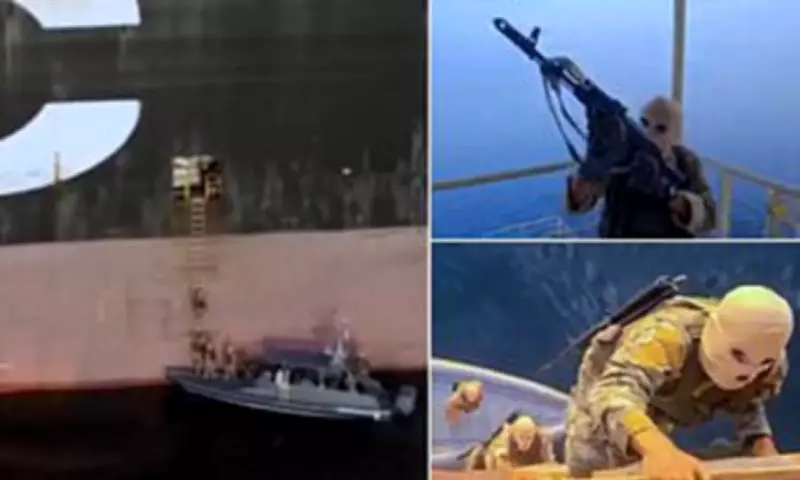
Tehran has released dramatic propaganda footage showing masked fighters from the Islamic Revolutionary Guard Corps (IRGC) seizing two commercial container ships in the Strait of Hormuz. The video appears designed to demonstrate Iranian control over this crucial maritime passage to both the international community and former US President Donald Trump.
Dramatic Footage Shows Military Operation
The released footage shows IRGC fighters approaching the Panama-flagged MSC Francesca and the Greek-flagged Epaminondas in speed boats before boarding the vessels using rope ladders. Armed with machine guns, the soldiers proceed to take control of both ships, whose crews appear to have been evacuated prior to the operation.
In an official statement, the IRGC accused the vessels of 'tampering with navigation systems and jeopardising maritime security', as well as 'operating without authorisation' in the strategically vital strait. The military force claimed the ships were directed to the Iranian coast for inspection of their cargo, documents, and records.

Escalation Amid Stalled Peace Negotiations
This maritime confrontation comes as peace talks between Washington and Tehran appear to have reached a significant stalemate. The two adversaries continue to clash over the future of the vital waterway through which approximately twenty percent of the world's gas and oil typically flows.
Wednesday's attacks targeted three vessels in total - the Francesca, the Epaminondas, and the Panama-flagged Euphoria. Iranian officials described these actions as retaliation for the United States intercepting an Iranian-flagged cargo ship in the Gulf as part of its ongoing naval blockade.
Tehran's chief negotiator, Mohammad Bagher Ghalibaf, has insisted it is 'not possible' to reopen the crucial oil passage because of what he called 'flagrant' breaches of the ceasefire by both the United States and Israel.
Conflicting Reports and International Response
Despite video footage purportedly showing the seizure of the Epaminondas, the Greek Ministry of Shipping denied that Iranian fighters actually boarded the vessel and insisted all crew members remained safe throughout the incident. The UK Maritime Trade Operations Centre reported that an IRGC gun boat fired on the container ship without giving any prior radio warnings, causing heavy damage to its bridge.
The attacks have created significant confusion in international shipping circles. Following a sudden reversal in the Iranian stance over the weekend - where the foreign minister announced the strait was open only to be contradicted the next day by the Revolutionary Guard - six cruise ships managed to slip through during a narrow window of opportunity. Since then, maritime traffic has largely dried up in the region.
Economic and Political Ramifications
Oil prices surged significantly on Thursday following the Iranian attacks, with Brent crude hovering around $103 per barrel and US-traded oil soaring above $94. The economic implications extend beyond immediate price fluctuations, as hundreds of ships and thousands of crew members remain effectively stuck in the region.
White House Press Secretary Karoline Leavitt maintained that the United States continues to exert economic pressure on Iran, claiming the blockade is 'completely strangling their economy' and causing losses of approximately $500 million daily. However, Iranian President Masoud Pezeshkian countered that the blockade represents one of the 'main obstacles' to genuine negotiations with the United States.
Analyst Perspectives on Strategic Motivations
Torbjorn Soltvedt, principal Middle East analyst at risk intelligence company Verisk Maplecroft, suggested the resumption of attacks reflects both genuine confusion about when passage is permitted through the strait and strategic Iranian interests. 'Their main leverage in negotiations with the US is being able to restrict shipping through the Strait of Hormuz, and insurance is a big part of that,' Soltvedt explained, noting that sporadic attacks help maintain high insurance premiums for vessels transiting the region.

The conflicting statements emerging from various Iranian authorities - and between Tehran and Washington - have created an environment of uncertainty that analysts believe serves Iranian strategic interests while complicating diplomatic efforts to resolve the ongoing crisis.