Iran Fires Missiles at Strategic Diego Garcia Base After UK Authorises US Action
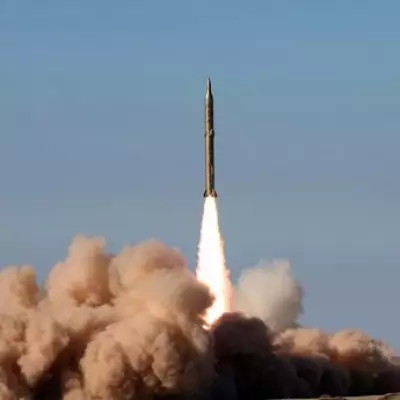
Iran has reportedly launched two intermediate-range ballistic missiles toward the joint US-UK military base at Diego Garcia in the Indian Ocean. This aggressive move comes directly after the United Kingdom granted the United States permission to conduct strikes against Iranian missile sites from British bases, including Diego Garcia.
Missile Attack Details and Strategic Location
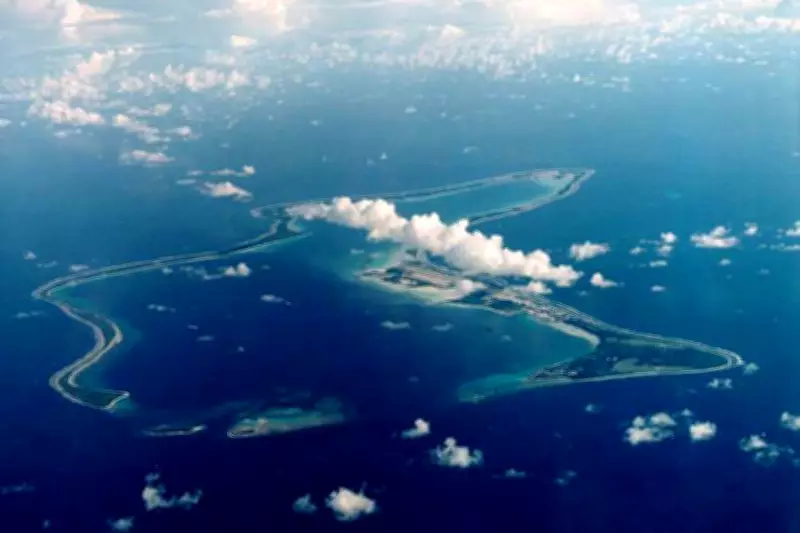
According to reports from the Wall Street Journal and the semi-official Iranian news agency Mehr, neither of the two missiles fired by Tehran successfully struck the Diego Garcia base. One missile was intercepted and shot down by a US warship, while the other reportedly failed during its flight path. The base, situated approximately 3,800 kilometres (2,360 miles) from Iran, is a critical strategic asset in the Chagos Islands.
Diego Garcia hosts a substantial airbase capable of accommodating long-range US bombers, along with extensive fuel storage facilities, radar installations, and a deep-water port. For decades, it has served as a vital launchpad for American military operations across the Middle East. The UK has agreed in principle to transfer sovereignty of the Chagos Islands to Mauritius while leasing back the base for continued military use.

Political Backdrop and International Reactions
The missile launch follows a significant political decision on Friday afternoon, when UK ministers authorised the United States to utilise British bases, including Diego Garcia, for strikes targeting Iranian missile sites near the Strait of Hormuz. This authorisation marked a shift from previous UK policy, which had only permitted "defensive" actions from these installations.
Iranian Foreign Minister Abbas Araghchi responded with fury, declaring on social media platform X that Iran would "exercise its right to self-defence." He accused Prime Minister Sir Keir Starmer of ignoring British public opinion and endangering British lives by allowing UK bases to be used for aggression against Iran. "Vast majority of the British People do not want any part in the Israel-US war of choice on Iran," Araghchi stated.
US President Donald Trump criticised the UK's timing, suggesting Britain "should have acted a lot faster" in granting permission. Trump has previously pressured NATO allies, labelling them "cowards" for refusing to deploy warships to help reopen the strategically crucial Strait of Hormuz.
Domestic Political Fallout in the UK
The decision has ignited fierce debate within British politics. Conservative leader Kemi Badenoch denounced Sir Keir Starmer's authorisation as the "mother of all U-turns," highlighting a perceived reversal from earlier, more restrictive stances. Meanwhile, the Liberal Democrats and the Green Party have demanded that any further permissions for US use of British bases must first be subject to a parliamentary vote, emphasising democratic oversight.
In a related development, RAF Akrotiri in Cyprus was struck by an Iranian drone shortly after the initial UK decision to allow only defensive actions. Prime Minister Starmer is scheduled to convene a Cobra meeting next week to address plans for assisting households with the rising cost of living exacerbated by the ongoing regional conflict.
This incident underscores the escalating tensions in the region and the complex diplomatic and military calculations facing the UK government as it navigates its alliance with the United States amid direct threats from Iran.