Iran Publishes Video Taunting US President Over War Strategy
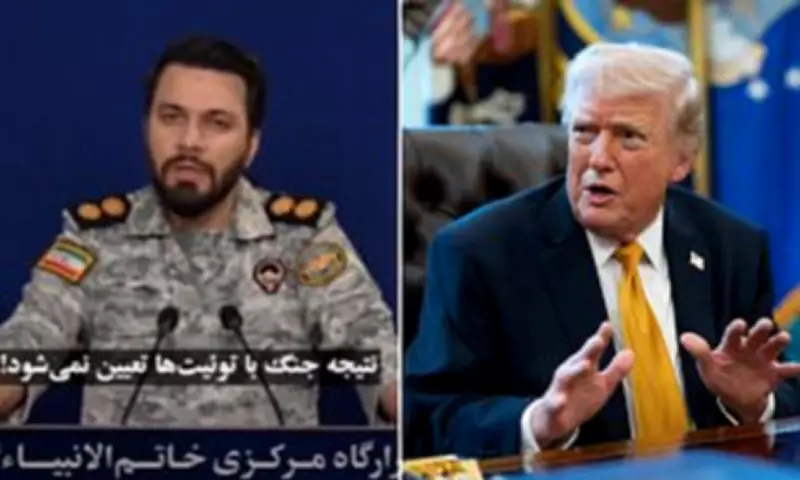
Iran has released a provocative video directly mocking US President Donald Trump, urging him to rename the ongoing military conflict from "Operation Epic Fury" to "Operation Epic Fear." The footage, published by Tehran's semi-official Mehr News Agency, features Ebrahim Zolfaghari, spokesman for the Islamic Revolutionary Guard Corps, delivering a pointed message in English to the American leader.
Mockery of Trump's Social Media Approach
In the video, Zolfaghari wears military attire and criticises Trump's reliance on social media for wartime commentary. "The outcome of war cannot be determined by tweets," he states, adding, "The result of war is determined on the field—the very place where you and your forces do not dare approach and you can only talk about it in your tweets." He concludes with a mocking smile, suggesting the conflict should be rebranded "Epic Fear" instead of "Epic Fury."
Context of Escalating Tensions
This video appears as a direct response to Trump's recent posts on his Truth Social platform, where he declared that "Iran is being decimated" and labelled the country "militarily ineffective and weak." Trump accused Iran of using artificial intelligence as a "disinformation weapon" to exaggerate its wartime successes. The conflict began on February 28, triggering retaliatory strikes by Iran across the Gulf region.
Warnings of Another Vietnam
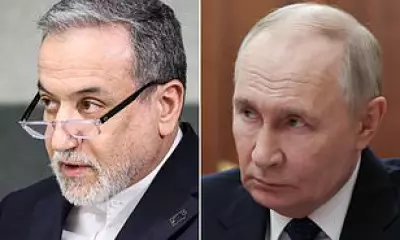
Iran's deputy foreign minister, Saeed Khatibzadeh, has warned the US against deploying ground troops, suggesting it could lead to another Vietnam-like quagmire. "Just read what happened in Vietnam," he told Sky News, emphasising that those who dragged America into the war could also entangle it in a prolonged struggle. Despite this, Trump has not ruled out sending US ground soldiers into Iran, with Republican lawmakers largely backing his strategy.
Democratic Concerns and International Dynamics
Democratic US senators, including Richard Blumenthal, have expressed alarm about the potential deployment of American troops, citing high risks due to Russian support for Iran's military. Blumenthal noted, "We seem to be on a path toward deploying American troops on the ground in Iran," and highlighted concerns about Russian and Chinese assistance to Tehran, calling for greater transparency from the administration.
Strategic Moves and the Strait of Hormuz
At the end of last week, Trump ordered a Marine amphibious unit from Japan to the Middle East, signalling a possible expansion of operations. A key objective may be reopening the Strait of Hormuz, a critical channel for 20% of the world's oil and gas, which Iran has effectively shut down since the war began. This closure has caused a major oil supply shock, surging global prices and disrupting trade flows.
Options for Military Action
Potential strategies to secure the strait include a ground invasion of southern Iran to destroy missile and drone stockpiles, or an escort operation with US warships and allied navies to protect oil tankers from Iranian attacks. Trump has called on European allies and China to provide naval escorts, but nations have been reluctant due to safety risks and fears of escalating the conflict.
Strained Relations with the UK
In a recent press conference, Trump criticised UK Prime Minister Sir Keir Starmer for refusing to send ships to help secure the Strait of Hormuz. Trump expressed disappointment, stating, "I was very surprised with the United Kingdom... You're our oldest ally, and we spend a lot of money on NATO to protect you." He emphasised the need for minesweepers and naval support, but Starmer has been cautious, avoiding involvement in a "wider war."
Maritime Challenges and Recent Developments
Arsenio Dominguez, head of the International Maritime Organisation, noted that naval escorts would not "100 per cent guarantee" ship safety and are not a sustainable solution. Meanwhile, Israel's Defence Minister announced that Iran's security chief Ali Larijani was killed in an Israeli strike, following his criticism of Trump at a recent rally. This adds to the volatile situation, with ongoing airstrikes and diplomatic tensions shaping the conflict's trajectory.